Trump warns Iran of significant military consequences following the Houthi assault on Saudi oil tankers
Trump warns of significant military action against Iran following Houthi assaults on Saudi oil tankers, which have caused a surge in global oil prices.
US President Donald Trump has issued a warning to Iran and its Houthi allies, referring to what he termed “major military punishment” following the Houthi fighters’ claim of responsibility for missile and drone attacks on two Saudi oil tankers in the Red Sea. This development has heightened concerns about a broader regional conflict and has caused a significant increase in global oil prices.
The attacks signify a notable intensification in the conflict, broadening hostilities to the Red Sea, a crucial maritime trade route, while exacerbating disruptions that are already impacting shipping through the Strait of Hormuz.
Brent crude experienced a significant increase of over six percent, surpassing $100 per barrel for the first time since May, as traders responded to escalating worries that the conflict might jeopardize another vital global energy corridor.
The recent developments occurred as the US military initiated new airstrikes on Iranian targets late Thursday and early Friday, signifying the 13th consecutive night of attacks after the breakdown of an interim truce intended to conclude the war. Iran retaliated by conducting strikes aimed at neighboring Arab nations that host US military bases.
Iranian state media reported missile strikes on Qeshm Island, situated along the Strait of Hormuz. Additionally, state broadcaster IRIB reported that a US missile attack on the southwestern city of Ahvaz killed four individuals and injured five others.
In light of the recent attacks on the Saudi tankers, Trump issued a warning to Tehran regarding any additional Houthi operations.
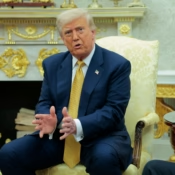
“If they do so again, the U.S. will hold Iran responsible, as the Houthis are a surrogate and/or proxy of Iran, and significant military consequences will be imposed on Iran and, of course, the Houthis themselves,” Trump wrote on social media.
Axios reports that Trump has suggested he is contemplating a significant military campaign against Iran once again.
“They haven’t experienced enough suffering yet,” Trump was quoted as saying.
Trump further stated that “any and all damages done” to cargo ships would be compensated using Iranian assets frozen by the United States, though he did not clarify how this action would be carried out.
Iranian Foreign Minister Abbas Araqchi expressed strong disapproval of the proposal, cautioning that seizing another nation’s assets to resolve future claims could lead to significant repercussions.
“Seizing another nation’s assets to pay for unrelated future claims sets a dangerous precedent,” Araqchi wrote on X.
“No one’s assets were secure once governments legitimized such confiscation.” “The resulting turmoil will be neither beautiful nor tranquil.”
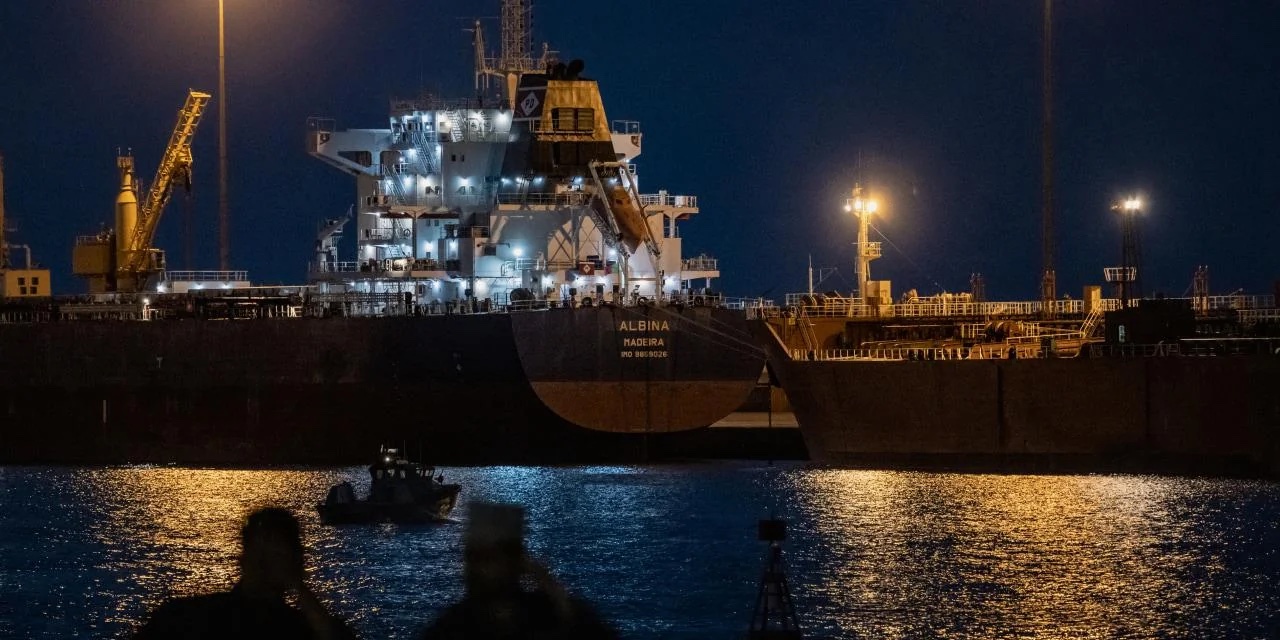
The Houthis, who govern a significant portion of northern and western Yemen, announced that they have established a naval blockade on Saudi Arabia and took responsibility for missile and drone attacks on the oil tankers Encelia and Layla.
A maritime security source reported that the Encelia sent out a distress signal following a missile strike near the Saudi port of Jizan in the Red Sea. Saudi state news agency SPA reported that the attack resulted in a fire at the vessel’s bow.
Reuters was unable to independently confirm the reported attack on the Layla, even though Trump mentioned attacks on two Saudi tankers.
Sources in Iran and Yemen informed Reuters that Tehran has recently sent Revolutionary Guard commanders, military advisers, and missile- and drone-related equipment to Yemen prior to the Houthis declaring their blockade. The Houthis dismissed the report.
The attacks have heightened worries regarding maritime security in the Bab el-Mandeb Strait, the crucial passage connecting the Red Sea to the Indian Ocean and the world’s second most vital energy shipping route following the Strait of Hormuz.
Several oil tankers have reportedly changed their routes to bypass the Bab el-Mandeb, choosing instead to embark on longer and costlier journeys around Africa. Shipping insurance premiums for vessels transiting the southern Red Sea have also increased significantly for some operators following the attacks.
Ship-tracking data indicated that tanker traffic through the Strait of Hormuz fell to a mere single vessel on Thursday, marking the lowest level since May 7.
Meanwhile, Iran announced that it had carried out attacks on US missile systems, fuel depots, and military facilities in Jordan and Kuwait as a response to American strikes on its territory.
Jordan’s military reported the interception of four Iranian missiles and six drones in the past day, with only one missile landing safely in an uninhabited area.
Iran’s Revolutionary Guards asserted that they targeted a US electronic warfare unit at Kuwait’s Al-Adiri base, resulting in unspecified casualties. However, neither Washington nor Kuwait has verified any casualties.
Brigadier General Mohammad Akraminia, a spokesperson for the Iranian military, stated that Tehran would persist with retaliatory operations as long as US attacks on Iranian infrastructure and coastal regions continued.
“Iran will continue to retaliate as long as the U.S. persists in attacking its infrastructure and coastal regions,” Iranian state television reported Akraminia as stating.
The conflict is also exacerbating political tensions in Washington, as increasing oil prices have intensified inflation concerns in the lead-up to November’s congressional elections.
The House of Representatives, under Republican control, voted on Thursday to support legislation that instructs Trump to cease US military operations against Iran, contending that only Congress possesses the constitutional authority to declare war. However, the Senate subsequently dismissed a comparable proposal, permitting the administration’s military campaign to persist.