Top diplomats advocated for diplomatic solutions as the ASEAN Security Forum concentrated on the Middle East crisis and escalating tensions in the South China Sea.
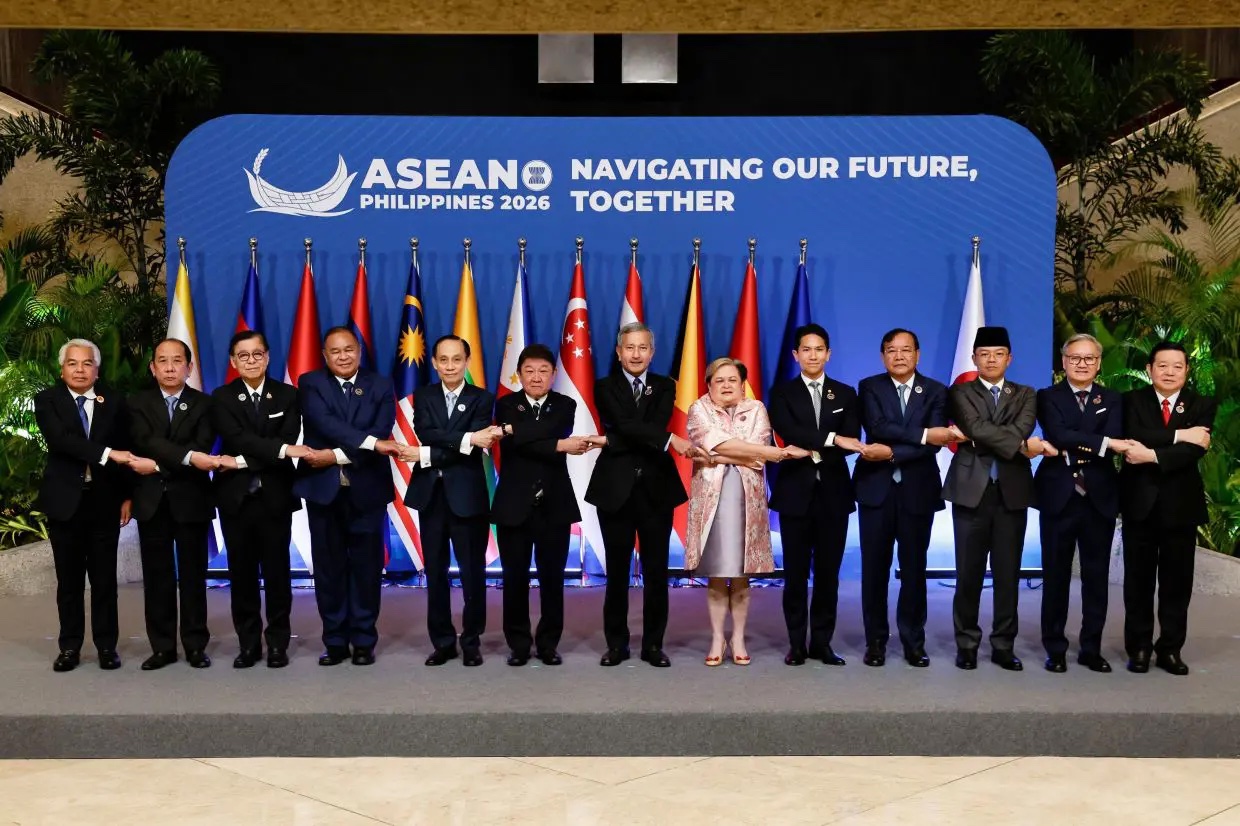
Top diplomats from Asia, Europe, and North America convened in Manila on Thursday for the ASEAN Regional Forum, where the escalating crisis in the Middle East and increasing tensions in the South China Sea were at the forefront of discussions regarding regional and global security.
Foreign ministers and senior officials, including US Secretary of State Marco Rubio, Russian Foreign Minister Sergei Lavrov, and representatives from China, Japan, India, Australia, Britain, and the European Union, urged for a revival of diplomatic initiatives aimed at reducing tensions in the Middle East and tackling increasing security challenges.
In her opening remarks at the forum, Philippine Foreign Secretary Theresa Lazaro emphasized the importance of enhanced international collaboration, asserting that no nation can tackle the increasingly intricate security challenges of today in isolation.
The meeting occurred as the United States conducted its 12th consecutive night of military strikes on Iran, while Iran-aligned Houthi forces reported attacks on two Saudi oil tankers. This development raised concerns regarding the security of the Strait of Hormuz and Red Sea shipping routes, which are crucial for global energy supplies.
In a meeting with officials from ASEAN, China, Japan, and South Korea, Chinese Vice Foreign Minister Hua Chunying cautioned that the world has entered a phase of increased instability. She emphasized the importance of collaboration among nations to maintain peace and regional stability.
A day earlier, Rubio reaffirmed Washington’s preference for a diplomatic resolution to the Middle East crisis while accusing Tehran of not engaging constructively.
Rubio engaged in nearly an hour of discussions with Lavrov on Thursday, focusing on the war in Ukraine and initiatives to enhance US-Russia relations.
Russia’s Foreign Ministry stated that Lavrov reiterated Moscow’s dedication to resolving the conflict through political and diplomatic avenues, while also expressing support for the proposals put forth by the leaders of both nations. The US State Department indicated that the discussions also centered on bilateral relations and initiatives aimed at concluding the Russia-Ukraine war.
In addition to the Middle East, the forum addressed the rising tensions in the South China Sea, where ongoing territorial disputes between China and the Philippines persistently heighten regional security issues.
The most recent clash occurred after an incident earlier this week involving Chinese coast guard vessels and Philippine naval personnel near a contested reef within Manila’s exclusive economic zone, leading both governments to call in each other’s ambassadors.
On Thursday, the coast guard of China accused the Philippines of engaging in provocative actions near the contested Scarborough Shoal, stating that it had obstructed what it termed an unlawful intrusion. The Philippine Coast Guard reported that one of its fisheries vessels, which was on a humanitarian mission, was hit by a water cannon during the confrontation.
Beijing asserts its sovereignty over almost the entirety of the South China Sea, which overlaps with the maritime claims of Brunei, Indonesia, Malaysia, the Philippines, and Vietnam. China persists in dismissing a 2016 international arbitration ruling that determined its extensive territorial claims lack legal foundation under international law.
Chinese Foreign Minister Wang Yi chose not to attend the forum, deciding to travel to Kyrgyzstan for an alternative regional meeting. Before his departure, Wang urged ASEAN member states to protect peace in the South China Sea and to resist what he termed external interference in regional matters.
On Thursday, China commenced two days of live-fire military exercises in sections of the Taiwan Strait, following discussions between Wang and Rubio in Manila the previous day, which also addressed Taiwan, highlighting the escalating strategic tensions throughout the Indo-Pacific.