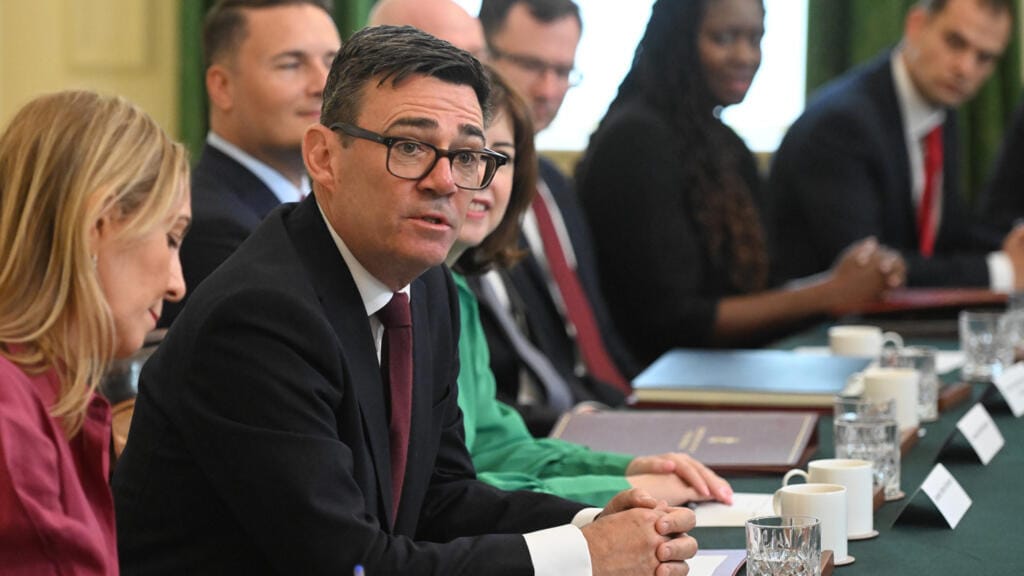
UK inflation decreased to 2.6% in June, providing Prime Minister Andy Burnham with an early economic advantage as price pressures subsided.
UK inflation slowed more than anticipated in June, providing new Prime Minister Andy Burnham with an early economic advantage as the easing price pressures brought some relief from the nation’s ongoing cost of living crisis.
Consumer prices increased by 2.6% year-on-year in June, a decrease from 2.8% in May, representing the lowest inflation rate since March 2025, as reported by the Office for National Statistics (ONS).
The reading fell short of economists’ forecast of 2.7%, bolstered by reduced petrol prices due to a temporary easing of tensions in the Middle East and a decrease in energy costs.
Analysts, however, warned that the improvement might be short-lived, as renewed geopolitical tensions have driven energy prices up, heightening the risk of new inflationary pressures in the months ahead.
“A decline in motor fuel prices, especially diesel, contributed to a reduction in inflation in June,” stated ONS Chief Economist Grant Fitzner.
The cost of raw materials decreased for the first time since January, primarily driven by a decline in crude oil prices, while the rise in factory gate prices continued to decelerate.
The most recent data indicates that UK inflation is lower than that of the United States, which recorded an inflation rate of 3.5%, and the euro zone, where it was at 2.8%.
The UK continues to be significantly affected by elevated energy costs due to its dependence on imported natural gas, which makes households and businesses more susceptible to changes in global energy prices.
Despite a reduction in inflation, it has consistently stayed above the Bank of England’s 2% target for a significant portion of the last five years. The central bank has issued a warning that inflation may increase to 3% in the third quarter.
Services inflation, an important metric observed by the Bank of England for indications of underlying price pressures, decreased to 3.6% in June from 3.7% in May. However, the figure was marginally above economists’ forecast of 3.5%.
Investors largely anticipate that the Bank of England will maintain its benchmark interest rate at 3.75% in the upcoming week, as policymakers evaluate domestic inflation trends and the effects of geopolitical developments.
Yael Selfin, chief economist at KPMG, stated that the most recent inflation data strengthened the argument for the central bank to uphold a careful monetary policy approach, highlighting that underlying inflationary pressures stayed relatively subdued despite sluggish domestic demand.
Some members of the Bank of England’s Monetary Policy Committee continue to express concerns that inflation may persist in surpassing the central bank’s 2% target, despite having voted to raise borrowing costs in June.
On Tuesday, financial markets factored in the likelihood of one or two quarter-point interest rate hikes by the conclusion of 2026.
Data released last week indicated that the British economy performed somewhat better than anticipated in May, offering additional backing for Burnham’s government, which assumed office on Monday.
Since taking office, the government has unveiled initiatives aimed at decreasing household energy bills and lowering the cap on bus fares as part of wider efforts to alleviate the cost of living pressure.
Data released on Tuesday indicated a stabilizing labor market and reduced government borrowing in June, bolstering optimism that the UK’s economic outlook is slowly improving despite persistent global uncertainties.