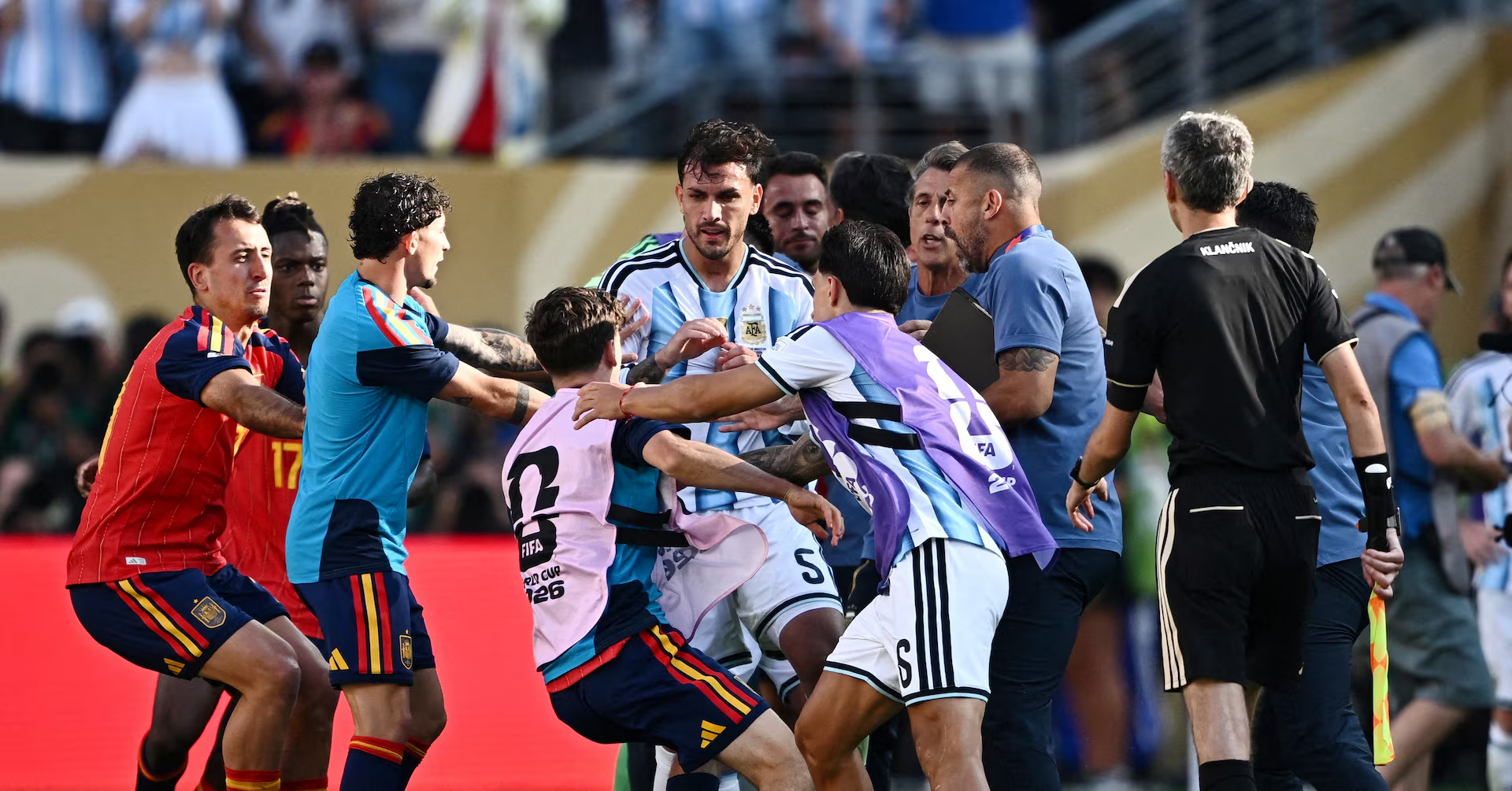
FIFA is preparing to investigate Argentina following the altercation with Spain players during the World Cup final, with both players and the football federation potentially facing disciplinary measures.
FIFA has initiated an investigation into the post-match altercation that occurred after Argentina’s World Cup final loss to Spain, with players and the national football federation potentially facing disciplinary measures.
Leandro Paredes received a red card after the final whistle due to altercations with Spain’s Eric Garcia and Gavi, while Nahuel Molina seemed to strike at Spain captain Rodri.
FIFA will evaluate the incidents prior to determining if additional sanctions will be applied. The investigation could additionally encompass events following Argentina’s semi-final triumph against England.
After the match, several players from Argentina showcased a banner that read, “Las Malvinas son Argentinas,” which translates to “The Falkland Islands are Argentinian.”
A spokesperson for Fifa stated following the semi-final, “In accordance with standard procedure, Fifa’s independent Disciplinary Committee is presently reviewing the match reports and evaluating the pertinent circumstances before determining any potential further actions in line with the Fifa Disciplinary Code.”
The same procedure will be implemented for the World Cup final.
Paredes and Enzo Fernandez, who received two yellow cards and were sent off during normal time, will each face a one-match suspension in Argentina’s upcoming competitive fixture.
However, FIFA’s Disciplinary Code stipulates that players sent off for violent conduct are required to serve a suspension of “at least three matches.” It also states that misconduct related to assault, which includes actions such as “elbowing, punching, kicking, biting, spitting at, or hitting an opponent,” will lead to a suspension of “at least three matches or an appropriate period of time.” The code additionally permits retrospective sanctions.
Uruguay’s Luis Suarez was handed a nine-match international ban and a four-month suspension from all football-related activities following an incident in which he bit Italy’s Giorgio Chiellini during the 2014 World Cup.
France legend Zinedine Zidane received a three-match ban for headbutting Italy’s Marco Materazzi during the 2006 World Cup final, while Materazzi was given a two-match suspension for provoking the French midfielder. Zidane’s ban was never enforced as he retired following the tournament.
FIFA may still elevate any punishment given to Paredes if it concludes that his actions constituted violent conduct. Molina may still encounter retrospective action even though he escaped a card during the match.
Argentina’s football federation may also encounter disciplinary actions if FIFA determines that there were broader instances of misconduct. The disciplinary code specifies that “if a national team behaves inappropriately (for instance, if the referee imposes individual disciplinary sanctions on five or more players during a match), disciplinary actions may also be directed towards the associated organization.”
The code also includes provisions for sanctions if teams are found to have acted “in a way that brings the sport of football and/or Fifa into disrepute.”
The confrontation started when Spain’s Mikel Oyarzabal and Rodri passed by Molina after the final whistle, as Spain celebrated their World Cup victory. Molina seemed to take a swing at Rodri before the two faced off against each other.
Garcia stepped in just before Paredes reached the altercation, sending the Spain defender crashing to the ground. Once Garcia regained his footing, Paredes seemed to strike him in the throat.
Argentina coach Lionel Scaloni tried to intervene and separate the players before Paredes focused on Gavi. The midfielder was knocked to the ground before players from Spain intervened. Footage seemingly captured Argentina assistant coach Daniel Ayala hitting Spain midfielder Dani Olmo.
The disorder marked a contentious conclusion to Argentina’s campaign as Lionel Messi played in his last World Cup match.