Trump has decided to eliminate the proposed 20% fee on Hormuz cargo as the US reinstates its naval blockade of Iranian ports across the country.
US President Donald Trump has retracted his plan to impose a 20% fee on cargo passing through the Strait of Hormuz. Instead, he is focusing on establishing significant trade and investment agreements with Gulf states, coinciding with the United States’ resumption of its naval blockade of Iranian ports.
Trump announced the decision shortly before US Central Command (Centcom) initiated another series of strikes against Iranian targets, stating that the operations were intended to diminish Iran’s capacity to threaten commercial shipping in the crucial waterway.
Centcom announced late on Tuesday that its forces have initiated another series of strikes against Iran to further diminish the Iranian capabilities employed in attacks on commercial shipping in the Strait of Hormuz.
The most recent military operation came after a third consecutive night of US airstrikes. Iranian state media reported explosions in multiple cities, including Bushehr, which is home to the nation’s sole nuclear power plant.
Tehran announced that it had aimed at US military installations in Bahrain and Jordan following earlier attacks on two tankers from the United Arab Emirates.
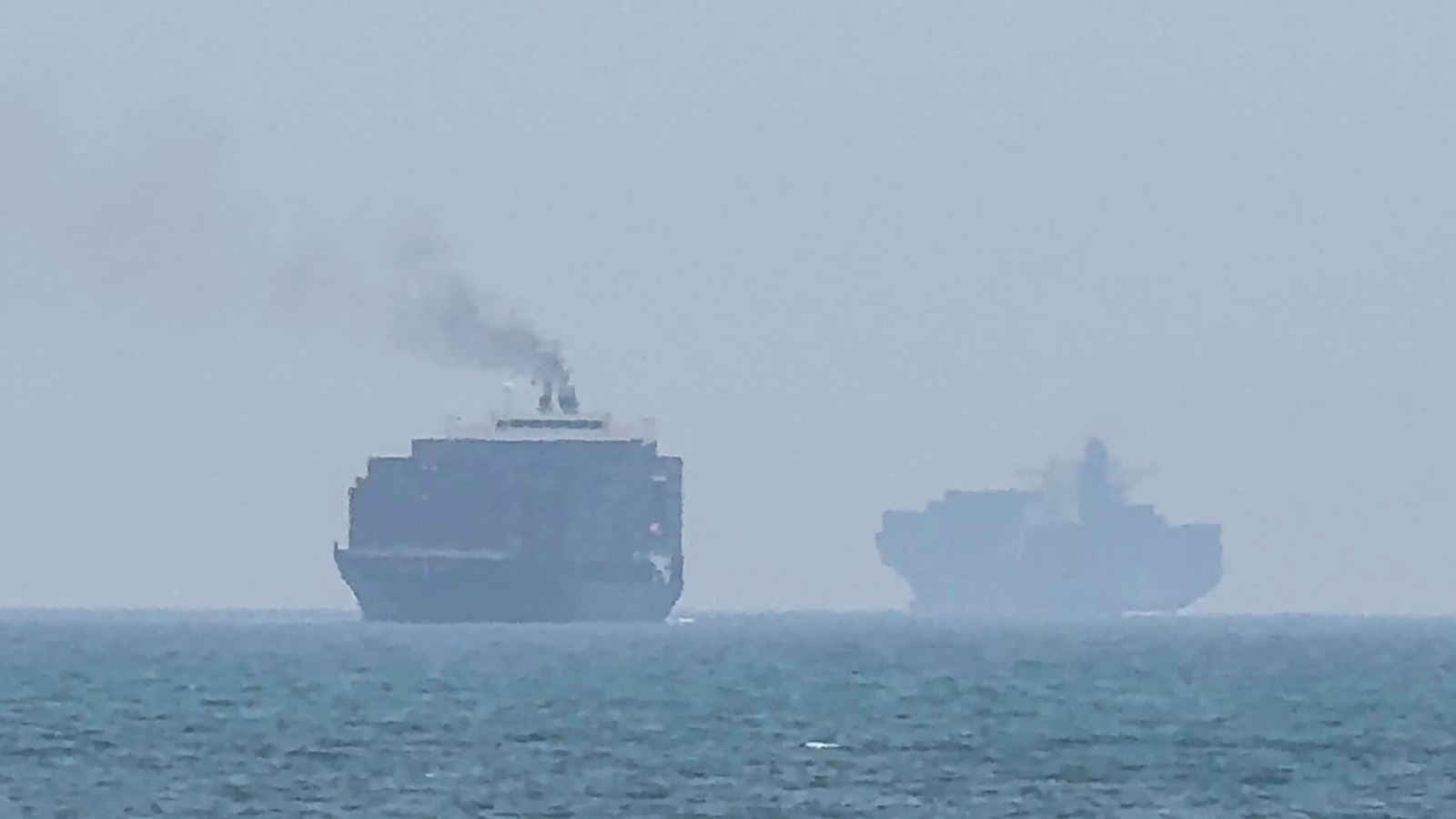
The recent attacks have demonstrated the importance of the Strait of Hormuz, an essential global shipping corridor. Iran has accused the United States of meddling in the waterway, whereas Washington claims it is safeguarding international shipping.
Trump previously designated the US as the “guardian” of the Strait of Hormuz and revealed intentions to implement a 20% fee on all cargo traversing the route to fund its protection. He also stated that the United States would reinstate its naval blockade of Iranian ports.
Trump later announced on Truth Social that he would cancel the fee.
I have decided to replace the 20% United States reimbursement fee with trade and investment deals that the various Gulf States will be making with the United States.
“Those investments will be significant, but, at the same time, exceptionally beneficial for them and their future.”
He provided no additional information regarding the proposed agreements.
Trump also stated that the Strait of Hormuz “is open to ALL ship traffic except for Iran” and that “oil is flowing like never before, thanks to the incredible power of the United States military.”
After discussions in Washington with Iraqi Prime Minister Ali al-Zaidi, Trump remarked, “I dislike the idea of a fee, but it’s unfair that we’re safeguarding this Strait for the whole world.”
He mentioned that he altered his approach following multiple calls from leaders in the Gulf.
Iran dismissed Trump’s assertions, affirming its continued control over the Strait of Hormuz.
Iran’s Deputy Foreign Minister Kazem Gharibabadi stated that Trump’s decision to reinstate the blockade “has, in a way, dismantled” a previous truce agreement.
The United States initially established a naval blockade on Iranian ports in April, which was subsequently lifted in June as part of a memorandum of understanding aimed at alleviating tensions. Nevertheless, conflicts regarding the Strait of Hormuz have persisted.
Shipping data indicates that vessel traffic through the strait has decreased to its lowest level in two months, while Brent crude oil prices have experienced a significant increase.
The Strait of Hormuz previously facilitated approximately 25% of the world’s oil shipments and 20% of global liquefied natural gas supplies before Iran interrupted traffic following US and Israeli strikes on February 28.
Israeli Prime Minister Benjamin Netanyahu issued a warning to Iran regarding the potential for additional attacks.
“I will convey this message to the leaders of Iran: Do not expect things to stay calm if you choose to attack us,” he stated in a video shared on social media.