The US and Iran engage in military strikes as Tehran announces the closure of the Strait of Hormuz, heightening concerns about global energy supplies.
The United States and Iran engaged in significant missile and drone strikes on Sunday following Tehran’s attack on US facilities throughout Gulf states and its announcement of the closure of the Strait of Hormuz.
The recent attacks come after several days of fighting, leading President Donald Trump to announce the termination of a ceasefire aimed at stopping the conflict that started on February 28. Trump, however, stated that the door remained open for additional negotiations.
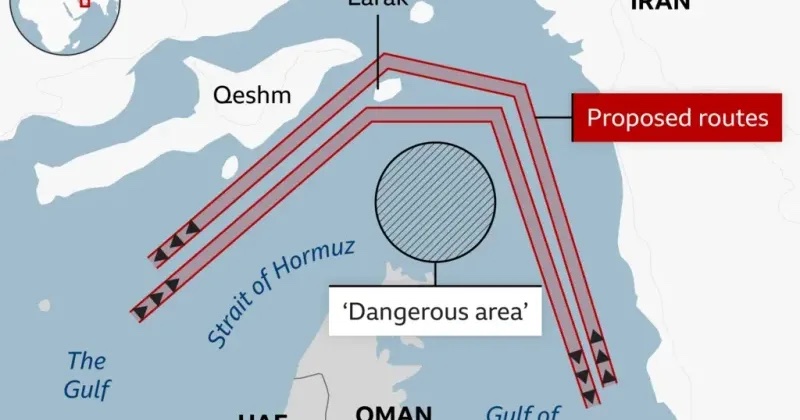
Iran announced that it had closed the strategic waterway following a warning shot that hit a commercial vessel navigating on what it termed an unauthorized route. Tehran also announced that it had disabled a second vessel.
The Revolutionary Guards announced that the Strait of Hormuz will stay closed until “the end of U.S. interference in this region.”
US Central Command challenged the assertion, stating that commercial vessels continued to navigate the waterway, which accounted for approximately one-fifth of global oil and liquefied natural gas shipments prior to the conflict.
Qatar reported that three individuals, including a child, sustained injuries from falling shrapnel during the attacks. The United Arab Emirates reported that its air defense systems successfully intercepted Iranian missiles and drones as warning sirens were activated in Bahrain and explosions were audible in Doha.
Iran’s strikes represented a notable escalation of the conflict following Tehran’s warning that any reaction to the recent container ship incident would provoke a “severe response.”
The conflict has unsettled the Gulf and interrupted energy markets, as Iran’s blockade of the Strait of Hormuz has driven up global oil prices and heightened inflation worries.
Iran’s Foreign Minister Abbas Araqchi has accused the United States of breaching the ceasefire agreement.
“There can only be mutual compliance,” he stated on X on Friday.
On Sunday, Iran’s chief negotiator Mohammad Baqer Qalibaf shared, X: “The era of one-sided deals is OVER.” We warned you: honor your commitment or face the consequences. Reality is at the door.
Araqchi also met with Omani Foreign Minister Badr Albusaidi to discuss suitable mechanisms for ensuring the safe passage of ships through the Strait of Hormuz. Oman indicated that negotiations would persist at both technical and political levels.
The recent updates follow the vow of revenge made by Iran’s new Supreme Leader, Ayatollah Mojtaba Khamenei, in response to the killing of his father and predecessor.
“We vow to seek justice for the blood of our fallen leader and all those who have sacrificed,” the statement declared.