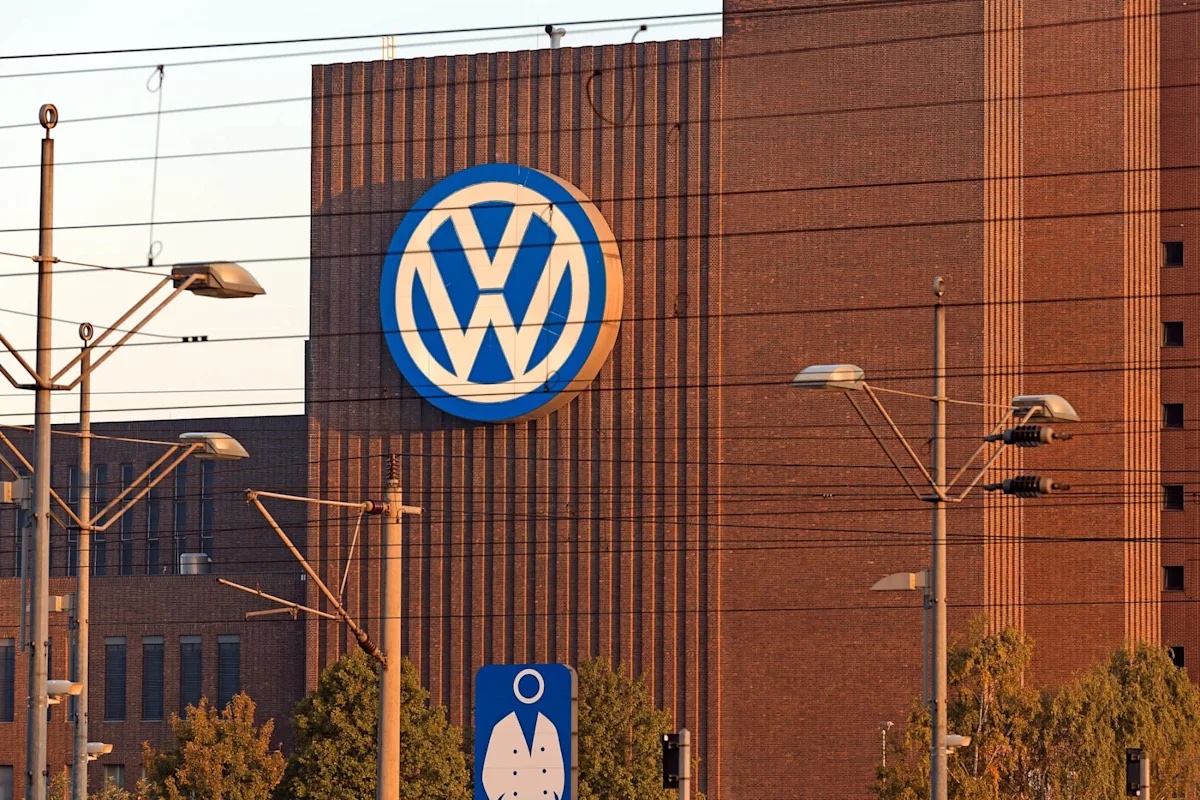
Volkswagen is embroiled in a legal dispute regarding its proposal to shut down four German plants and eliminate 100,000 jobs
Volkswagen is encountering strong opposition from unions as executives deliberate on the potential elimination of 100,000 jobs and the closure of four factories in Germany as part of a restructuring effort.
Volkswagen is at a crucial point in its history as its supervisory board convenes on Thursday to deliberate a comprehensive restructuring proposal that may lead to the elimination of up to 100,000 jobs and the closure of four German factories in response to escalating financial pressures.
The meeting, set to take place at the automaker’s headquarters in Wolfsburg, coincides with protests unfolding at around 20 Volkswagen Group locations in Germany, where workers are voicing their opposition to the proposed measures and calling for stronger commitments to protect domestic manufacturing.
Europe’s largest carmaker is facing challenges with increasing production costs, surplus manufacturing capacity in Germany, growing competition from Chinese automakers, and tariffs on vehicle imports into the US. The convergence of these challenges has exerted extraordinary pressure on the company to revamp the business model that has supported its growth for decades.
Chief Executive Officer Oliver Blume is anticipated to garner backing from the supervisory board’s prominent labor representatives for more extensive cost-cutting initiatives throughout the Volkswagen Group, encompassing the Audi and Porsche brands.
Blume faces pressure from the Porsche and Piech family shareholders, who have witnessed tens of billions of euros wiped from the market value of their investments recently.
Sources familiar with the discussions indicate that Volkswagen is contemplating what could be the most significant restructuring program in its history. The proposals entail the closure of four German plants—Hanover, Emden, Zwickau, and Audi’s Neckarsulm facility—alongside a rise in planned job cuts to 100,000, which is double the number presently being considered.
The discussions surrounding the restructuring are made more complex by the structure of Volkswagen’s supervisory board, which includes representatives from the controlling families, labor unions, and the Lower Saxony state government, frequently hindering the ability to reach a consensus.
The latest proposals mark a notable shift from the agreement established in late 2024, during which unions obtained a pledge from management to prevent factory closures in Germany. Following that agreement, Volkswagen began exploring alternative uses for underutilized facilities.
Efforts have encompassed an extensive search for a defense industry partner to leverage the Osnabrueck plant, along with assessing the feasibility of manufacturing vehicles tailored for the Chinese market at German factories.
Data from Mobility Global, as reported by Reuters, highlights the magnitude of Volkswagen’s overcapacity issue. The figures suggest that the group’s German vehicle plants are anticipated to function at 81% of standard capacity in 2026, with utilization expected to decrease further to 73% by the end of the decade, despite the planned removal of the Osnabrueck facility from its production network.
Among the four plants reportedly facing closure, Zwickau is expected to perform the best in 2026, achieving an 88% utilization rate. However, that figure is anticipated to drop to merely 42% by 2030.
Ahead of Thursday’s board meeting, Germany’s largest industrial union, IG Metall, rallied workers at approximately 20 Volkswagen locations nationwide in opposition to the suggested restructuring.
In a statement, IG Metall President Christiane Benner, who also holds the position of deputy chair of Volkswagen’s supervisory board, issued a firm warning to management.
“This sends a strong message to the board: Not on our watch!”
Benner urged the company and policymakers to create strategies aimed at preserving manufacturing capacity and safeguarding German industry against increasing international competition.
“In challenging times, we unite and urge the group and policymakers to develop strategies and initiatives that guarantee our plants operate at full capacity and shield us from inequitable competition,” she stated.
The result of Thursday’s supervisory board meeting is anticipated to decide if Volkswagen moves forward with one of the most comprehensive restructuring initiatives ever launched by a European automaker, as it aims to regain competitiveness in a progressively challenging global automotive landscape.