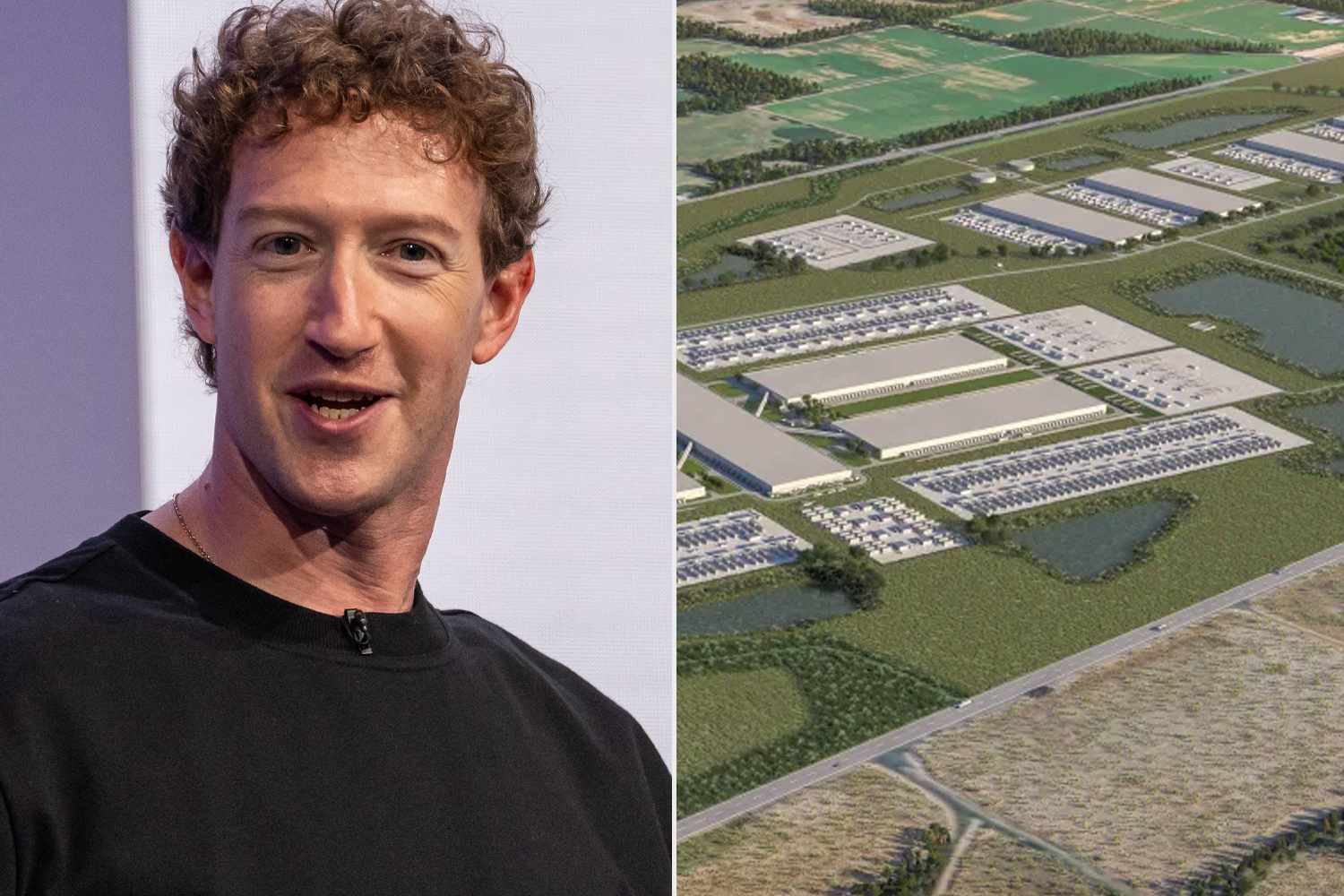
Meta is set to invest C$13 billion in its inaugural AI data centre located in Alberta, Canada
Meta plans to invest C$13 billion in Alberta to establish its first Canadian AI data center, thereby enhancing global computing capacity.
Meta has revealed its intention to establish its inaugural data center in Canada, pledging C$13 billion (around $9.17 billion) towards a substantial artificial intelligence facility in central Alberta as the tech giant intensifies its initiatives to enhance its global AI computing infrastructure.
The company announced on Wednesday that the one-gigawatt data center, which has the potential to expand to 1.8 gigawatts, will be situated in Sturgeon County, Alberta. The facility will be Meta’s 33rd data center globally and signifies the company’s inaugural investment in Canada.
The announcement took place in Calgary, featuring Meta executives alongside Alberta Premier Danielle Smith and other provincial officials. They have dedicated years to attracting major Silicon Valley technology firms, aiming to diversify Alberta’s economy and draw significant investments beyond the traditional oil and gas sector.
Meta has notably increased its investment in artificial intelligence recently, dedicating hundreds of billions of dollars to develop AI infrastructure, especially in the United States, to address the rising demand for computing power.
Alberta’s minister of technology and innovation, Nate Glubish, stated that the Meta project is anticipated to facilitate further large-scale data center developments throughout the province.
“This is the first of its kind, size, and scale, but it won’t be the last,” Glubish said.
The province has become a compelling choice for AI infrastructure, thanks to its plentiful natural gas reserves, comparatively low energy costs relative to the United States, and a cold climate that helps lower the expenses associated with cooling extensive computing facilities.
Alberta officials report that numerous other gigawatt-scale data center proposals are presently at various stages of development.
Meta stated that the Alberta facility will use approximately the same amount of electricity as 800,000 households. To support the project, the company committed to fully funding the new electricity generation and grid infrastructure necessary for the site.
Gary Demasi, Meta’s vice president for data center development, stated that the company plans to counterbalance its electricity usage by investing in clean and renewable energy initiatives.
He also mentioned that the facility will utilize a closed-loop liquid cooling system aimed at reducing water consumption.
“The data center will utilize a closed-loop liquid cooling system,” Demasi stated, noting that its total water consumption will be less than that of a standard golf course.
To supply energy for the facility, Meta has established a long-term tolling agreement with Pembina Pipeline, based in Alberta. Pembina has recently received approval for the construction of its Greenlight Electricity Centre, a natural gas-fired power generation plant located in Sturgeon County, which is set to commence operations in late 2030.
Until that facility is operational, Capital Power, based in Alberta, will provide 250 megawatts of electricity to the data center from its current fleet of natural gas-fired power plants.
Pembina estimates that the project will necessitate around 150 million cubic feet of natural gas daily, thereby generating increased demand for natural gas producers in Western Canada.
The investment follows the recent announcement by the Canadian government of a national artificial intelligence strategy that promotes the growth of data centers, highlighting the nation’s predominantly clean electricity grid fueled by renewable and low-emission energy sources.
However, Alberta stands apart from much of Canada, as approximately 60% of its electricity is produced from natural gas, resulting in a significantly more carbon-intensive electricity grid compared to the national average.
The project has faced criticism from environmental groups, who contend that the expansion of large AI data centers may lead to increased greenhouse gas emissions and further strain on natural resources.
Keith Stewart from Greenpeace Canada urged for tighter regulations prior to the approval of additional large-scale AI infrastructure.
“We require a pause on mega-data centers until we establish legal protections for the environment and human rights concerning AI,” Stewart stated.