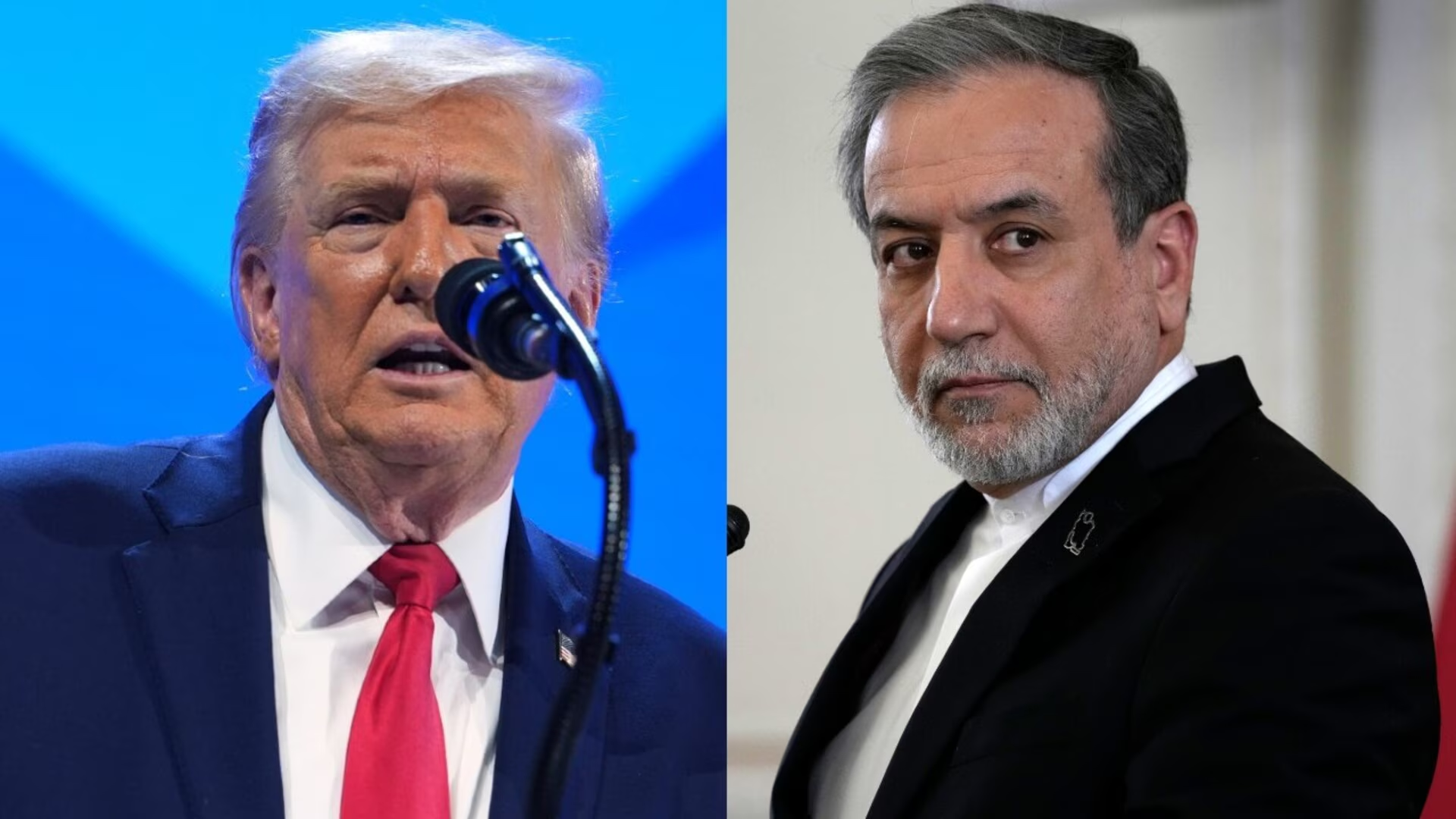
New US-Iran strikes put the interim peace deal at risk, and Trump threatens to escalate the military conflict
Renewed US-Iran strikes are putting pressure on the interim ceasefire, heightening concerns of a broader conflict as tensions rise in the Strait of Hormuz.
A new round of escalating strikes between Iran and the US continued on Sunday, further undermining the fragile interim peace agreement between the two countries and prompting President Donald Trump to threaten violence that would ensure Iran “will no longer exist.”
On Sunday, Tehran initiated drone and missile assaults on Bahrain and Kuwait following recent US strikes on locations in southern Iran and issued a warning of a “complete halt” to negotiations aimed at resolving the conflict, as reported by the UK Guardian.
Trump stated that there may soon be a moment when he would cease negotiations and the US would “militarily finish the job.” The US president shared on social media: “If that happens, the Islamic Republic of Iran will no longer exist!”
Kuwait, home to a significant US Army base, reported the interception of two ballistic missiles, with no injuries or damage reported. Meanwhile, Bahrain’s interior ministry indicated that the Iranian strikes had caused damage to a residential building near the international airport but confirmed that there were no fatalities.
The interior ministry of Qatar reported that one Qatari national lost their life and another individual sustained injuries from shrapnel resulting from “military operations in the area.” The two were on a boat that went missing on Saturday and was found early on Sunday.
The recent violence has been sparked by attempts to reopen the Strait of Hormuz to all shipping without Iran’s direct oversight. The strategically important waterway, which transported a fifth of the world’s oil and liquid gas supplies prior to the war, has historically been regarded as an international passageway.
US Central Command stated that its strikes were a direct response to ongoing Iranian aggression towards commercial shipping, specifically targeting Iranian military surveillance, communications, air defense, drone storage, and mine-laying facilities.
Washington has been advocating for a southern route along the coast of Oman, whereas Tehran, which ultimately intends to impose fees for the use of the strait, prefers that ships navigate a northern route through its waters and under its jurisdiction.
Hundreds of vessels, including oil-laden tankers, have been trapped inside the Gulf due to the closure of the strait since the outbreak of war. Some have navigated the passage through the past two weeks, resulting in a decline in oil prices to near pre-war levels and providing relief to economies globally.
The US military has accused Iran of breaching the ceasefire on Saturday by launching an attack on the Panama-flagged tanker Kiku, which was transporting crude oil for Qatar’s state-run energy company. Ship-tracking websites indicate that the Kiku seemed to be trying to navigate the southern corridor close to the coast of Oman.
During a state visit to Iraq on Sunday, Abbas Araghchi, Iran’s foreign minister, reaffirmed Tehran’s assertion of exclusive control over the waterway. He stated in Baghdad: “Any interference in this matter, any attempt to establish new or separate arrangements from those currently being carried out by the Islamic Republic of Iran, will only result in further complications, prolong the reopening of the Strait of Hormuz, and heighten the level of tension.”
Observers indicate that Iran is leveraging its capacity to threaten shipping in the strait not only as a bargaining tool in negotiations with the US but also to intimidate neighboring countries and assert a more dominant position in the region, according to a report by the Guardian.
Aragchi also advocated for the creation of a security framework with Gulf countries that would not involve the US. He stated, “We ought to establish a new framework that encompasses all countries in the region, free from the presence or interference of any external nation.”
Mediators from Qatar and Pakistan successfully facilitated a meeting between representatives of Washington and Tehran in Switzerland earlier this month. However, they have struggled to reconcile significant differences on contentious topics, including the future of the Strait of Hormuz, sanctions relief for Tehran, and the trajectory of Iran’s nuclear program. Under the memorandum of understanding signed earlier this month, the two countries have a period of 60 days to finalize the details before executing a final agreement.
Leaders in Tehran and Washington are currently navigating domestic political pressures that compel them to steer clear of renewed conflict. For the time being, they seem dedicated to maintaining a ceasefire, even in the face of frequent aggressive rhetoric.
The Islamic Revolutionary Guard Corps took responsibility for the two new attacks on Sunday. It stated: “Inform the adversary that breaching the ceasefire … will result in a total suspension of current activities.”
The IRGC, which oversees Iran’s ballistic missile arsenal, has increased its influence in the country in recent months. Its navy command stated that American bases in the region would face severe challenges in the upcoming days.