Myanmar destroys drugs worth more than $600 million that were seized as part of a bigger attempt to stop drug trafficking.
In an action across the whole country to mark the UN’s International Day Against Drug Abuse and Illicit Trafficking, heroin, methamphetamine, opium, ketamine, marijuana, and other illegal drugs worth more than $600 million were destroyed.
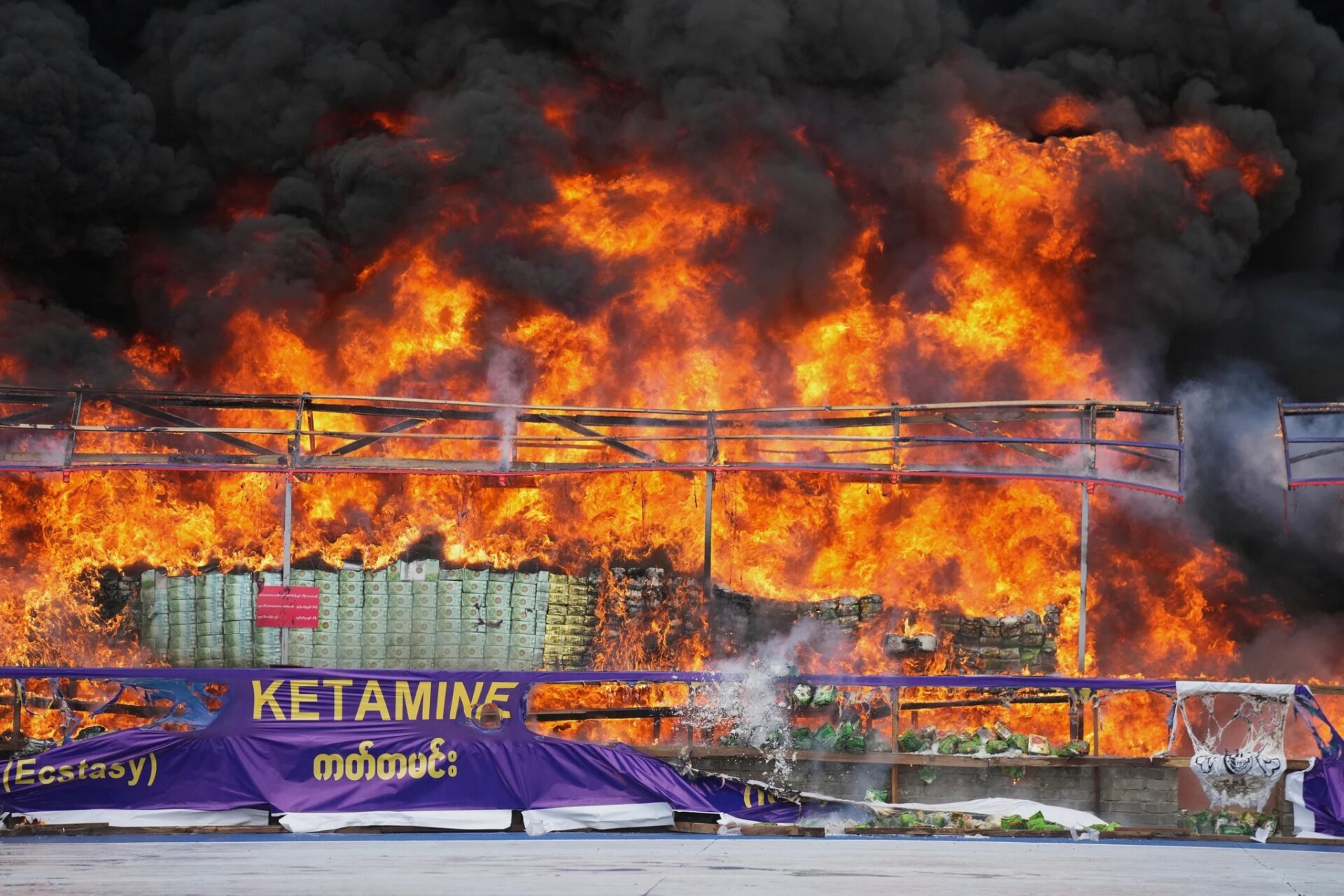
On Friday, police burned more than 50 tonnes of drugs they had seized in one of the biggest public drug destruction drills in the country. Thick black smoke filled the air around the edges of Yangon.
Police Lt. Col. Aung Myat Soe of Yangon’s Anti-Drug Police Force said that the drugs destroyed across the country were worth more than $600 million on the black market. This is more than double the value of the drugs destroyed during the same drill last year.
At a bus station complex on the edge of the city, Aung Myat Soe told reporters, “In Yangon alone, about $321 million worth of 31 different types of drugs were destroyed.” The drugs had been set on fire.
Similar rituals of destruction were held in Mandalay and Taunggyi, the capital of Shan State. These cities are closer to where most of the drugs in the country are made.
Myanmar, which is also called Burma, has been one of the biggest makers of heroin and methamphetamine in the world for many years. It sends these drugs to East and Southeast Asia.
Even though the country has had many operations to stop drug crime, the ongoing political instability and armed battles have made it easier for people to make illegal drugs.
Experts say that the military takeover in 2021, which led to a civil war between the ruling junta, pro-democracy forces, and ethnic armed groups, has made it easier for people to make and sell drugs.
Myanmar’s military government said earlier this year that it had taken what it called the country’s “largest-ever seizure” of illegal drugs and tools used to make drugs. This was after raids on 12 drug production sites in northern Shan State.
In many places of Myanmar, ethnic armed groups are still in charge, and many of them are fighting the government. Some of these groups are accused by the military of getting money for their insurgencies from the illegal drug trade and blocking peace talks to protect the profitable business.
There have been links between some armed groups and drug trafficking in the past, but other groups have started anti-drug efforts in areas they control.
The Ta’ang National Liberation Army (TNLA), which recently agreed to a ceasefire with the military after taking over large parts of northern Shan State, said on Thursday that it would destroy illegal drugs worth about $5.5 million in areas it controls.