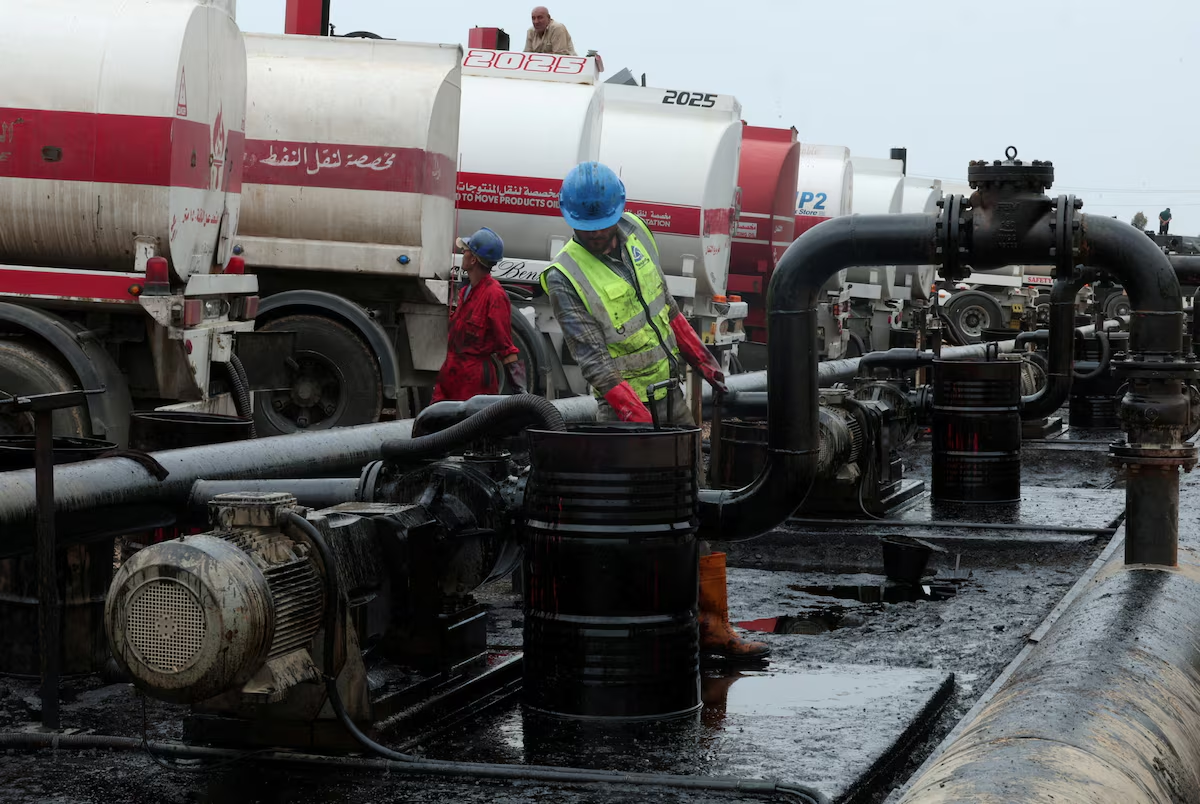
Oil prices have reverted to levels seen before the conflict, as the recovery of Middle East exports and enhanced shipping flows alleviate supply worries.
Global oil prices fell on Thursday, reverting to levels observed prior to the onset of the Iran conflict, as traders concentrated on the recovery of supply flows from the Middle East instead of demand-related concerns.
Brent crude futures for August delivery decreased by $1.28, or 1.74%, settling at $72.46 per barrel. Meanwhile, US West Texas Intermediate crude declined by $1.15, or 1.63%, trading at $69.19 per barrel during the morning session.
The decline occurred as energy markets reacted to indications that oil shipments through the strategically significant Strait of Hormuz have mostly rebounded. US Energy Secretary Chris Wright stated that export volumes navigating through the waterway were nearing normal levels, with over 20 million barrels transported in the last 24 hours.
Wright observed that although traffic has seen considerable improvement, a complete return to normal operations might still require several weeks as efforts persist to clear mines and fully restore navigational confidence in the region.
Market analysts indicated that the recent surge in activity primarily involves tankers departing from the Gulf, whereas incoming traffic continues to be below normal due to persistent safety concerns. Shipping firms and insurers are likely to maintain a cautious approach until security conditions show further improvement and insurance costs reach a stable point.
Increased pressure on prices arose from the anticipation that crude supplies from the region will persist in their growth. Iran is expected to boost oil exports after a brief relaxation of US sanctions, which will likely lead to a more subdued forecast for global crude markets.
Analysts at Goldman Sachs have indicated that they do not anticipate a significant increase in Iranian oil production, even if sanctions relief continues beyond the current August deadline.
The bank noted that China is anticipated to continue being the main destination for Iranian crude, as the restrictions placed by European and British authorities on Iranian oil shipments and vessels persist in constraining wider market access.
Last week’s agreement to end hostilities between the United States, Israel, and Iran has contributed to a renewed sense of confidence in the region, facilitating a more unrestricted flow of commercial shipping through the Strait of Hormuz.
The agreement also set forth a 60-day negotiating period intended to tackle more intricate matters, such as Iran’s nuclear activities. Wright conveyed assurance that oil shipments via the waterway would persist, even in the face of potential challenges in diplomatic discussions.
In a continued effort to alleviate congestion, Oman launched temporary shipping routes on Wednesday, collaborating with international maritime authorities to enhance tanker movements in the region.
Uncertainty regarding oil production quotas within OPEC has reemerged, following remarks from a senior Iraqi oil ministry official who suggested that Baghdad might consider alternative options if its production allocation does not see a substantial increase.
The comments have sparked fresh interest in Iraq’s future position within the producer group, especially in light of the United Arab Emirates’ exit earlier this year. Iraq continues to be one of OPEC’s founding members and has traditionally held a pivotal position within the organization.