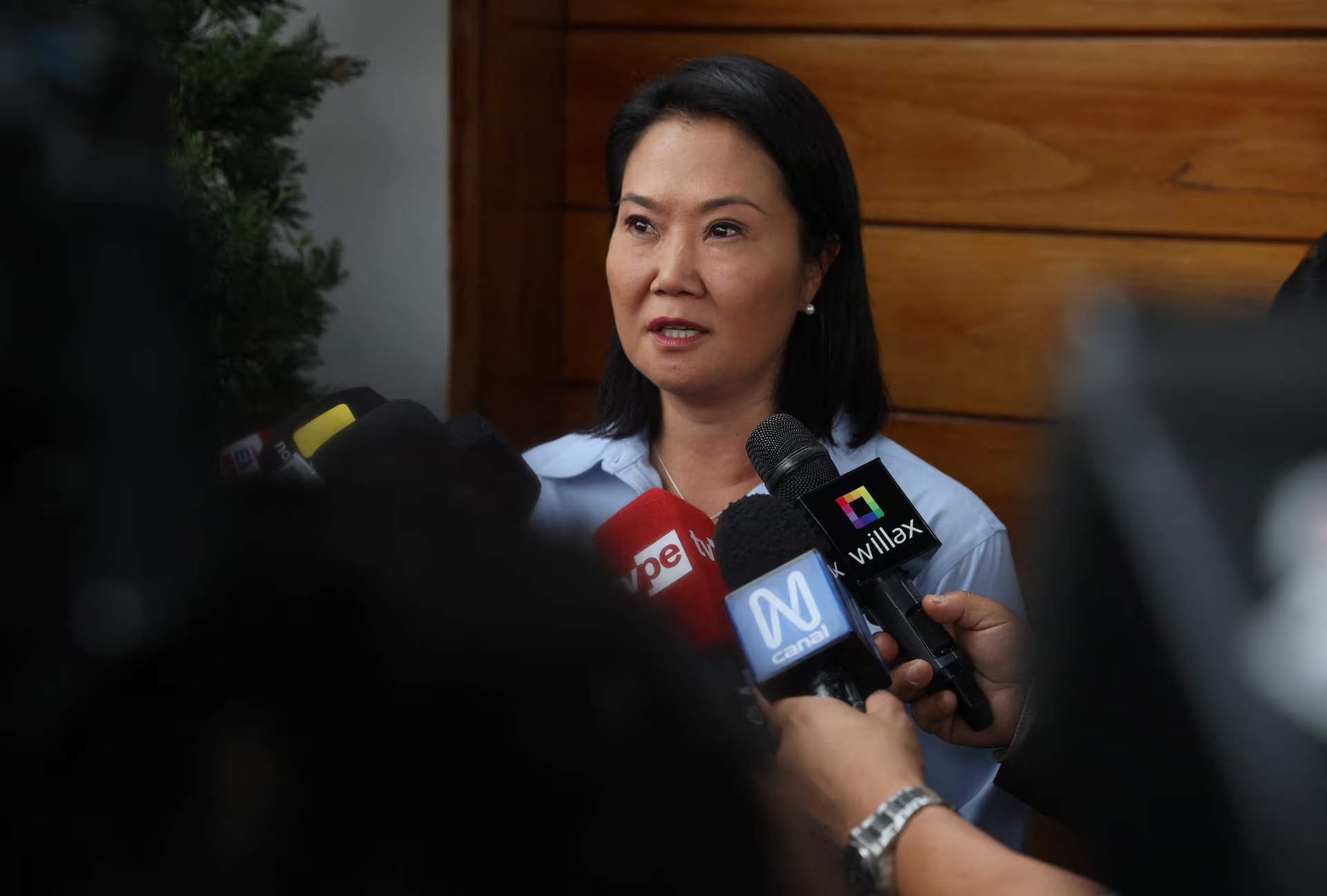
Keiko Fujimori’s anticipated triumph brings back a contentious legacy to Peru
Keiko Fujimori’s success in her fourth attempt for the presidency of Peru brings a contentious political dynasty back into power, reigniting profound divisions that have historically divided the South American nation.
Conservative Fujimori, 51, achieved a narrow victory over leftist congressman Roberto Sanchez in one of the closest elections in Peru’s modern history, securing a razor-thin win in the June runoff that took weeks to finalize.
The contest unfolded with questioned ballots and an extended vote count, yet international observers reported that both rounds proceeded without incident. With 98.86% of the vote counted, Fujimori secured a commanding lead late on Tuesday.
Sanchez has alleged fraud and stated that he will not acknowledge Fujimori’s victory. Peru’s ONPE electoral authority is set to announce the winner officially in mid-July.
She is poised to take office on July 28 for a five-year term as Peru’s copper-exporting economy faces challenges from rising crime, corruption, and political instability—no Peruvian president has successfully completed a full term in the last decade.
Fujimori is set to become the first elected female president of Peru. Her victory comes after three prior unsuccessful attempts—in 2011, 2016, and 2021—each determined by slim margins and influenced, in part, by a longstanding “anti-Fujimori” vote that has characterized the nation’s elections for years.
Analysts indicate that her resilience highlights the lasting strength of “Fujimorismo,” the movement established by her late father, former president Alberto Fujimori. He was a controversial leader who held power from 1990 to 2000, recognized for establishing stability in the nation but criticized by opponents as authoritarian. He served 16 years in prison for human rights abuses committed during his time in power and passed away in 2024 following his release.
Family legacy
Keiko Fujimori began her public life at a young age, taking on the role of de facto first lady at just 19 following her parents’ separation. She subsequently established her own political foundation, securing a congressional seat in 2006 with the highest vote count ever achieved by a Peruvian lawmaker.
Having previously distanced herself from her father’s legacy, she has now increasingly embraced it, positioning herself in this campaign as a strong leader capable of restoring order as Peru faces rising crime and extortion rates.
Among her proposals was the revival of “faceless judges,” a contentious system employed in the 1990s to prosecute terrorism and drug cases, which was subsequently criticized by rights organizations for compromising due process.
She has highlighted the importance of economic stability, the respect for private property, and the need for closer ties with Washington, reflecting the stance of other conservative governments in the region.
Her political career has been marked by legal troubles. Fujimori spent almost a year and a half in pretrial detention from 2018 to 2020 due to allegations of illegal campaign financing, which were dismissed last year.
Her running mate, Luis Galarreta, has characterized that period as transformative, portraying a “new Keiko” who is more introspective and practical.
“She emerged from prison without resentment,” Galarreta stated in an interview with Reuters, noting that she now focuses more on establishing a well-organized political entity.
Fujimori continues to be a polarizing figure. Opponents contend that her right-wing Popular Force party, which has historically been a significant presence in Congress, is anticipated to maintain the largest minority bloc with 41 seats in the lower house and 22 in the Senate for the 2026 to 2031 legislature and has played a role in Peru’s ongoing cycle of instability.
Protests opposing her candidacy attracted hundreds of leftist supporters and civil society organizations in Lima in the lead-up to the runoff. Just 11% of the electorate cast their votes for her in the first round of the election.
Fujimori will encounter a divided party system that has struggled to establish enduring governing coalitions. Corruption scandals have implicated nearly every Peruvian leader in the past thirty years.
The country has experienced a succession of eight presidents and 21 prime ministers in the past decade, resulting in a significant absence of a cohesive national government.
Fujimori succeeds Jose Balcazar, who took office earlier this year following the removal of his predecessor by Congress due to a scandal related to undisclosed meetings with a Chinese businessman.
Peru’s legislature has reverted to a bicameral system, where no party possesses a majority in either chamber. This situation has complicated governance and led to ongoing impeachments.
Analysts suggest that right-wing allies may provide Fujimori with a slight advantage. Her Popular Force party will hold 22 of the 60 Senate seats, providing sufficient power to obstruct impeachment.
Eileen Gavin of Verisk Maplecroft noted that, although opposition to Fujimori has somewhat lessened during the campaign, it remains a significant force.
“It remains uncertain whether her rivals on the far right and center-right in Congress will be inclined to formally ally with the Popular Force,” Gavin stated, cautioning that such divisions could hinder effective governance.
Gavin remarked that the hopes for Peru to finally break free from its cycle of revolving-door presidents might be unfortunately unfounded.