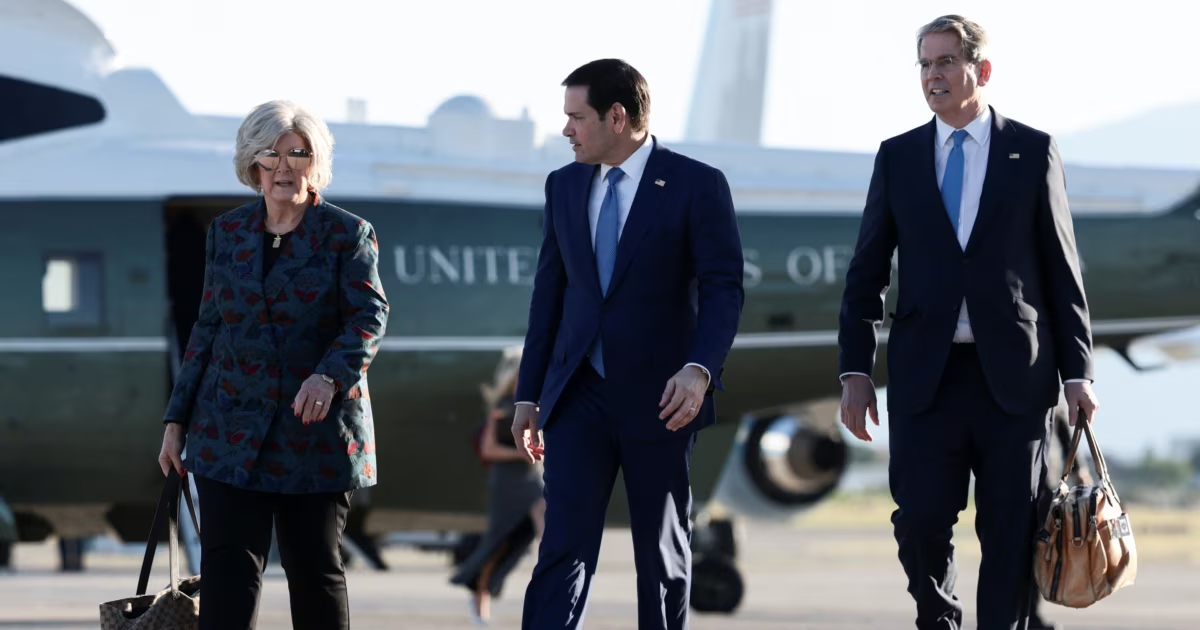
U.S. Secretary of State Marco Rubio will embark on a trip from Tuesday to Thursday to the United Arab Emirates, Kuwait, and Bahrain. This visit presents an opportunity for the Trump administration to directly present its preliminary Iran accord to Gulf Arab allies.
During his time in Bahrain, Rubio is set to engage with the Gulf Cooperation Council (GCC), which consists of six Sunni monarchies, including Saudi Arabia, Qatar, and Oman, as stated by State Department spokesperson Tommy Pigott on Monday.
While GCC leaders have generally backed initiatives to resolve the U.S. – Israeli conflict with Iran: Numerous individuals express unease regarding the particular stipulations outlined in the memorandum of understanding that U.S. President Donald Trump signed last week.
Regional officials are particularly concerned about the potential establishment of a $300 billion reconstruction fund for Tehran. Gulf leaders fear that the Islamic Republic may utilize this fund to enhance its military capabilities and finance proxy groups in the region. The MoU’s inability to tackle Iran’s ballistic missile program is causing concern among Washington’s Gulf allies, who have faced Iranian missile and drone attacks in recent months.
The UAE, Saudi Arabia, Kuwait, Bahrain, and Qatar all host U.S. military bases that form the backbone of America’s security architecture in the Middle East. Should any of those countries reconsider their security relationship with the U.S., even in a subtle manner, it could significantly influence U.S. military strategy in the region.
The Rubio trip occurs during a wider surge of diplomacy related to Iran. On Wednesday, Trump signed the Iran MoU during his visit with French President Emmanuel Macron in Versailles, initiating a 60-day period for Washington and Tehran to negotiate a more comprehensive agreement.
Over the weekend, a team of U.S. negotiators, headed by Vice President JD Vance, participated in discussions facilitated by Qatari and Pakistani officials in Switzerland. The initial round of discussions wrapped up on Monday, with technical conversations anticipated to persist throughout the week.
Information regarding Rubio’s trip, including the exact schedule of his visits to the UAE, Kuwait, and Bahrain, as well as the names of the leaders and officials he is expected to meet, has not been released at this time.
In the statement, Pigott, the State Department spokesperson, indicated that Rubio, who also holds the position of White House national security advisor, would “discuss a range of regional priorities, including the memorandum of understanding with Iran, efforts to secure full and free safe transit through the Strait of Hormuz, and the importance of peace and stability in the region.”