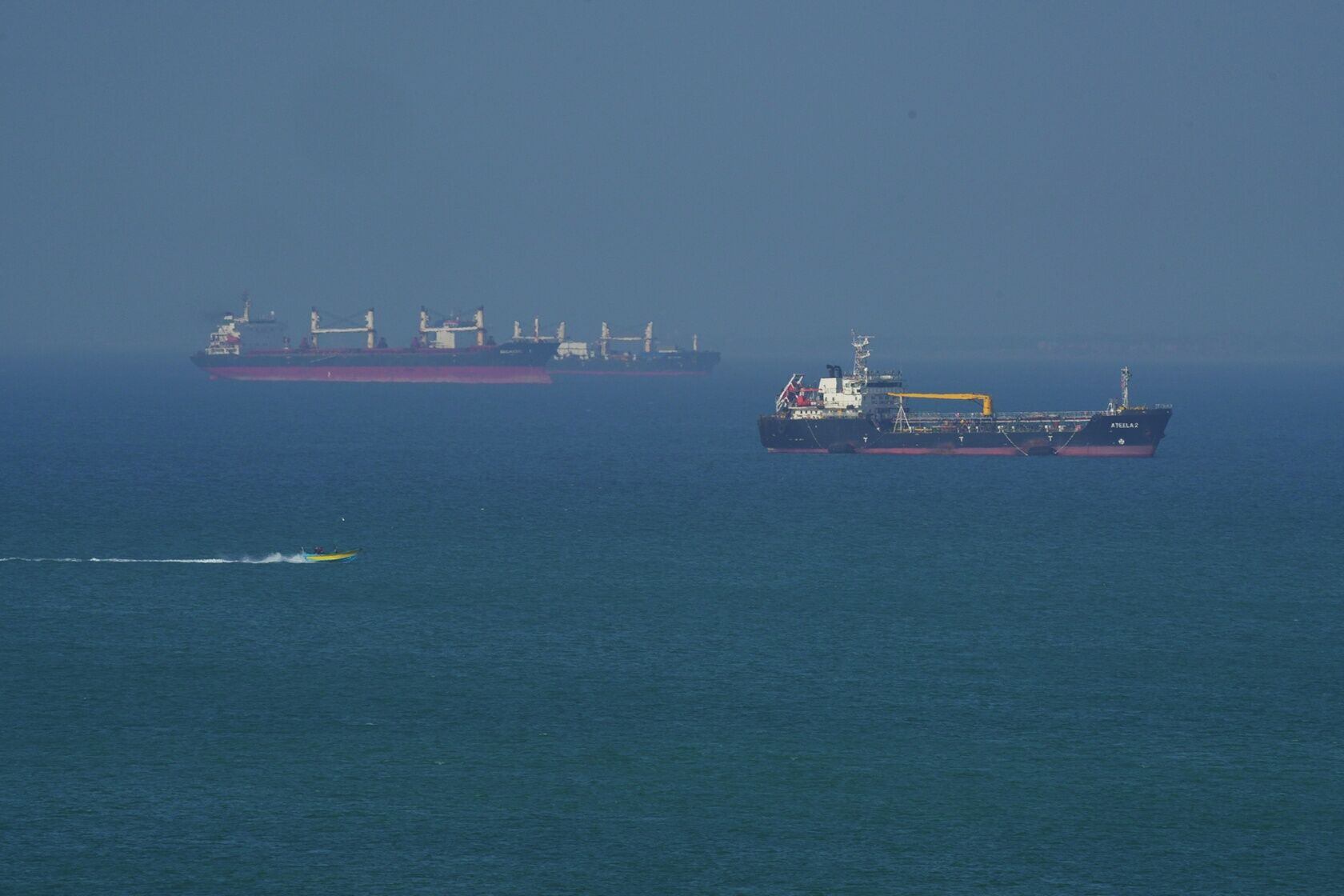
Qatar successfully navigated four LNG carriers through the Strait of Hormuz, even as vessel traffic decreased amid heightened regional tensions.
Four liquefied natural gas carriers operated by Qatar have entered the Strait of Hormuz, as maritime traffic in the area continues to be low following Iran’s announcement that the passage was once again closed over the weekend.
The vessels Wadi Al Sail, Mekaines, Al Sadd, and Mesaimeer were navigating a route close to Iranian waters, signifying their inaugural passage through the strait amid escalating tensions involving the United States, Israel, and Iran, as reported by maritime analytics firm Kpler.
QatarEnergy has not yet commented on the recent vessel movements, despite experiencing considerable disruption in its LNG export operations since hostilities began.
Shipping records indicated that the bulk carrier Summit Success, registered in the Marshall Islands, entered the Gulf on Monday.
Maritime traffic through the strait has significantly decreased recently. Kpler data indicated that only five vessels transited the waterway on Sunday, a decrease from the 26 ships recorded the previous day.
Among those making the crossing were three Very Large Crude Carriers, each transporting approximately two million barrels of Saudi crude oil and fuel products, with one vessel reportedly headed for Japan.
Industry observers noted that the actual number of ships operating in the area could be greater, as some vessels may be navigating with tracking systems disabled.
Last week, Iran relaxed traffic restrictions in the Strait of Hormuz following an agreement with the United States to prolong a ceasefire arrangement designed to facilitate diplomatic negotiations. In response to Israeli military actions in Lebanon, Tehran’s Revolutionary Guard declared that they would once again close the waterway.
Despite the uncertainty, the US Central Command reported that 55 commercial ships successfully navigated the strait on Saturday, transporting over 17 million barrels of oil intended for international markets.
Data indicated that multiple tankers transporting crude from the United Arab Emirates, Kuwait, and Iraq departed the strait during the same timeframe, in addition to vessels carrying refined petroleum products.
A total of 13 additional ships made their way into the passage on Saturday, among them two Very Large Crude Carriers.
Iranian authorities maintain that oil exports will persist despite the ongoing disruption. Hamid Bovard, the leader of the National Iranian Oil Company, stated that over 25 million barrels of Iranian crude have passed through the effective blockade zone since Monday.
In the meantime, regional energy producers have modified their export strategies. Abu Dhabi National Oil Company and Kuwait Petroleum Corporation have reportedly provided buyers with the choice of loading crude cargoes from either side of the Strait of Hormuz.
South Korea’s Ministry of Oceans and Fisheries has confirmed that two vessels operated by Korean companies recently navigated through the strait following the interim peace agreement reached between Washington and Tehran last week, though the identities of the ships remain undisclosed.
ADNOC’s two LNG tankers were en route to India on Monday, having recently departed the Gulf with their cargoes. Shipping data indicated that Al Hamra was in the process of unloading at the Ennore LNG terminal, whereas Mubaraz was set to discharge its cargo at Kochi on June 23.
Both vessels had briefly vanished from public tracking systems before resurfacing off India’s coast with LNG shipments. ADNOC has not yet provided a response to requests for comment.
Maritime analysts reported that Al Hamra and Mubaraz have successfully undertaken two untracked voyages through the Strait of Hormuz since the onset of the conflict.