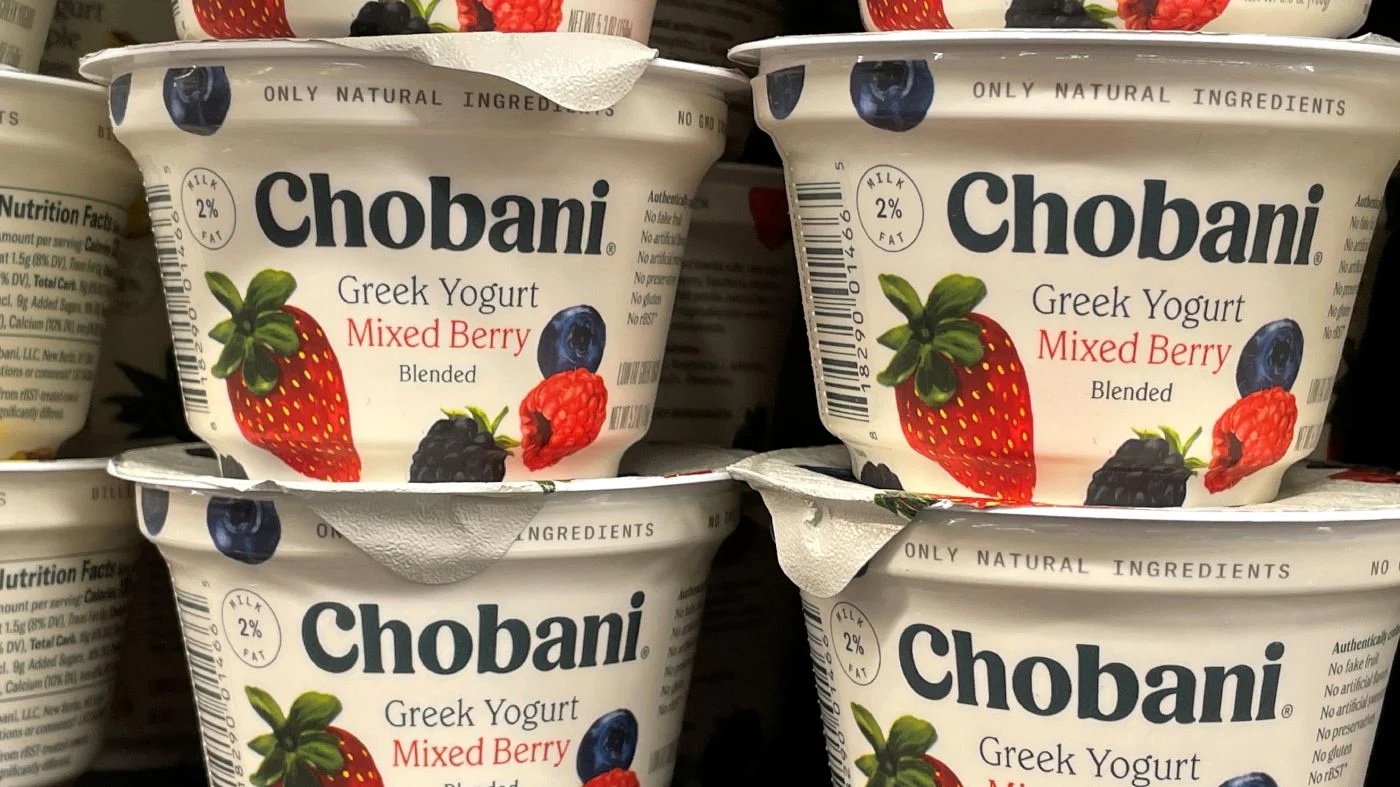
Danone’s lawsuit against Chobani regarding protein claims highlights the French dairy company’s perception of its U.S. competitor as a significant threat in a food category that is experiencing growth due to weight-loss drug users, both during and after their GLP-1 treatment: yogurt.
Danone, facing challenges in satisfying the increasing consumer demand for high-protein products, filed a lawsuit against Chobani in Manhattan federal court on Monday. The company claims that Chobani has overstated the protein content on the labels of its Chobani 20G Protein tubs, which Danone sees as a direct rival to its Oikos Pro in the high-protein yogurt market.
The competition for protein dominance is especially significant in the United States, where an increasing number of users of GLP-1 weight-loss medications are turning to protein-rich products to address muscle loss. A consumer study conducted by Boston Consulting Group revealed that, in contrast to products like protein shakes, yogurt is one of the few foods that experiences a more lasting increase in demand due to weight-loss medications.
High-protein foods such as yogurt and meat appear to become more prevalent during and even more so after discontinuing GLP-1s,” stated Lauren Taylor, managing director and senior partner at BCG.
The company based in Paris has accused Chobani of replicating its product and deceiving consumers to boost sales, claims that Chobani has rejected. Danone also stated that Chobani’s strategies were enabling it to undercut Danone’s €1 billion Oikos brand in terms of pricing.
Chobani CEO Hamdi Ulukaya claimed that Danone was making unfounded accusations to create negative publicity for the privately held New York company he founded in 2007. “In a way, I am laughing at it,” Ulukaya remarked to Reuters. We do not incorporate any external protein into our products. We will always be transparent with everyone.
Danone stated that it believes consumers ought to have the ability to compare products using clear, accurate, and consistent nutrition information. Chobani’s multi-serve labeling is said to exaggerate its serving size, which the company argues is misleading to consumers, preventing them from making “an accurate comparison between products.
DANONE CONFRONTING INTENSE COMPETITION
Danone, which emphasized its challenges in fulfilling the exceptionally high demand for high-protein yogurts in the latter half of 2025, is consistently increasing its production capacity. Barclays analysts noted in May that investors are becoming anxious due to what they perceive as a lack of urgency regarding the recovery of Danone’s U.S. dairy business.
The company’s shares have decreased by 15% this year, in contrast to an 11% increase in the MSCI World Index.
Competitors, particularly Chobani, are performing significantly better and are currently experiencing growth of over 20%,” Barclays stated. There is a perception that Danone has lagged in expanding its capacity and may need to invest more to effectively compete with assertive rivals like Chobani.
Chobani shared NielsenIQ data indicating that the company’s U.S. market share reached 26% in the first quarter of this year, an increase from 21% three years prior. Danone’s share decreased to 25.8% from 30.7% during the same period.
Danone’s dairy unit experienced a 3% increase in like-for-like sales in the Americas during the first quarter of this year, according to filings.
The company has initiated legal action against Chobani on at least four occasions since 2016, with the latest case concerning coffee packaging slogans; Ulukaya noted that earlier lawsuits have been dismissed.
Danone files lawsuits against Chobani four or five times annually for various reasons,” stated Brad Charron, a former marketing executive at Chobani who currently leads the plant-based protein brand ALOHA. If you are unable to compete with them, consider legal action.
Charron mentioned that many large consumer packaged food companies will adjust serving sizes to present aspects such as protein content in a different manner. He stated, “Ultimately, I believe the consumer is astute enough to discern whether they are being misled in one direction or another.