US-Iran discussions commence in Switzerland as Tehran asserts closure of the Strait of Hormuz
US-Iran discussions commence in Switzerland as Tehran asserts closure of the Strait of Hormuz amidst rising tensions over the Lebanon ceasefire.
Direct discussions between the US and Iran are set to commence in Switzerland on Sunday, even as Tehran asserts that it has once more shut the Strait of Hormuz in response to Israeli strikes in southern Lebanon.
Iran stated that the closure was triggered by what it characterized as a violation of its agreement with the US to conclude the war. However, the US military contested the assertion, maintaining that maritime traffic continues to be unaffected.
US Vice-President JD Vance arrived in Switzerland early on Sunday in anticipation of a new round of negotiations set to commence later in the day.
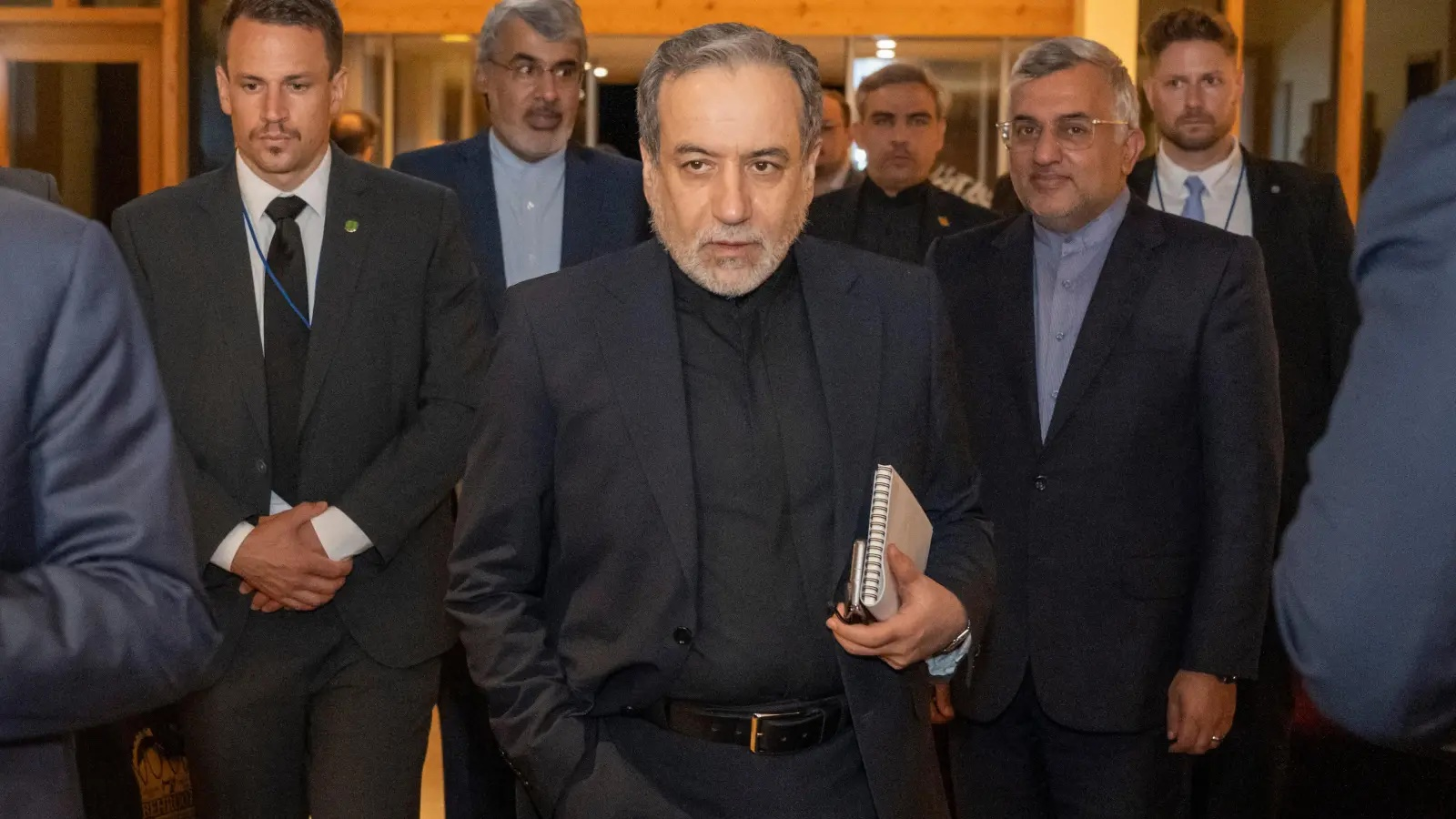
An Iranian delegation, headed by parliamentary speaker Mohammad Bagher Ghalibaf and Foreign Minister Abbas Araghchi, arrived on Saturday night.
Officials from both nations will be accompanied by Pakistan’s Prime Minister Shehbaz Sharif and the military chief, Field Marshal Asim Munir, as Islamabad maintains its position as a mediator in the ongoing conflict.
“Pakistan will maintain its support for the implementation of the agreements between Iran and the United States,” stated the Pakistan Ministry of Foreign Affairs in a statement prior to the discussions.
Before leaving for Switzerland, Vance expressed his hope to advance discussions on the nuclear issue and the Lebanon ceasefire issue.
Regarding the situation in Lebanon, he remarked: “Things are actually improving there, and the pace is easing a bit.”
“We will need to consistently oversee the situation to guarantee the safety and security of both Israel and Lebanon.” “The primary objective of this initiative is to ensure the safety and security of the entire region,” he stated.
Iran’s foreign ministry spokesman, Esmail Baghaei, stated that Tehran would be “demanding that the other side fulfil its commitments.”
The discussions follow closely on the heels of an initial agreement signed by US and Iranian leaders, which seeks to bring an end to the conflict, including hostilities in Lebanon, with immediate effect. The agreement also binds both parties to engage in additional negotiations over the next 60 days in search of a final settlement.
The situation has been made more complex due to ongoing confrontations between Israel and Hezbollah. Lebanon’s health ministry reported that at least 47 individuals lost their lives on Saturday due to a series of Israeli air strikes.
The Israel Defense Forces (IDF) reported that it targeted 80 sites associated with Hezbollah, resulting in the deaths of “dozens” of fighters. Additionally, the IDF confirmed the loss of four Israeli soldiers.
Despite ongoing exchanges of fire between Israel and Hezbollah following the announcement of the US-Iran agreement, a ceasefire between the two parties was confirmed on Friday.
Prior to the agreement, Israel asserted that it would not pull its forces out of Lebanon and contended that its conflict with Hezbollah was distinct from the war involving Iran.
Hezbollah has accused Israel of trying to “sabotage” the wider US-Iran agreement by persisting with its military operations in Lebanon.
The US has expressed criticism of Israel’s continued actions in Lebanon, which became directly engaged in the conflict after Hezbollah fired rockets into Israel following US-Israeli strikes that resulted in the death of Iran’s supreme leader.
Lebanon’s health ministry reports that since hostilities between Israel and Hezbollah resumed on 2 March, there have been 4,057 fatalities.
Iran’s Islamic Revolution Guard Corps (IRGC) stated that Israeli strikes in Lebanon breached ceasefire commitments and declared that the Strait of Hormuz had been closed once more after having previously reopened following the US-Iran agreement.
The Iranian military defended its actions by alleging that Washington has not adhered to the initial clause of the 14-point memorandum of understanding, which demands “the immediate and permanent termination of military operations on all fronts, including in Lebanon.”
However, US Central Command (Centcom) dismissed Iran’s claim. Centcom spokesperson Tim Hawkins stated that “traffic continues to flow” through the strategic waterway.
He stated that US forces were “monitoring the situation to ensure this remains the case,” emphasizing that “Iran does not control the Strait of Hormuz.”
Centcom also revealed that 55 merchant ships transporting over 17 million barrels of oil for global markets navigated through the strait on Saturday.