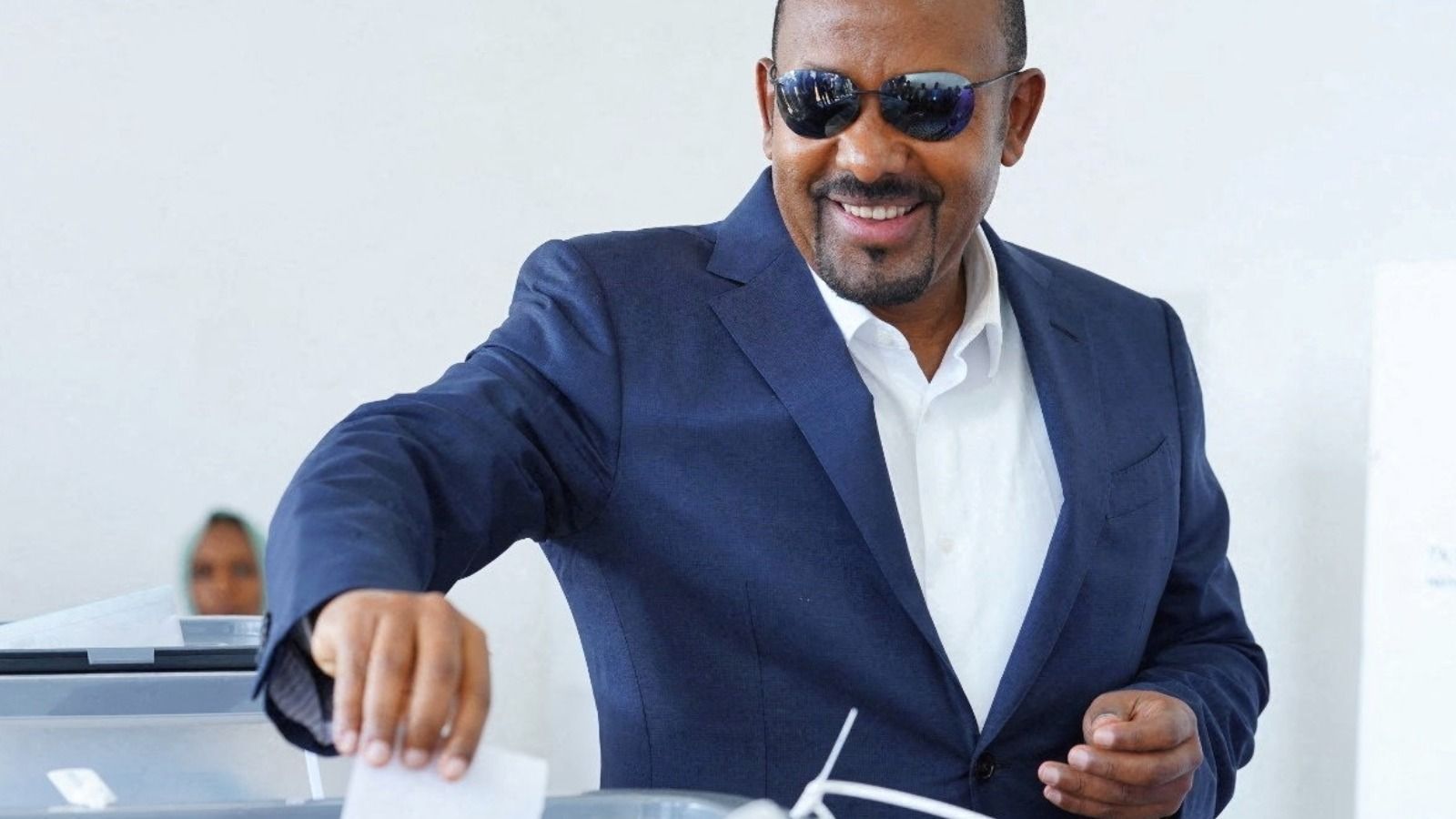
The Prosperity Party of Ethiopian Prime Minister Abiy Ahmed won another large majority in the parliament in this month’s elections. The national election board announced the results on Sunday.
Many people thought that Abiy’s party would win the elections against a weak opposition. He was appointed in 2018 after large protests against the EPRDF alliance, which had been in power for a long time. His Prosperity Party was born the next year.
Abiy’s party secured 438 seats, approximately 90% of the seats for which Facebook broadcast the results live. To get a majority, it needed 274 votes.
Because people in Tigray and some parts of Amhara did not vote, not all 547 places in the lower house of parliament were contested.
The Prosperity Party got about the same number of seats in the last election, which was in 2021.
Even though there are emergencies, Abiy has maintained power.
The Prosperity Party replaced a coalition of parties that had ruled Ethiopia for over 25 years. This has helped Abiy, 49, strengthen his control over national politics, even though he has faced violent resistance in some of the country’s biggest regions.
This time, Prosperity Party candidates discussed better food security and strong economic growth in Africa’s second-most populous country, which officials say will reach 10% in 2026, which is one of the fastest rates on the continent.
More than 50 million people were registered to vote; however, no election took place in the northern Tigray area because organizers cited “unfavorable conditions” due to ongoing political unrest and the aftermath of a two-year civil war.
The government also has to deal with uprisings in the two largest areas of the country. Ethnic groups’ complaints about their exclusion from Ethiopia’s federal system cause these uprisings.
Voting is restricted in some parts of the country.
In Oromiya, Abiy’s home country in the south, hundreds of people have been killed in the last few years in fighting between the government and the Oromo Liberation Army.
A group called Fano has been taking over large parts of the land in neighboring Amhara since 2023. Because of these developments, people did not vote in at least eight of Amhara’s 138 districts.
A peace deal in 2022 ended the civil war in Tigray, which researchers say killed hundreds of thousands of people. However, last month, the region’s main political party took back control of the region’s government, which made Ethiopian officials and analysts worry about the possibility of new unrest.
The opposition groups say that the federal government is working against them by arresting their leaders and making it illegal for them to do political work. The government denies these claims.
As of mid-February, Reuters has not been able to report from inside Ethiopia because the Ethiopian Media Authority did not renew the credentials of its three writers in Addis Ababa.