Colombia has a runoff election where a radical reformer is running against a new law-and-order candidate
Colombians are participating in a presidential runoff this Sunday to decide if the nation will maintain its leftist trajectory or align with Latin America’s shift to the right by electing a political outsider committed to addressing crime.
Following a crowded first-round election in May that resulted in no clear winner, voters will now select between two candidates in the runoff: leftist Senator Ivan Cepeda and Abelardo De La Espriella, a right-wing lawyer and businessman lacking political experience.
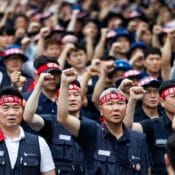
Cepeda, 63, is committed to upholding the policies of President Gustavo Petro, a former rebel and the nation’s first leftist president. These policies encompass state pension payments for the impoverished, labor reforms supported by unions, peace negotiations with armed groups that have opposed the state for decades, and a moratorium on new oil projects.
De La Espriella, 47, is advocating for a complete reversal—halting negotiations with armed groups and initiating an extensive military campaign against them, while also enhancing Colombia’s oil and gas industry.
De La Espriella attributes the country’s economic and security challenges to Petro and has pledged to cut taxes and shrink the size of the state by as much as 40%. However, he has stated that he will maintain Petro’s 23% increase in the minimum wage, along with other widely supported social initiatives.
Whoever emerges victorious will face significant challenges, including substantial public debt and a fractured Congress, which may hinder efforts for reform.
Polls and a cautious market lean towards De La Espriella, who secured the highest number of votes in the first round with 43%, yet analysts anticipate a competitive contest. Both candidates have made significant efforts to increase turnout among the nearly half of eligible voters who did not participate in the May first round.
Security was a primary concern for voters in southwestern Bogota on Sunday. “We must prioritize the restoration of security. It is the sole factor that either ensures our nation’s prosperity or leads us into despair. “I’m concerned that the continuation of Petro’s project will ruin everything,” said taxi driver Enrique Vargas, 58, who supported De La Espriella.
Others were apprehensive about a resurgence of a more intense conflict. “I don’t want the country to descend into a cycle of war that ultimately costs the lives of our children and grandchildren,” expressed Cepeda voter Abigail Pacheco, a 65-year-old pensioner.
REGIONAL SHIFT
In recent presidential elections, voters in Chile, Argentina, Costa Rica, and Ecuador have chosen right-wing presidents. Additionally, Bolivia marked a major change by electing center-right Rodrigo Paz last year, bringing an end to two decades of leftist governance.
In Peru, where votes from a June 7 contest are still being counted, conservative Keiko Fujimori, daughter of former President Alberto Fujimori, who served 16 years in prison for human rights abuses, is positioned to win the presidency after three unsuccessful attempts.
Many of those elections, including Colombia’s, were influenced by worries about increasing crime rates and a struggling economy.
In Colombia, the peace talks initiated by Petro have largely been unsuccessful, as armed groups have increased in power and numbers, and drug trafficking gangs have expanded, resulting in rises in murders and extortion along the Caribbean coast.
De La Espriella has portrayed Petro and Cepeda, the son of a slain communist leader, as accomplices of criminals, despite Petro’s administration claiming to have confiscated more cocaine than any other government. Cepeda has dismissed the allegations, asserting that there is no evidence to support them.
Cepeda has offered a critique of De La Espriella’s legal work for individuals associated with right-wing paramilitary groups and corruption cases, including Alex Saab, who is facing U.S. charges for allegedly laundering money for the ousted Venezuelan President Nicolas Maduro. De La Espriella asserts that his professional relationships are free from any complicity or criminal activity.
U.S. President Donald Trump has taken steps to enhance his nation’s presence and influence in the region, which includes the arrest of Maduro, executing lethal strikes against suspected drug traffickers in the Caribbean, and establishing the Shield of the Americas, a military alliance of right-wing leaders committed to combating drug trafficking.
Trump, who has had a public feud with Petro, openly endorsed De La Espriella this month, stating that the results of Sunday’s race are “critical to the future of Colombia and its relationship to the United States.
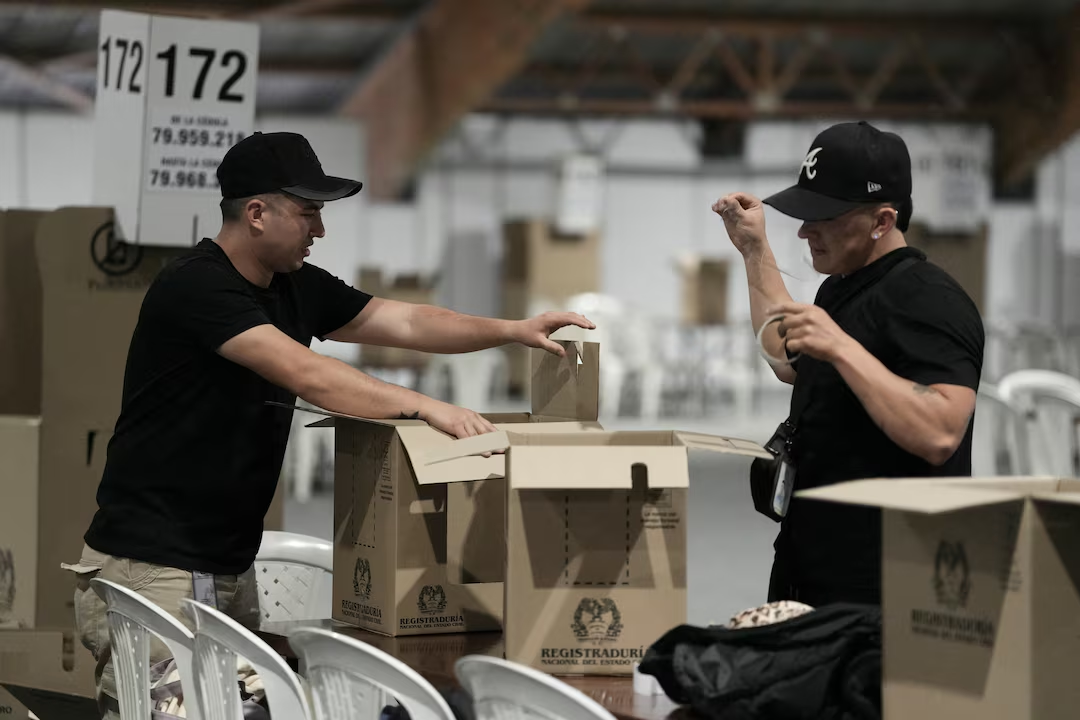
Over 41 million Colombians have the right to vote. Polling commenced for a duration of eight hours, beginning at 8 a.m. local time (1300 GMT). Initial results are anticipated a few hours following the closure of the polls.