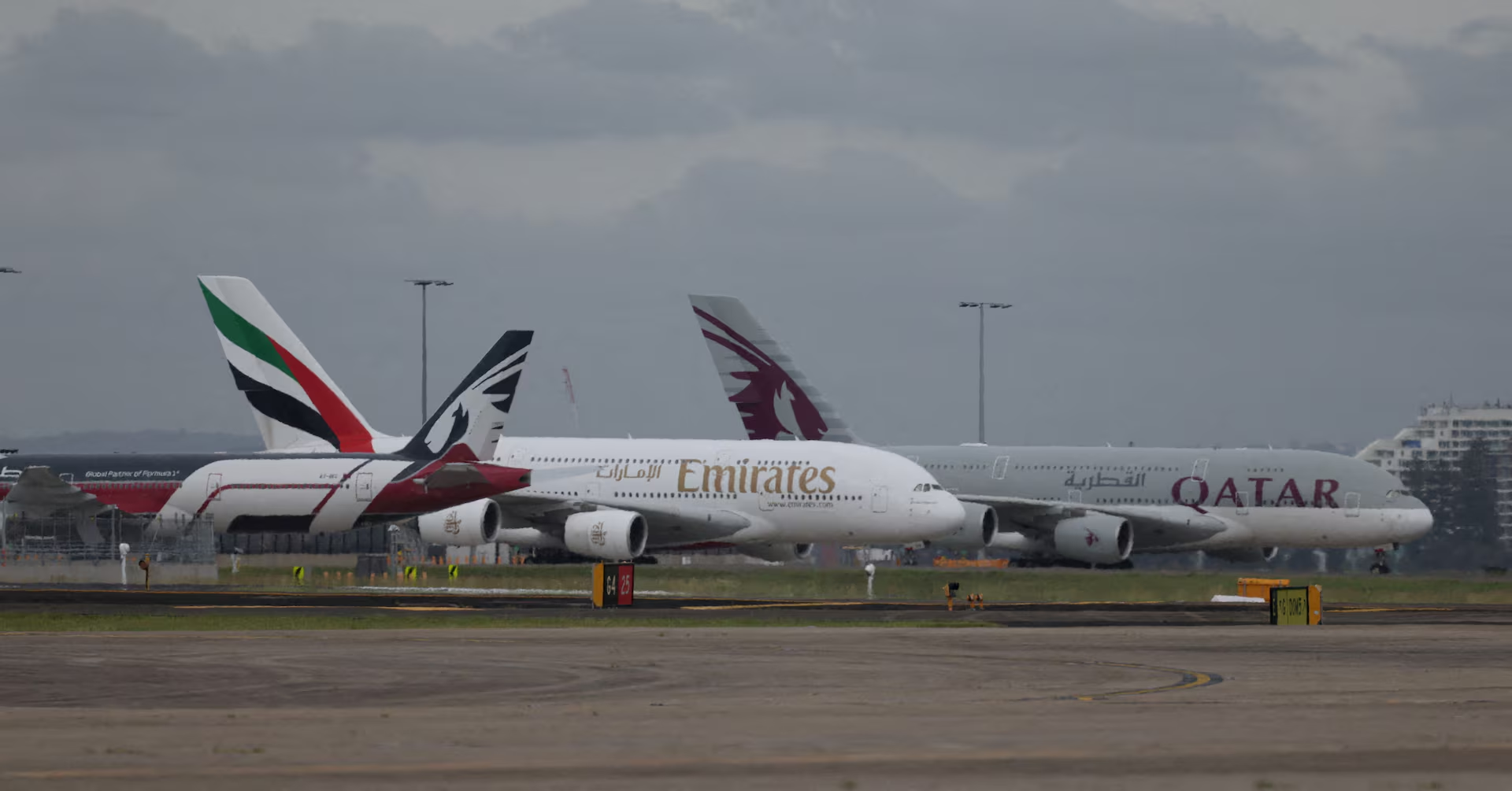
Be quiet about it, but Gulf Airlines has resumed operations.
Some of the largest airlines in the world are based in the Middle East, but the Iranian conflict has disrupted their networks. Recently, Iranian missile and drone attacks have occasionally closed airports and changed traffic routes throughout the Gulf.
According to data from Flightradar24.com, the total number of flights operated by major Gulf airlines has now reached about 82% of what it was on February 27, the day before the conflict began. Recently, Gulf Air and Kuwait Airways have surpassed 100% of that level.
The three largest airlines, Emirates, Qatar Airways, and Etihad, are either above or close to 90% of their pre-war levels. A month ago, Etihad and Qatar Airways were as low as 40–50%. Emirates has remained higher for a longer period of time since it has made significant investments to maintain flights.
Gulf Airlines may have a lot better future after the United States and Iran signed an interim agreement on Wednesday to put an end to the almost four-month confrontation. They are scheduled to discuss implementing the ceasefire accord on Friday.
According to James Halstead, managing partner at Aviation Strategy, the end of hostilities would result in the reopening of the area’s airspace, enabling regional carriers to fully resume operations. “If it gets back to normal, I just see them acting normally and coming back in full force,” Halstead stated.
SAFETY ISSUES
Drone attacks during the Iranian conflict have frequently caused flights headed for the Gulf to detour, limiting routes to a few safe aviation corridors and creating safety concerns for both passengers and crew.
With numerous warnings still in effect, European and Asian airlines have mostly stopped operating flights to the area. However, Australia eased its travel restrictions for a number of Middle Eastern nations this week, which is good news for the transit hub.
Because of the dangers connected to the conflict, the European Union Aviation Safety Agency (EASA) has maintained its warning against flying to the area.
EASA informed Reuters that it will reevaluate its conflict-zone alert for the area, which is in effect until June 24, taking into account the most recent developments. However, it warned it was still “too early to determine whether the observed de-escalation will result in a sustained reduction of risks to civil aviation.”
FALLOUT GOES FAR BEYOND GULF
With significant investments in hotels, airports, and events, the oil-rich Gulf area has been working hard recently to strengthen its position as a worldwide transportation hub and travel destination. The Gulf economies should benefit from the full reopening of the skies.
Last week, Emirates CEO Tim Clark told Reuters that the airline would concentrate on assuring passengers about dependability and safety. According to Flightradar24.com statistics, the carrier located in Dubai is operating at 86% of its pre-conflict flight volume.
From July through December, Etihad is providing free medical travel insurance to guests visiting Abu Dhabi.
Kuwait Airways and Qatar Airways had reached 86% and 87% of their February levels, respectively, while Gulf Air and Etihad had reached 93%. Air Arabia and Flydubai have reduced their flight volumes to 75% and 57% of their pre-war levels, respectively.
The conflict’s aftermath has spread well beyond the Gulf.
Schedules in Europe and Asia have been interrupted, airlines have warehoused jets and conducted long “flights to nowhere” to reposition aircraft, and carriers without oil hedges have been pressed by skyrocketing jet fuel prices that are now declining.
Due to the Iran war, the International Air Transport Association, which represents over 370 airlines and accounts for around 85% of all air travel worldwide, nearly decreased its prior 2026 profit prediction for the sector this month. It now projects a combined net profit of $23 billion, which is significantly less than the earlier estimate of around $41 billion and $45 billion in 2025.