UK Prime Minister Starmer pledges to confront any challenges following a significant victory for rival Burnham
British Prime Minister Keir Starmer stated on Friday that he would not back down, pledging to confront any challenge from his main party rival Andy Burnham, which could lead to a new phase of political instability.
Burnham, the Greater Manchester mayor, achieved a significant victory for Labour, securing a parliamentary seat in northwest England. He has indicated his intention to leverage this position in any potential contest to succeed Starmer.
The magnitude of his triumph in Makerfield, located in northwest England, has led to an increasing number of Labour lawmakers suggesting that Starmer, who is facing unpopularity and pressure from the populist Reform UK in polls, should contemplate resigning to facilitate a smooth transition to Burnham.
That would indicate Britain appointing its seventh prime minister in just over a decade, marking the highest turnover in nearly two centuries. This situation reflects voter frustration with ongoing failures to enhance living standards, public services, and address illegal immigration.
However, Starmer, who achieved a significant election victory in 2024, stated he was “not going to walk away,” outlining a series of actions: strengthening connections with the European Union, stabilizing the economy, and decreasing waiting times in the health service.
Burnham addresses national themes in his speech.
If there is a contest … I will stand, and I’ve said repeatedly I’m not going to walk away,” Starmer told reporters in London.
During a call with Labour staff nationwide, he cautioned against the risks of a potentially disruptive leadership campaign, urging them to focus on ensuring that Labour maintained the mayoralty of Greater Manchester. “We must avoid plunging our party and our country into chaos by turning on each other and tearing apart our party,” he stated. “That has always been ineffective.”
His refusal to heed growing calls from Labour to step down may result in the party displaying its internal divisions publicly during a leadership contest—an issue that previously weakened the Conservatives, who lost power after changing leaders five times in eight years.
Burnham, a 56-year-old career politician, secured 54.8% of the vote, while the populist Reform UK candidate garnered 34.5%. This outcome enhanced his reputation as a figure capable of countering the swift ascent of veteran Brexit campaigner Nigel Farage’s party.
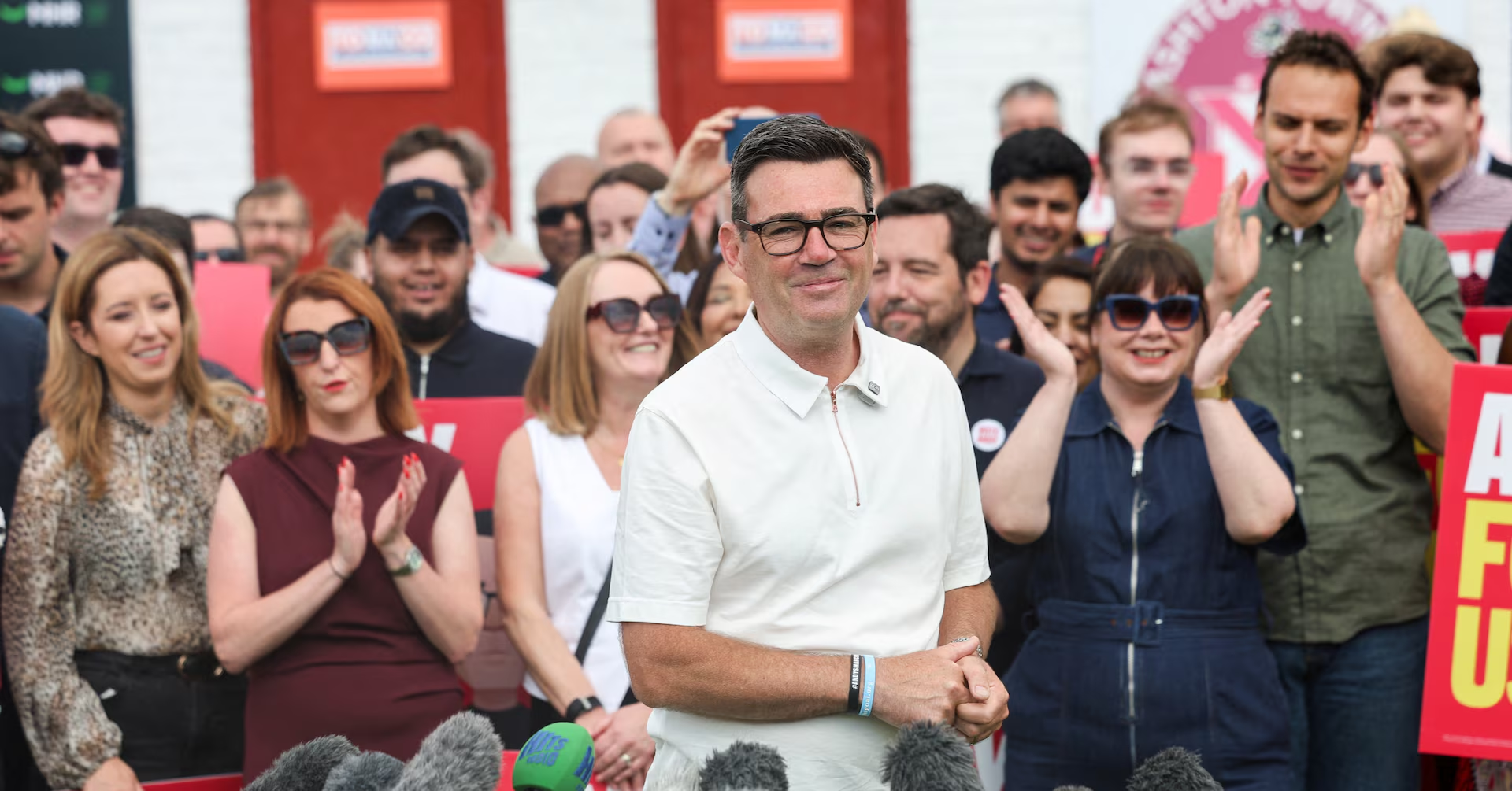
Hours after declaring victory, he outlined a national strategy in what lawmakers described as a prime ministerial-style address. “I did mention the necessity for Labour to evolve … and we must seize this moment to address the challenges presented,” he conveyed to a gathering of supporters, enumerating the areas he believed required attention: enhancing affordability, lowering utility costs, and promoting reindustrialisation.
This is our final opportunity for transformation, and we will seize it… as we chart a new course for Britain.
His victory not only returned him to parliament, providing a platform for a leadership challenge, but also raised the hopes of some concerned Labour lawmakers that they can secure victory in the upcoming national election, scheduled for 2029.
Many believe that Starmer, facing some of the lowest popularity ratings of any British leader, cannot achieve that.
BURNHAM WIDELY FAVORED AMONG LABOUR MEMBERS
Polls among Labour party members suggest that Burnham would emerge victorious in a formal leadership contest, though certain Labour lawmakers are hopeful that such a process can be circumvented.
Starmer, 63, has consistently pledged to persevere, despite facing scandals, policy reversals, and claims of indecision, aiming to complete his five-year term by addressing some of Britain’s most urgent issues.
Approximately a quarter of his lawmakers have called for his resignation following Labour’s significant losses in the local elections last month, with additional names joining the list of dissenters. Senior colleagues, including the ministers of defence and health, have stepped down.
Several Labour lawmakers suggested that the party should allow Starmer the weekend to contemplate and potentially resign. A Burnham ally, Labour lawmaker Louise Haigh, expressed to the BBC her hope that “Andy and the prime minister can speak over the coming days.
We aim to steer clear of a leadership contest if we can, and we hope to find a mutually agreeable path forward,” she stated.
Numerous Labour members of parliament are apprehensive about the possibility of losing their seats in the upcoming election, scheduled for 2029, to Farage’s party, which has consistently topped opinion polls for over a year.
Another of Starmer’s rivals, former health minister Wes Streeting, stated this week that he would initiate a contest soon unless the prime minister disclosed when he would resign. He stated that Burnham’s victory demonstrated the necessity for Labour to evolve.
Party regulations stipulate that 20% of the parliamentary party, which amounts to 81 lawmakers, must declare their support for a single candidate in order to initiate a leadership challenge.