Donald Trump and Masoud Pezeshkian have signed a deal aimed at ending the war, committing both the US and Iran to engage in 60 days of discussions.
US President Donald Trump and Iranian President Masoud Pezeshkian have signed an initial agreement to address the conflict between their nations, with both parties agreeing to engage in further negotiations over the next 60 days to achieve a lasting resolution.
The 14-paragraph memorandum of understanding, effective Wednesday, establishes a framework for ceasing hostilities and addressing significant disputes between Washington and Tehran. The agreement specifies that the 60-day negotiating period can be “extended with mutual consent” should both parties need more time to finalize an accord.
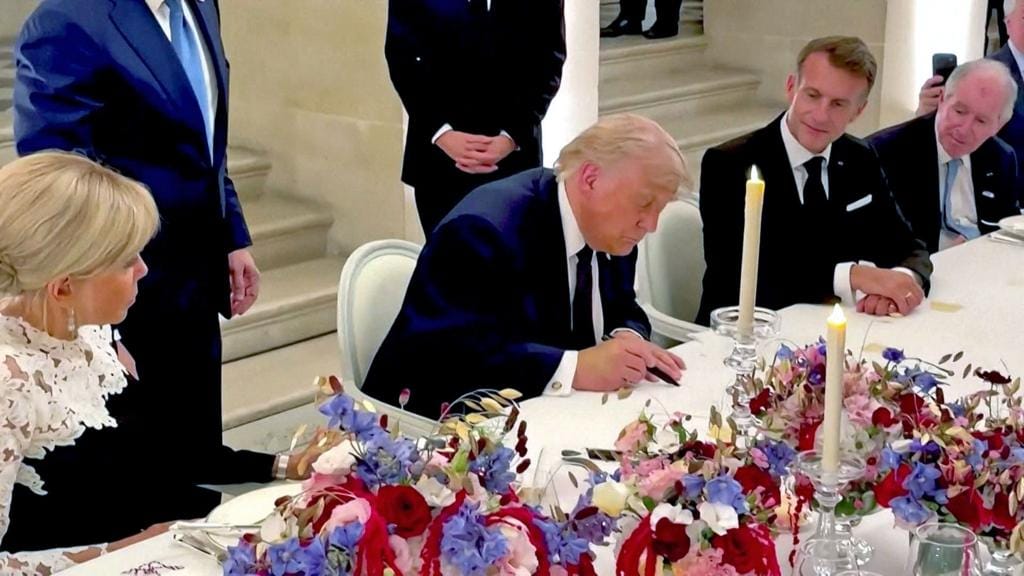
Trump signed a copy of the agreement at a dinner in Paris with French President Emmanuel Macron. The decision was made prior to an official signing ceremony with US and Iranian representatives that was anticipated to occur in Switzerland on Friday, though it is still uncertain if that event will go ahead as planned.
The initial part of the agreement obligates the US and its allies to a “swift and lasting” cessation of military activities on “all fronts,” including Lebanon, where hostilities associated with the broader conflict have escalated in recent months.
Lebanon has consistently been a focal point of tension during the war, as Hezbollah, the Iran-backed armed group based in Lebanon, and Israel have repeatedly leveled accusations against one another regarding breaches of ceasefire agreements.
Iran’s Foreign Ministry spokesperson Esmail Baghaei cautioned on Telegram that any further Israeli assaults on Lebanon would be seen as a violation of the memorandum. As reported by Iranian state television, he further remarked that the ongoing presence of Israeli forces in Lebanon would constitute a “violation” of the agreement.
The remarks followed the Israeli military’s recent strikes in southern Lebanon on Wednesday. The military also reported that one of its soldiers died following injuries sustained in an “incident” in southern Lebanon.
During his address at the G7 Summit in France, Trump recognized the ongoing tensions in Lebanon while emphasizing that the agreement with Tehran was of utmost importance. He stated that peace in Lebanon is “something we will have to work on” but emphasized that “the big deal is the Iran deal.”
The Israeli government has yet to provide a public response to the signing of the agreement.
One of the key provisions includes the reopening of the Strait of Hormuz, a vital shipping route globally. According to the terms of the agreement, the US will start to lift its naval blockade, with the understanding that the blockade is anticipated to conclude entirely within 30 days.
Iran has committed to “make arrangements using its best efforts” to guarantee that commercial vessels can transit safely through the Strait without incurring charges for a duration of 60 days.
The memorandum also outlines a proposed $300 billion (£224 billion) program for Iran’s “reconstruction and economic development.” Furthermore, the US has consented to lift “all types of sanctions” placed on Iran as part of the overarching peace framework.
On the nuclear issue, Iran has pledged not to procure or acquire a nuclear weapon, and both countries have agreed to continue negotiations towards a comprehensive settlement within a “maximum” of 60 days.
While the agreement establishes a provisional deadline for finalizing a deal, Trump indicated that the process might extend if needed. Speaking to reporters on Wednesday, he stated, “It could take longer.”
The agreement signifies a major diplomatic advancement between Washington and Tehran since the onset of the conflict and outlines a framework for negotiations intended to achieve a lasting peace agreement.