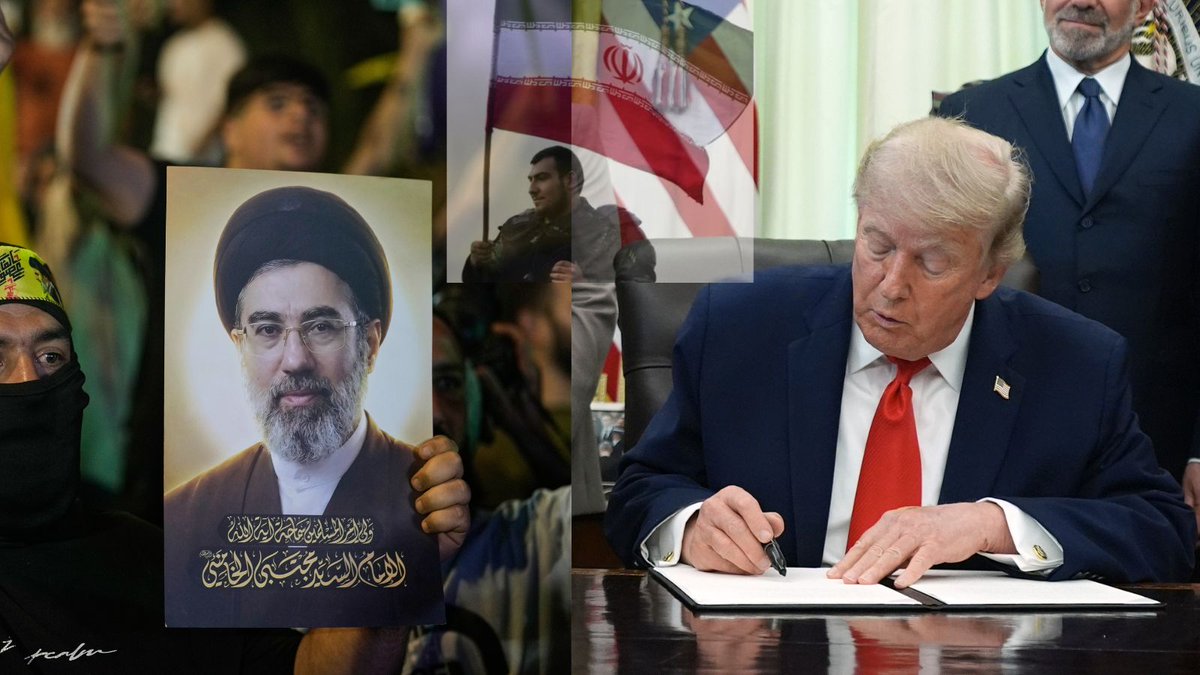
Trump Declares US-Iran Peace Agreement to Conclude 107-Day Conflict
Donald Trump has announced a peace deal with Iran, bringing an end to hostilities and reopening a crucial global oil route.
The United States and Iran on Sunday reached an agreement to conclude their 107-day conflict, with both parties announcing a permanent halt to military operations and scheduling Friday for the official signing of a peace accord facilitated by Pakistan.
Consequently, US President Donald Trump declared the prompt lifting of the American naval blockade and permitted the reopening of the Strait of Hormuz, an essential global energy passage. The action is anticipated to alleviate interruptions in global oil supplies and stabilize energy markets that have been unsettled by months of conflict.
The opening of the Strait of Hormuz is anticipated to provide relief to the global economy following more than three months of conflict.
Details of the deal were not immediately available; however, the key mediator, Pakistan, confirmed that the signing will take place on Friday in Switzerland. Meanwhile, significant issues such as Iran’s nuclear program are anticipated to be addressed at a later date.
“I hereby fully authorize the toll-free opening of the Strait of Hormuz, and, simultaneously herewith, authorize the immediate removal of the United States Naval blockade,” Trump wrote on Truth Social.
The U.S. had previously indicated that it would ease its blockade of Iranian ports as the strait reopens and would agree to relax sanctions to enable Iran to sell more of its oil and bolster its struggling economy.
Iran’s Deputy Foreign Minister, Kazem Gharibabadi, confirmed the agreement on state television, stating that Iran would not begin implementation until it was signed on Friday. He stated that the agreement came after more than 14 hours of discussions in Tehran with a representative from Qatar, who served as another mediator.
Pakistan initially revealed the agreement following a day when Israel, excluded from the discussions, launched an attack on the southern suburbs of Beirut while targeting the Iranian-backed Hezbollah. The attacks presented a challenge to finalizing the negotiations, according to a report by the Associated Press.
“Both sides have announced the immediate and permanent cessation of military operations across all fronts, including in Lebanon,” stated Pakistani Prime Minister Shehbaz Sharif, noting that mediators will facilitate meetings this week to “establish the groundwork for the technical discussions.”
Broader negotiations regarding outstanding issues, such as Iran’s nuclear program, will persist over the next 60 days, according to two senior Pakistani officials who spoke on condition of anonymity due to their lack of authorization to publicly discuss the matter. If the parties do not come to a resolution within that timeframe, the timeline may be prolonged.
The agreement probably restores the region to a condition that was present prior to the conflict, yet it comes with the heavy toll of thousands of lives lost and Iran now possessing a new lever of negotiating power through its capacity to affect shipping in the strait. The waterway plays a vital role in the transportation of substantial shipments of oil, natural gas, and associated products such as fertilizer, and its effective closure has had a profound impact on the global economy.
Despite the objectives outlined by the US and Israel at the onset of the conflict on February 28, which included the assassination of Iran’s supreme leader, Ayatollah Ali Khamenei, Tehran continues to maintain a missile program, provide support for armed proxies in the region such as Hezbollah, and possess a stockpile of highly enriched uranium for its nuclear initiative.
Khamenei’s son has assumed the role of supreme leader, yet he has remained out of the public eye since the onset of the war. His approval was required for Iran to finalize the deal, according to AP.
Iran sought a ceasefire agreement that would encompass the ongoing conflict in Lebanon, where Israel has intensified its invasion further than it has in more than twenty-five years, focusing on Hezbollah. Tehran has also pursued the release of billions of dollars in frozen funds.
The emerging deal faced significant criticism from Israel’s government as well as from dissenters within Trump’s own Republican Party. Some argued that it did not enhance the conditions of the 2015 Iran nuclear deal, from which Trump withdrew the U.S. during his first term and which he continues to label as “bad.”
Tehran has highlighted its desire for a deal that prioritizes ending the war, with discussions regarding its nuclear program—the central issue—postponed for a later time.
According to the International Atomic Energy Agency (IAEA), Iran possesses 440.9 kilograms (972 pounds) of uranium enriched to 60 percent purity, which is a brief, technical step away from reaching weapons-grade levels of 90 percent.
Iran has consistently asserted that its nuclear program is intended for peaceful purposes and has not made any public commitment to relinquishing the enriched uranium, which is thought to be concealed beneath three nuclear sites that suffered significant damage from U.S. strikes last year.
On Sunday, oil prices fell following Trump’s announcement that an agreement with Iran had been reached, leading to the United States ending its naval blockade on the nation.
Brent crude prices decreased by 3.9 percent, reaching approximately $84 a barrel, while US crude saw a decline of 4.8 percent, settling around $81 a barrel. If oil settles at that level, it will mark the lowest price for crude since March 4, shortly after the war began.
With expectations of a deal framework emerging this weekend, oil prices settled below $90 a barrel on Friday, marking the first time since the initial week of the war. It still has a considerable distance to cover to return to the $70 mark, which it reached prior to the attacks on Iran by the United States and Israel in late February.
Markets have responded positively to perceived advancements, yet the oil market still faces considerable challenges in restoring the flow of crude to its usual state. The Strait of Hormuz requires de-mining, allowing ships to navigate freely in and out of the strait. Middle East production must resume, emergency petroleum reserves should be replenished, and damaged energy facilities need repair, according to a CNN report.