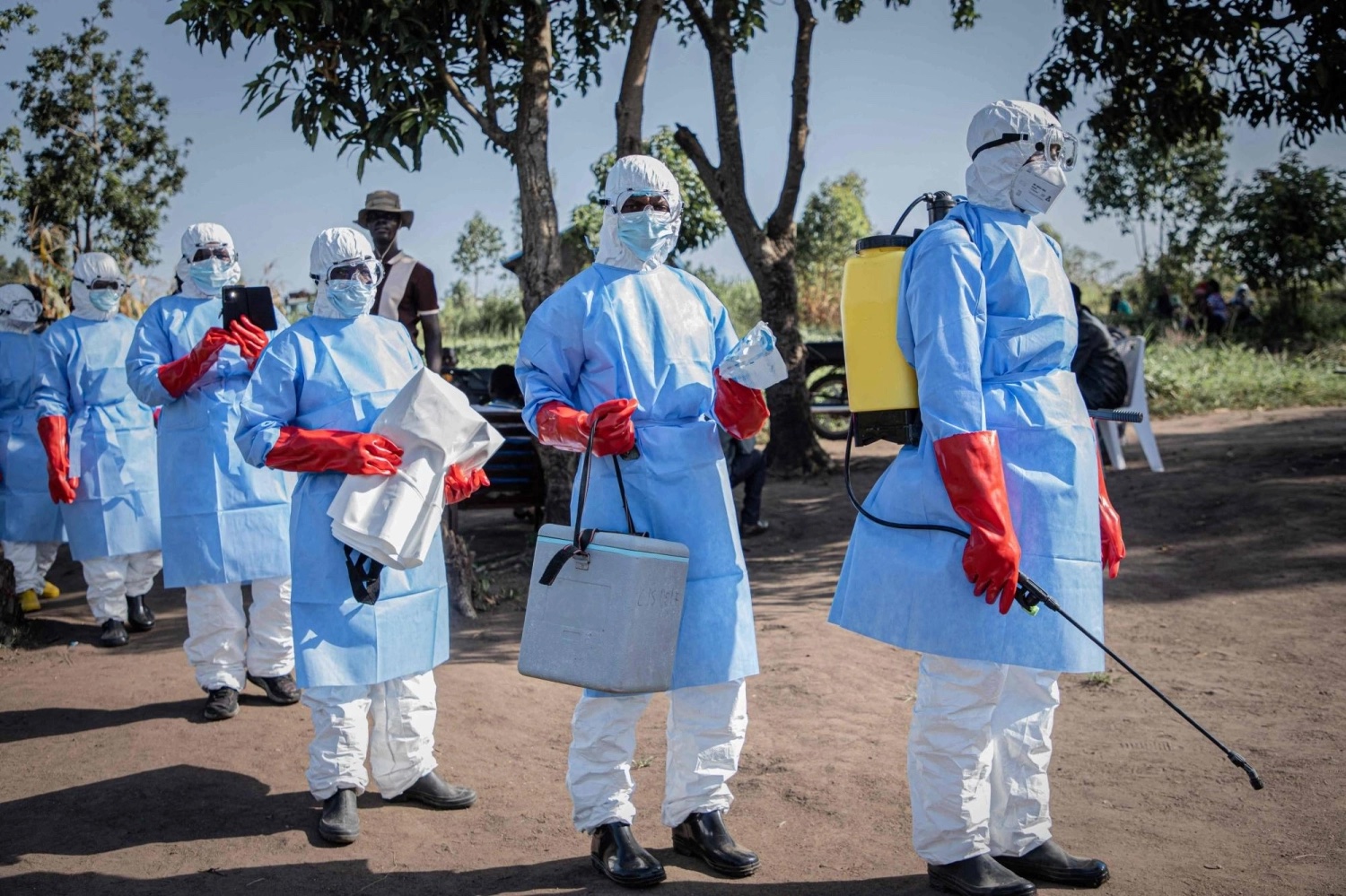
Following the recent deaths from Ebola at the Kpangba displacement camp, which marked a troubling first in this region of war-torn Congo, health workers swiftly mobilized to identify individuals who had been in contact with the deceased to interrupt the transmission chains.
However, the workers from the provincial health ministry, the World Health Organization, and other aid agencies were driven away by irate locals who refused to accept that the two women had succumbed to Ebola, stated Jean-Claude Lonzama, the chief doctor for the local health zone of Nizi, a densely populated mining region.
As of today, we are still unable to follow up on the contacts related to these cases,” Lonzama informed Reuters on Saturday.
The standoff has left health authorities in a difficult position as they attempt to prevent a rise in Ebola cases within this camp of approximately 30,000 individuals, the majority of whom have escaped inter-ethnic violence in nearby regions. “We have 22 displaced persons sites in the Nizi health zone … with around 81,124 residents,” Lonzama stated. This situation is a significant concern for us, as there have been no preventive measures implemented at these sites, apart from a handful of educational messages.
Since the outbreak was declared a month ago, several treatment sites have faced attacks from locals frustrated by their inability to bury their loved ones due to precautions aimed at preventing the spread of the virus or who believe that Ebola is a hoax.
Inadequate hygiene practices
Aid workers are concerned that Ebola may rapidly spread in these and other displacement camps, where hundreds of individuals often share a single toilet and open defecation is prevalent, potentially exacerbating one of the largest outbreaks the world has ever seen.
The outbreak currently affects more than 5 million displaced individuals across the three provinces of Ituri, South Kivu, and North Kivu. These regions have suffered greatly due to decades of conflict.
In Kpangba, similar to towns and rural areas throughout eastern Democratic Republic of the Congo where cases have been reported, health workers attempting to contain the outbreak are facing significant challenges due to entrenched mistrust of the government and external entities.
The assaults on Ebola treatment centers bring to mind the extensive violence directed at healthcare facilities by both civilians and armed factions during the 2018-2020 outbreak in eastern Congo, which resulted in the deaths of over 25 health workers.
The fatalities in Kpangba took place on May 31 and June 1 but were initially disclosed in a report by the U.N. refugee agency released on Thursday.
As reported by Reuters, a health ministry document from Congo indicates that the initial victim, a 60-year-old woman residing in the camp, tested positive for Ebola on May 30. However, by that time, she had escaped quarantine and could not be found.
The challenges of gaining the population’s trust, along with the lack of essential equipment and ongoing armed conflict in many affected regions, have left health experts profoundly concerned about the ability to control the outbreak.