US hits Iranian sites after Iran fires drones in the latest fight in the Gulf
U.S. forces targeted Iranian coastal radar sites on Saturday following the interception of drones launched by Iran towards the Strait of Hormuz, according to the U.S. military. This incident marks a further escalation, complicating efforts to resolve the ongoing conflict between the two nations.
The U.S. military suspects that the four Iranian drones were aimed at regional maritime traffic, according to a U.S. official who spoke to Reuters. U.S. Central Command announced on X that the U.S. subsequently targeted Iran’s surveillance sites located in Goruk and Qeshm Island, both situated along the Strait of Hormuz.
The foreign ministry of Iran stated that the actions taken by the U.S. violated a ceasefire established on April 8, emphasizing that such repeated violations indicated Washington’s lack of intention to ease tensions. It cautioned that the United States would be accountable for the repercussions of its “illegal actions” and any additional escalation.
Iran’s Revolutionary Guard Corps announced that it had conducted attacks on U.S. bases in Kuwait and Bahrain as a response to U.S. strikes and targeted four tankers attempting to cross the strait without its authorization.
Kuwait’s army reported on Saturday that it intercepted seven ballistic missiles that entered the country’s airspace early in the morning, passing over several residential areas and causing some debris to fall. The army reported that the Iranian attack resulted in material damage; however, there were no casualties. In Bahrain, sirens echoed through the streets as residents were advised to find shelter.
Pakistani minister reportedly on the way to Tehran.
Kuwait and Bahrain expressed their condemnation of the strikes. Kuwait’s foreign ministry characterized the Iranian attacks, including the most recent one on Saturday, as “blatant” aggression that poses a threat to citizens, residents, and regional security, according to a ministry statement.
Iran later announced that it had targeted U.S. bases in both countries with ballistic missiles; however, the U.S. military reported that six missiles were intercepted, and a seventh failed to reach its intended target.
The U.S. and Iran have been involved in primarily indirect discussions aimed at reaching an interim agreement to cease the three-month-old conflict, while deferring matters such as Iran’s nuclear program for future negotiations.
However, despite occasional conflicts, an agreement has continued to be out of reach.
Tehran seeks access to billions in oil revenue, exemptions from sanctions on crude exports, the removal of a U.S. blockade on its ports, and influence over the strait. Iran has successfully obstructed the waterway, which previously facilitated the transit of approximately one-fifth of the world’s oil before the conflict.
Iranian state media reported that Mohsin Naqvi, the interior minister of Pakistan, who has been mediating an end to the conflict, was en route to Tehran on Saturday.
A source from Pakistan indicated that Naqvi would deliver a message from Pakistan to the Iranian Supreme Leader Mojtaba Khamenei.
U.S. President Donald Trump is encountering increasing domestic political pressure stemming from rising gas prices to conclude the unpopular war. He informed NBC that although the majority of Iran’s drone and missile manufacturing facilities have been obliterated, the Iranians still retain access to approximately one-fifth of their missiles. “They possess some missiles; they possess some drones. I would estimate that, percentage-wise, around 21% to 22% of their missiles are involved. It’s a considerable number of missiles, but it’s not the same as it was during our initial attack,” Trump stated during an interview with NBC News’ “Meet the Press,” as per excerpts shared by the network on Friday.
When questioned about why Iran’s leaders were not more willing to reach an agreement, despite the desperation he has attributed to them, Trump responded:
They possess great strength. They take great pride. There are actions they never anticipated taking that they will now be compelled to undertake, with no alternatives available, and it requires some time to adjust.
Following the initiation of hostilities by the U.S. and Israel against Iran on February 28, Tehran retaliated by targeting Gulf states that housed U.S. military bases and significantly curtailed shipping activities in the Strait of Hormuz.
The conflict has led to an increase in oil prices and caused disruptions in supply chains for various other products. The U.N. World Food Programme announced on Friday that rising fuel and transport costs are pushing millions of people closer to hunger.
Mohsen Rezaei, an adviser to Iran’s supreme leader, informed CNN on Friday that a peace deal depended on the Trump administration releasing $24 billion in Iranian assets. He cautioned that the U.S. would “enter into a dark corridor” if it continued its attacks.
Fighting continues to erupt across the region, despite the presence of ceasefires.
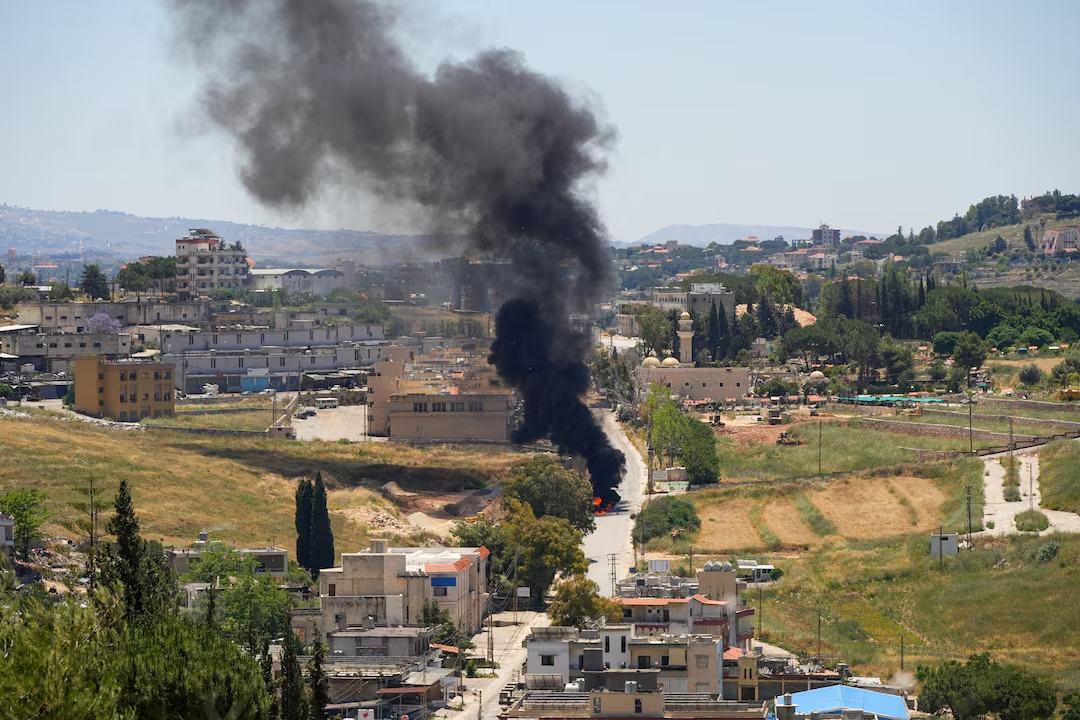
In a concurrent conflict in Lebanon, the Lebanese army reported that two officers and a soldier were killed due to an Israeli strike on a military vehicle in southern Lebanon. Meanwhile, the Israeli military stated that it is looking into the incident.
The Israeli military reported that it targeted the vehicle after recognizing what it termed a threat to its forces and receiving signals that Hezbollah was getting ready to launch an attack on Israeli troops from the vicinity. Hezbollah, aligned with Iran, characterized the incident as a continuation of Israel’s aggression towards Lebanon.
Iran has stipulated that a ceasefire between Israel and Hezbollah is a prerequisite for any peace agreement with Washington.
Hezbollah leader Naim Qassem this week dismissed a U.S.-brokered agreement between Israel and the Lebanese government aimed at ceasing hostilities in Lebanon. The agreement did not include provisions for an Israeli withdrawal, and Hezbollah was not involved in the negotiations.
Israel has stated that its forces will not withdraw or cease operations in the country despite rising tensions with the U.S.