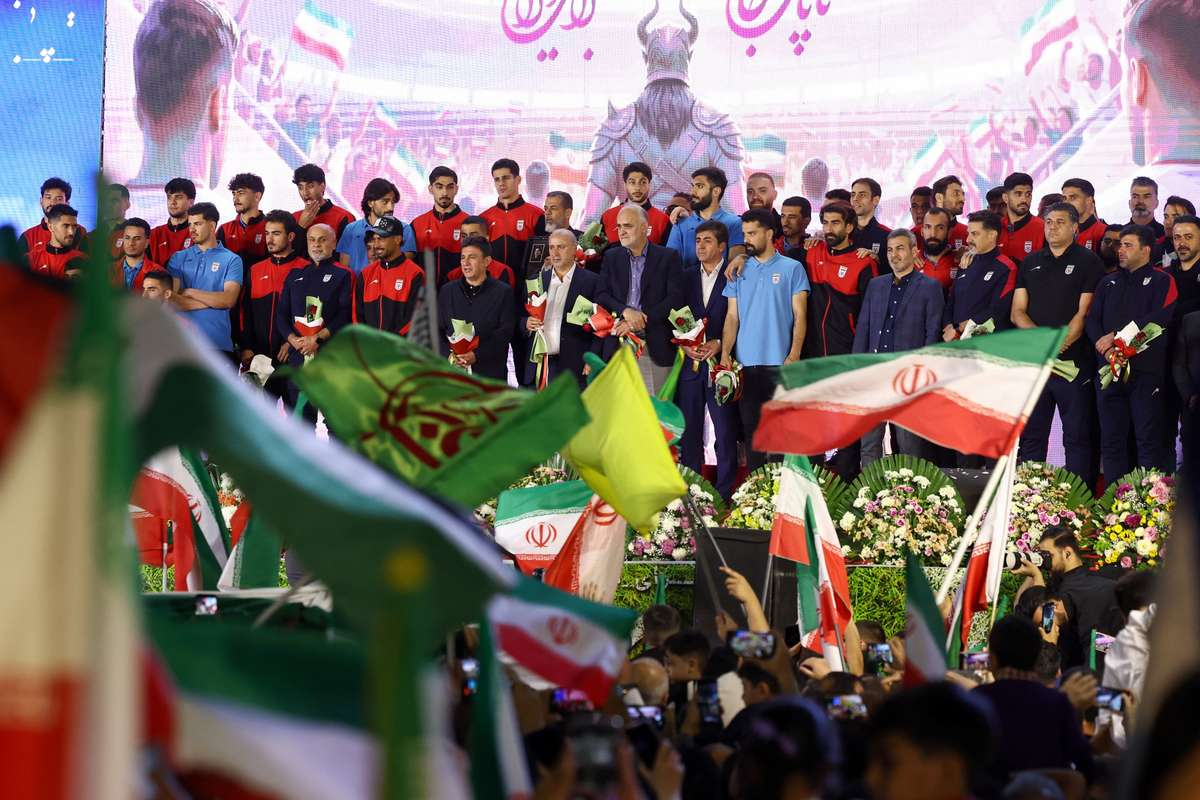
Iranian players get visas to enter the US before the World Cup starts, but some leaders from the federation still don’t have clearance.
A US official revealed that Iran’s World Cup players have been given visas to enter the US before their first game, but some members of the team’s administrative staff are still waiting for clearance.
A White House source told Reuters on Friday, 10 days before Iran’s first game in Los Angeles, that the players had been given visas. The confirmation came after Abolfazl Pasandideh, Iran’s ambassador to Mexico, said on Thursday that the papers had not yet been sent to the squad.
Iranian news service Tasnim said on Saturday that Executive Director Mehdi Kharati, Football Federation Secretary-General Hedayat Mombini, and Media Director Mohsen Motamedkia are still waiting for visas.
The story says that staff members who don’t have visas will go to Mexico with the team while they work to get entry permits.
The US, Mexico, and Canada are co-hosting the World Cup, which starts on Wednesday. The event is happening at a time when the US and Iran are at war. This is the first World Cup since it began in 1930 and the host country is set to host a country that it is at war with.
After having trouble getting visas and with more people in Tehran thinking the team should spend less time in the US, Iran has changed its tournament base from Arizona to Tijuana, Mexico. The team is likely to get to Tijuana early on Sunday.
Iran’s first game in Group G will be on June 15 in Los Angeles against New Zealand. Before going to Seattle to play Egypt, the team will also play Belgium.
Pasandideh said that the US had never officially said that it wanted the Iranian team to leave US soil.
However, on Tuesday, US Secretary of State Marco Rubio told lawmakers that people with ties to Iran’s Islamic Revolutionary Guard Corps would not be allowed to enter the country as part of the group.
The head of Iran’s football federation and a former commander of the Revolutionary Guards, Mehdi Taj, was not allowed to attend the December World Cup draw in Washington, D.C.
Pasandideh said that Iran’s decision to play in the event showed that it wanted to end its conflict with the United States.
Pasandideh spoke through a Spanish translator at the Iranian embassy in Mexico City. “Iran’s decision to play in the World Cup, even on the ground of a country that is considered an enemy, shows that Iran wants peace.”
Iran and the US have been working hard to reach a peace agreement, but it has been slow going. Both sides are still conducting military actions while they try to negotiate an interim deal.