Israel and Lebanon Reach a new peace agreement while the US pushes for security zones without Hezbollah
As negotiations supported by the US demand Hezbollah-free security zones, Israel and Lebanon extend their ceasefire. Violence across the border is still going on.
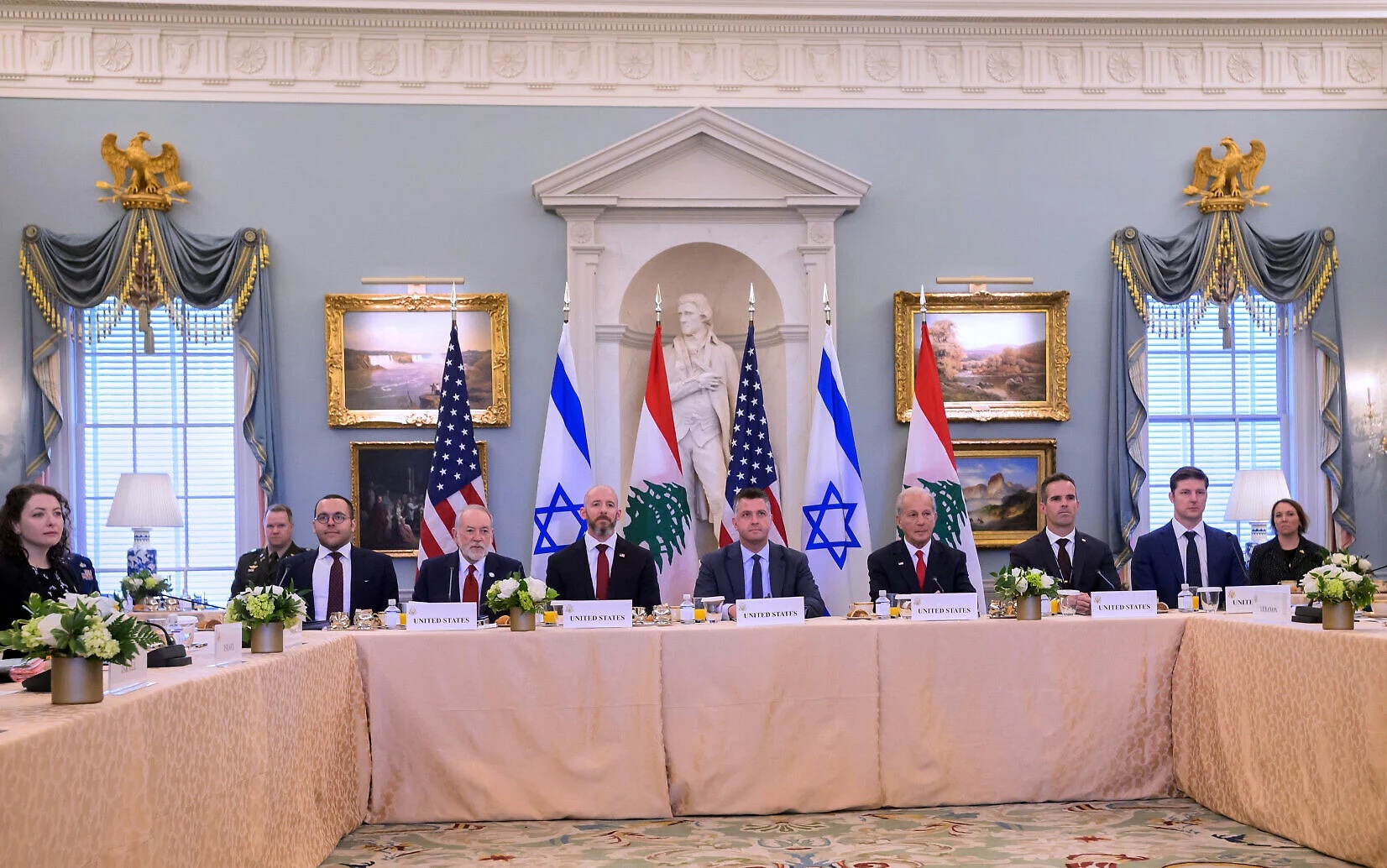
A joint statement from the US and Israel on Wednesday said that they had agreed to renew their fragile truce and set up a number of “pilot” security zones inside Lebanon where Hezbollah agents would not be allowed.
The agreement, made after a fourth round of talks mediated by the US in Washington, DC, is meant to stop fighting along the border between Israel and Lebanon from getting worse and make it possible for the two countries to start larger talks.
The two sides said in a joint statement that the deal was “conditional on a complete cessation” of attacks by the Iran-backed Hezbollah group and the “evacuation of all operatives” from the area 30 kilometers north of the border with Israel, between the border and the Litani River.
The statement also said that the US would help set up “pilot zones” where the Lebanese Armed Forces would have full control of the land and no non-state players would be allowed.
The three countries also said that they would not allow “any state or non-state actor to hold Lebanon’s future hostage.”
The agreement did not include maps or specifics about how the planned security zones would work, but officials from both countries said they would meet again on June 22 “with a view toward reaching a comprehensive agreement.”
The latest event comes after a partial ceasefire was announced earlier this week. Under the terms of the agreement, Lebanon said Israel would stop bombing Beirut in return for Hezbollah’s stopping attacks on northern Israel.
Even after the diplomatic breakthrough became public, bloodshed continued on the ground.
Lebanese state media said that Israeli attacks started up again in southern Lebanon on Thursday and that people were hurt in a number of places. The health ministry of Lebanon said that an Israeli strike in the al-Housh area near the coastal city of Tyre killed four Syrians and two Palestinians.
Besides that, the ministry said that Israeli forces “directly targeted an ambulance” in the Chehour area and killed two paramedics and badly hurt another. The ambulance was owned by the Risala Scouts Association, which is linked to the Amal movement and supports Hezbollah.
The ministry claimed that Israel had broken international humanitarian law by attacking. The strikes demonstrated “contempt for international humanitarian law,” which aims to safeguard medical personnel during wartime, according to the ministry.
At least 128 paramedics and other health care workers have been killed in Israeli attacks on vehicles and hospitals in the past three months, the ministry says.
The Israeli military didn’t say anything right away about the claims, but it has said in the past that ambulances were being used for military reasons without showing proof.
The Lebanese army also said that an Israeli airstrike near Nabatieh killed one of its troops and hurt two others in a separate attack on a military vehicle.
The army spoke out against what it called “a pattern of deliberate strikes targeting army personnel, vehicles, and positions” by Israeli forces.
The Israeli military said it stopped a “hostile aircraft” and two projectiles that were trying to cross from Lebanon into northern Israel near the towns of Manara, Kiryat Shmona, and Misgav Am.
Israel did not directly blame Hezbollah, but the group later admitted that it had fired rockets “in response to the Israeli enemy army’s violation of the ceasefire.”
A group of Hezbollah fighters said they fired rockets at “a gathering of Israeli enemy army soldiers” in northern Israel.
However, the group has distanced itself from the most recent US-backed talks.
Mahmoud Qamati, a member of Hezbollah’s political council, dismissed reports of a larger ceasefire deal.
“There was no ceasefire agreement; all that was agreed upon was the protection of Dahieh,” Qamati told the BBC, referring to the southern suburbs of Beirut, which are a stronghold for Hezbollah.
He also didn’t believe the Washington talks were real, saying, “We don’t think these negotiations are important to us, and we don’t accept their results or decisions because we reject them in principle.”
Itamar Ben-Gvir, the Israeli minister of national security, also spoke out against the deal, calling it “a serious mistake” that would help Hezbollah “grow stronger.”
On March 2, Hezbollah retaliated by firing rockets at Israel, following an Israeli attack that reportedly killed Iran’s top leader. The attack made the conflict worse. In answer, Israel launched a major air assault and invaded southern Lebanon on the ground.
A previous ceasefire brokered by the US on April 16 did not stop the killing. Last week, Israeli Prime Minister Benjamin Netanyahu ordered more attacks on Hezbollah positions after rocket and drone attacks on communities in northern Israel.
The health office of Lebanon says that at least 3,516 people have been killed in Lebanon since the war started, but the numbers don’t separate civilians from combatants.
The UN says that more than a million people have been forced to leave their homes because of Israeli orders to leave more than eighteen percent of Lebanese land.
For its part, Israel says that 26 soldiers and 4 bystanders have died in the fighting.
The first partial truce was announced by US President Donald Trump. The latest ceasefire agreement was allegedly pushed for by Trump because he was worried that more fighting in Lebanon could stop larger talks with Iran.
Trump showed up on Wednesday to confirm reports that he had a heated conversation with Netanyahu about the strikes on Beirut, which caused fears of a wider war in the area.
Iran has said that any peace deal in the region must include Lebanon.
According to the Tasnim news agency, Iran’s Foreign Minister Abbas Araghchi said on Wednesday that Iran’s armed forces were “fully prepared” to start the war again if Israel kept attacking Beirut.