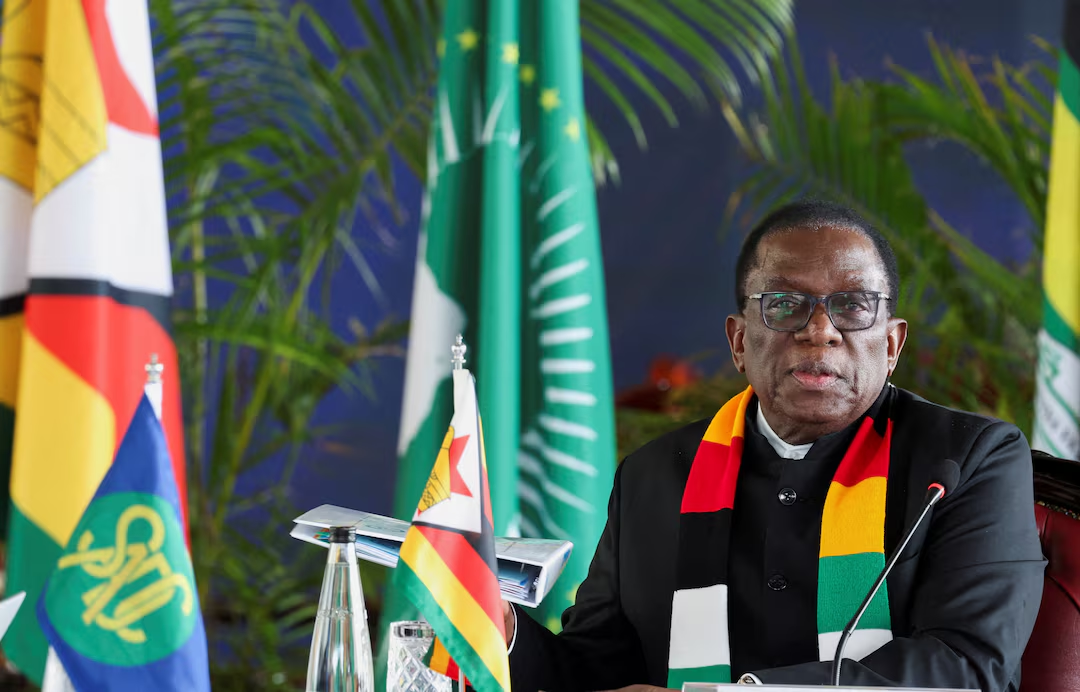
Zimbabwe’s government on Tuesday presented a bill to parliament aimed at extending President Emmerson Mnangagwa’s term by two years, pushing it to 2030. This move has faced criticism from a divided opposition and certain veterans of the nation’s liberation war.
The draft legislation is set for debate on Wednesday during its second reading in parliament.
Mnangagwa, 83, is expected to step down in 2028 after completing two five-year terms as head of state; however, his supporters are advocating for a constitutional amendment to extend presidential terms from five years to seven.
They also advocate for the election of presidents by parliament instead of through direct popular vote.
Justice Minister Ziyambi Ziyambi presented the bill in the lower house of parliament.
Political analysts anticipate that it will pass smoothly, as Mnangagwa’s ZANU-PF party holds a two-thirds majority in the lower house and maintains significant control over the upper house through traditional leaders and other proxies who typically align with its voting patterns, providing the necessary numbers to amend the constitution.
Ziyambi has previously stated that he anticipates the legislative process will take approximately a month.
ZANU-PF has been in power in Zimbabwe since the country gained independence from Britain in 1980, initially led by the longstanding leader Robert Mugabe, followed by Mnangagwa, who assumed leadership after a coup in 2017.
On Tuesday, a coalition of retired generals and former civil servants openly expressed their dissent regarding the bill aimed at prolonging Mnangagwa’s tenure in office.
They mentioned having met with Mnangagwa last month to express their concerns, but he responded, “Whoever wins, wins,” in reference to the potential passage of the bill.
Some war veterans and activists have also contested the bill in the Constitutional Court, which has reserved judgment as it deliberates on their arguments.