A ‘new Keiko’ challenges the longstanding Fujimori name in Peru’s presidential runoff
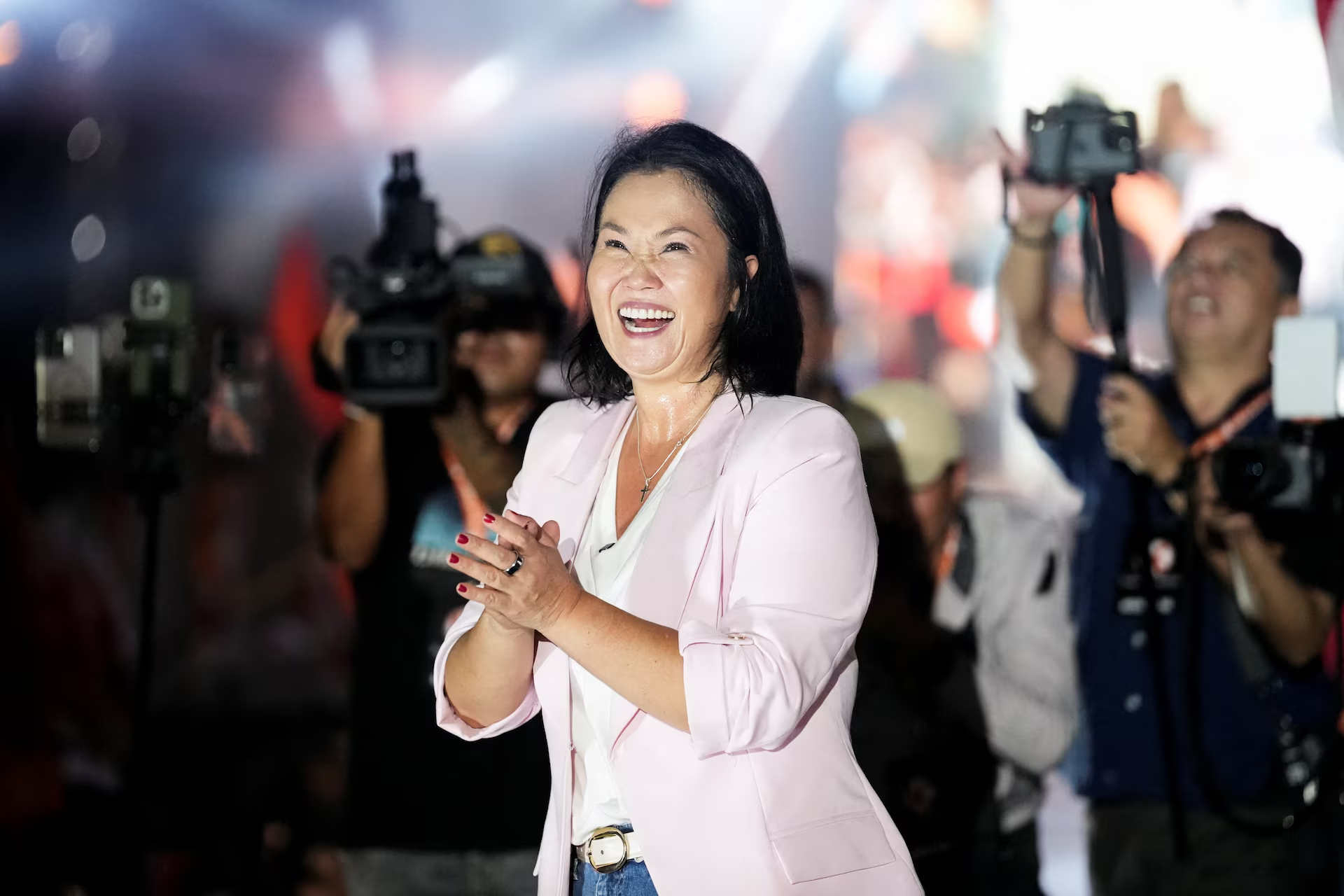
Conservative Keiko Fujimori is set to pursue the presidency of Peru this Sunday in a runoff election, aiming to leverage her strong stance on crime amid increasing insecurity, in hopes that it will overshadow her divisive family legacy among voters.
Fujimori, at 51 years old, achieved the highest percentage of votes in the initial round of the election held in April, garnering 17.17% support. She will confront leftist congressman Roberto Sanchez, who narrowly achieved second place with 12.03%.
This marks Fujimori’s fourth bid for the presidency. In her latest attempt in 2021, she suffered defeat against the leftist Pedro Castillo, who later faced ouster from office after attempting to dissolve Congress. Castillo has expressed support for her runoff opponent from behind bars.
Fujimori bears the significant weight of her surname. Her late father, Alberto Fujimori, served as the president of Peru from 1990 to 2000. A polarizing individual, some acknowledged his role in establishing stability in the nation, while detractors labeled him as authoritarian. He served 16 years in prison for human rights abuses that occurred during his time in power.
After previously distancing herself from her father’s political legacy, Fujimori has increasingly embraced it, now adopting his image as a strongman. She presents herself as the candidate most capable of reinstating order and stability, as Peru faces increasing rates of homicide and extortion, which are significant concerns for voters.
We will collaborate with financial institutions to identify, track, and block funds associated with extortion,” she stated during a runoff debate.
Nonetheless, her party is eager to highlight the differences between Fujimori and her father. Luis Galarreta, her vice-presidential running mate, remarked that Fujimori senior held a deep skepticism towards political parties, frequently establishing new ones for each election instead of fostering a sustainable organization. “Keiko is different,” Galarreta stated in an interview with Reuters. She advocates for a robust and formal party organization, emphasizing the importance of establishing institutional political structures.
A ‘NEW KEIKO’
Keiko Fujimori was under investigation for years regarding allegations of campaign financing, but those charges were dismissed last year. She experienced pretrial detention on two occasions, from 2018 to 2020, totaling nearly a year and a half in jail.
Galarreta expressed that the experience transformed her perspective, leading her to become more introspective, mature, and dedicated to family life. “We often discuss a ‘new Keiko,'” Galarreta remarked. “She is more authentic, more true to herself, both as an individual and as a friend.”
Galarreta characterized Fujimori as “chancona,” a Peruvian term that signifies being studious and diligent. He noted that he has observed her assisting her two daughters with their schoolwork and preparing their lunches, all while managing a demanding campaign schedule.
Her time in prison also left unforeseen personal imprints. She has developed a strong affection for cats now,” Galarreta remarked. Fujimori developed a fondness for them during his time in jail, as they assisted in keeping the rats at bay.” She wasn’t fond of cats previously, but now she owns four.
Fujimori began her public life as a teenager, taking on the role of de facto first lady at the age of 19 during her father’s presidency following her parents’ separation.
She subsequently pursued a degree in business administration in the United States and later founded her own political base. In 2006, she achieved election to Congress with the highest vote total ever recorded for a Peruvian lawmaker. She narrowly lost in three presidential runoffs to different contenders in 2011, 2016, and 2021.
RUNOFF CHALLENGES
Despite her experience, one of Fujimori’s significant challenges continues to be her high rejection rate, although opinion polls indicate that it has improved recently. Pollster Ipsos Peru reported that 40% of voters in May indicated they would definitely not support her in a runoff, a decrease from approximately 59% prior to the first round.
In addition to her family legacy and ongoing resentment regarding the corruption allegations, critics argue that her right-wing Popular Force party—a significant power in Congress—has consistently obstructed reforms.
On Saturday, hundreds of left-wing supporters and civil society groups gathered in Lima to protest against Fujimori.
The anti-Fujimori vote is the factor that explains why Keiko Fujimori has fallen short of the presidential palace in three consecutive elections,” stated historian and analyst Daniel Parodi. “I sense that this anti-vote has declined—the question is by how much.