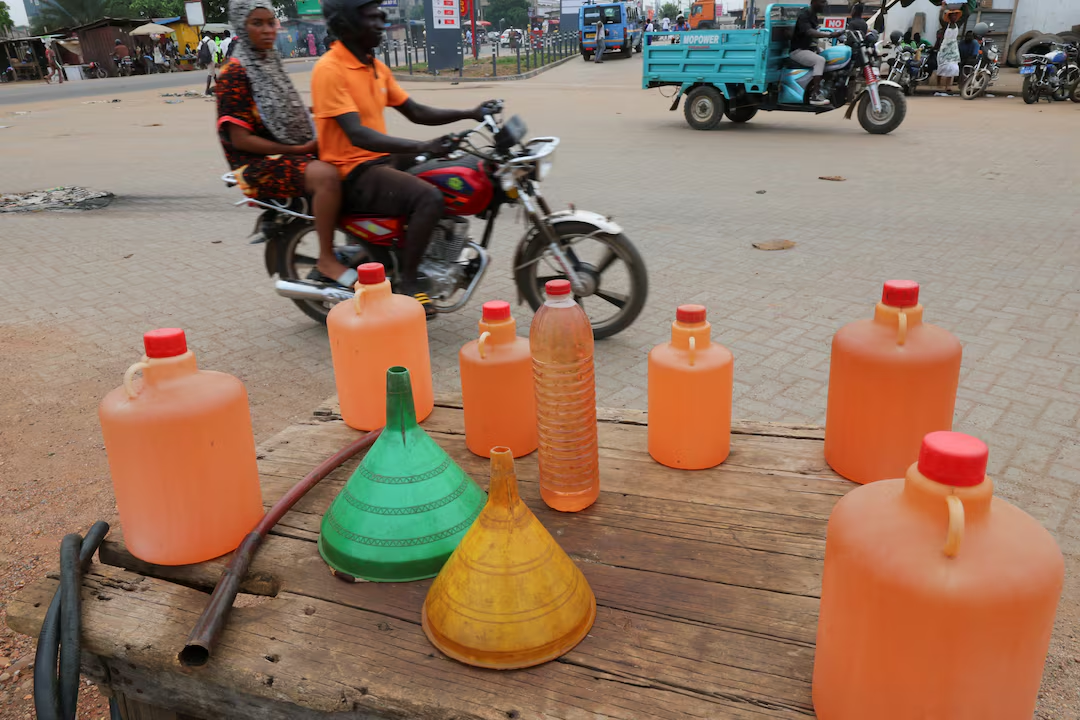
Fuel shortages happen in Mozambique, Ethiopia, and Burundi because of the conflict in the Middle East, which cuts off supplies and makes it difficult to get around in the area.
Parts of Africa are facing a worsening fuel crisis. Several countries are reporting shortages and long lines at gas stations because the ongoing war in the Middle East is causing problems along key global routes.
Mozambique is the latest country to say it is having trouble with its supply. There are long lines at gas stations, and problems have been reported in places like Maputo.
The problem has also caused gas prices to rise in Rwanda, Tanzania, Uganda, and the Democratic Republic of the Congo in East Africa. However, Kenya is still able to keep up with its supply thanks to its government-to-government fuel import system.
John Mbadi, who is the Treasury Cabinet Secretary for Kenya, has told people to get ready for a long crisis because the war in the Middle East has made markets around the world scramble for new fuel sources.
Mbadi said that the area provides a lot of the world’s fuel and is still an important source for African markets. This scenario means that problems can quickly spread through countries.
The effects have been worse in Ethiopia, where shortages of diesel have made it challenging for both public and private transportation to work in the city, Addis Ababa. Vehicles have been left parked for long periods of time.
Officials in Burundi have also reported an unusual lack of fuel. In Bujumbura, there are long lines at gas stations, and public transportation isn’t working, which slows down the economy.
To make sure there are enough supplies in Kenya, the government has hired companies like Abu Dhabi National Oil Company, Emirates National Oil Company, and Saudi Aramco to get fuel from places other than difficult supply routes and avoid shortages.
Opposition leaders want to change the G-to-G import system, but the government has said no. Mbadi has warned that changing the framework could make shortages worse.
He said, “If we review G-to-G, we will have no fuel in the country.”