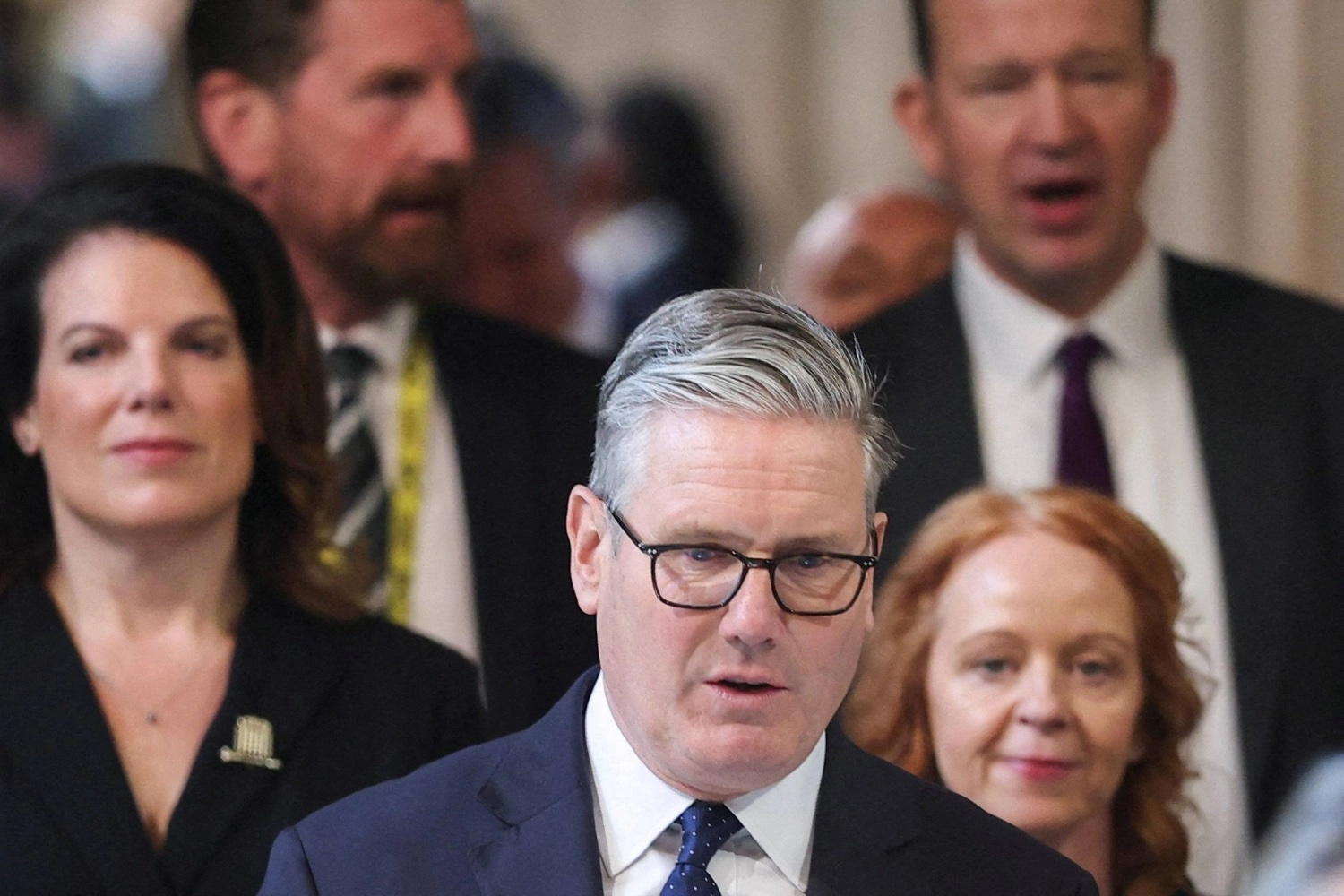
Starmer in the UK confronts a struggle for survival as possible challengers loom
British Prime Minister Keir Starmer faced challenges in maintaining his position after his primary rival in the government resigned on Thursday, citing concerns over political drift, while others began to position themselves for possible leadership contests.
The recent local elections have yielded disastrous results for the governing Labour Party, plunging Britain into a new crisis. This comes just under two years after Starmer secured a significant majority with a promise to restore stability and put an end to a decade of political turmoil.
Following days of pressure from Labour lawmakers urging Starmer to either resign or provide a timeline for his departure, Wes Streeting became the first senior minister to step down, resigning from his position as health minister. He stated that he was stepping down because “it is now clear you will not lead the Labour Party into the next general election”.
Although Streeting did not initiate an official contest, possible contenders for the prime minister, including Greater Manchester mayor Andy Burnham, began to align themselves for a potential leadership challenge that Starmer has indicated he will contest.
Streeting expressed his discontent with his former boss in a resignation letter, stating that he was stepping down to facilitate a broad discussion about the future, one that the Labour movement aimed to center on ideas rather than individual personalities or factions.
“It must be comprehensive, and it should attract the most qualified candidates,” Streeting stated.
STREETING STATES BRITAIN REQUIRES A VISION
“In the absence of vision, we find ourselves in a vacuum.” “Where we require guidance, we find ourselves adrift,” Streeting remarked incisively regarding Starmer. “Leaders assume responsibility, yet frequently this has resulted in others bearing the brunt of the consequences.”
A source close to Streeting indicated that the former health minister possessed sufficient backing to initiate a formal leadership challenge, yet he refrained from launching an immediate contest, believing it would be more advantageous for Starmer to establish a structured timetable.
Starmer replied with a letter conveying his regret over Streeting’s resignation, stating, “it is our duty to confront what I perceive as a struggle for the essence of our nation” and “move beyond the turmoil”.
He promptly designated one of his allies, James Murray, to succeed Streeting.
The British leader has expressed his commitment to retaining his position, with sources indicating his resolve to confront any leadership challenge that may arise.
British Prime Minister Starmer engages with police officers in London prior to this weekend’s protests.
The pound slipped slightly following Streeting’s resignation and the announcement that Burnham would aim to re-enter parliament.
POTENTIAL CANDIDATES CLASH WITH STARMER LOYALISTS
Angela Rayner, Starmer’s former deputy and another potential candidate in any leadership contest, stated earlier on Thursday that she had been cleared of any deliberate wrongdoing regarding her tax affairs, which had posed an obstacle to challenging the prime minister. However, she refrained from indicating whether she intended to initiate a formal bid.
Burnham was also presented with an opportunity for a potential leadership challenge. Following the announcement of a Labour lawmaker in Greater Manchester regarding his resignation from his parliamentary seat, Burnham expressed his intention to seek permission to stand as Labour’s candidate.
To challenge Starmer, he would need to win an election for that seat—an ambition he refrained from expressing.
Significant changes are required at a national level to restore affordability in everyday life. “This is why I now seek people’s support to return to parliament,” he stated on X.
Another possible contender is armed forces minister Al Carns, a former Royal Marine regarded by some in Labour as a new face who could revitalize the party.
However, Starmer continues to have a measure of support. Education Minister Bridget Phillipson reiterated her support for Starmer and indicated that the remainder of his cabinet team of senior ministers were also in agreement. “This is now an opportunity for us to pause, take a breath as a party and attempt to draw a line under all of this,” she stated.
Starmer, 63, has taken a “business-as-usual” stance, while finance minister Rachel Reeves cautioned lawmakers against leading Britain into chaos as its sluggish economy begins to improve. The economy experienced an unexpected growth in March.
Business leaders are concerned that another leadership contest to select what would be Britain’s seventh prime minister in roughly ten years could discourage investment—an area the Labour government has emphasized needs to improve in order to revitalize Britain’s prospects.
The ongoing political instability has resulted in increased borrowing costs, causing some investors to feel apprehensive about the potential election of a more left-leaning, tax-and-spend Labour prime minister.
Amanda Blanc, CEO of insurance company Aviva, expressed her concerns to Reuters, stating, “There have been too many changes of government strategy, leadership, just in my six years of being CEO.” It seems detrimental to a significant economy like the UK and to our international reputation.