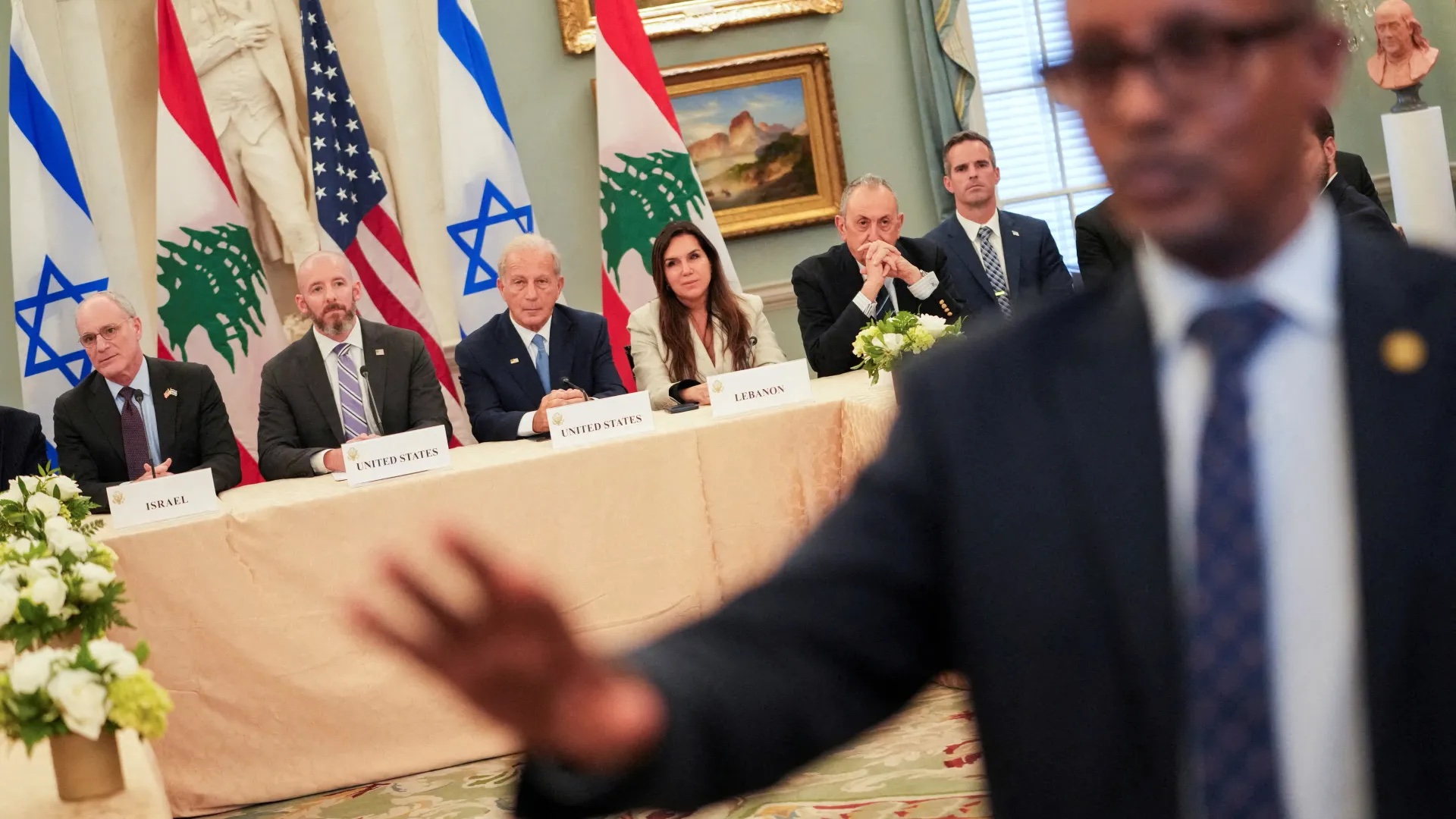
Hezbollah is against the reestablishment of a ceasefire. In spite of the Israel-Lebanon Agreement
Hezbollah has dismissed a renewed ceasefire agreement between Israel and Lebanon as hostilities continue, with new Israeli airstrikes targeting southern Lebanon.
Hezbollah has dismissed a renewed US-backed ceasefire agreement between Israel and Lebanon, characterizing the deal as a capitulation that would benefit Israeli interests while compromising Lebanon’s sovereignty.
Hezbollah leader Naim Qassem issued a pointed statement, rejecting the results of the recent US-mediated negotiations, labeling them as “futile” and “humiliating” for Lebanon. He stated that the proposed arrangement had faced rejection from significant portions of Lebanese society and cautioned that the group would not agree to conditions demanding it cease attacks on Israel and withdraw its fighters from southern Lebanon.
The rejection follows the announcement of a renewed ceasefire framework between Israel and Lebanon, which came after a fourth round of talks in Washington. The agreement outlines the establishment of pilot security zones in southern Lebanon, where Hezbollah operatives will be prohibited, and the Lebanese Armed Forces will take exclusive control.
US President Donald Trump conveyed a sense of optimism regarding the process, noting that he had engaged in discussions with both Hezbollah representatives and Israeli Prime Minister Benjamin Netanyahu. He indicated that advancements were occurring in the effort to alleviate tensions along the border.
“I believe you will witness developments over there,” Trump stated, emphasizing that peace would be advantageous for a nation that has faced years of turmoil.
Hezbollah maintained that the suggested arrangement represented a one-sided concession. Qassem contended that ceasing military operations and pulling back fighters from the southern front would successfully fulfill Israel’s goals without obtaining assurances for Lebanon.
The skepticism resonated in Beirut’s southern suburbs, a stronghold of Hezbollah known as Dahieh. Local residents expressed concerns about the feasibility of a ceasefire amidst ongoing Israeli military operations within Lebanon.
Sami, a shop owner in the area, informed the BBC that a truce would not be effective if only one side adhered to it.
“A ceasefire cannot be one-sided; it must involve all parties or there will be no ceasefire,” he stated.
He characterized the agreement as “surrender” instead of a true peace deal.
Another resident, Hadi, expressed that decades of conflict have led many Lebanese to be skeptical about the potential of political agreements to bring about lasting stability.
Under the proposed agreement, Hezbollah fighters would withdraw from an area extending from the Israeli border to the Litani River, roughly 30 kilometers to the north. Israeli ground forces are presently occupying certain areas of the region.
The United States would support the creation of pilot zones where the Lebanese military would hold exclusive authority, barring all armed non-state actors. However, the agreement does not detail the specific locations of the zones or clarify how they would operate in practice.
The latest initiative comes in the wake of a partial ceasefire declared earlier this week, during which Israel consented to halt strikes on Beirut, while Hezbollah agreed to refrain from launching attacks into Israel. Representatives from both countries are anticipated to reconvene on June 22 for additional discussions focused on achieving a more comprehensive settlement.
While Lebanon’s government hopes the talks could eventually yield a lasting peace, Hezbollah seems resolute in its commitment to remain the primary force opposing Israel.
Despite this, combat persisted on the ground. Israeli Defense Minister Israel Katz stated that military operations will persist for the time being to dismantle what he referred to as terrorist infrastructure in southern Lebanon.
Lebanese media reported several Israeli strikes in the southern region on Thursday. The state-run National News Agency reported that five individuals lost their lives in air raids on the Bekaa Valley town of Sohmor, while an additional person was killed in a strike near the city of Tyre.
Lebanon’s health ministry later reported that at least eight individuals lost their lives and 15 others sustained injuries in attacks aimed at Sohmor, Masaken, and Arab Al-Jalil.
The violence also resulted in the death of a United Nations peacekeeper. The UN Interim Force in Lebanon (Unifil) reported that one of its personnel has died following mortar rounds hitting a position near Marjayoun. Israel has accused Hezbollah of firing the mortars; however, the group has not yet responded to the allegation.
Serbia’s defense ministry has identified the peacekeeper as Senior Sergeant Milovan Jovanovic.
Israel announced the death of one of its soldiers, Capt. Eitan Shmuel Lemberg, who was killed during operations in southern Lebanon.
Hezbollah previously announced that it had deployed drones and rockets targeting Israeli troops and military vehicles in the vicinity of Qantara and Beaufort Castle.
The conflict escalated significantly in March when Hezbollah fired rockets into Israel in response to an Israeli attack that resulted in the death of Iran’s supreme leader. Israel launched a significant air campaign and ground offensive in southern Lebanon.
Attempts to bring the war to a close have consistently stumbled. A ceasefire brokered by the US in April did not succeed in stopping hostilities, as Israel escalated operations last week in reaction to ongoing rocket and drone attacks on northern Israeli communities.
Lebanon’s health ministry reports that at least 3,526 individuals have lost their lives since the onset of the conflict. According to the United Nations, over one million individuals have registered as displaced.