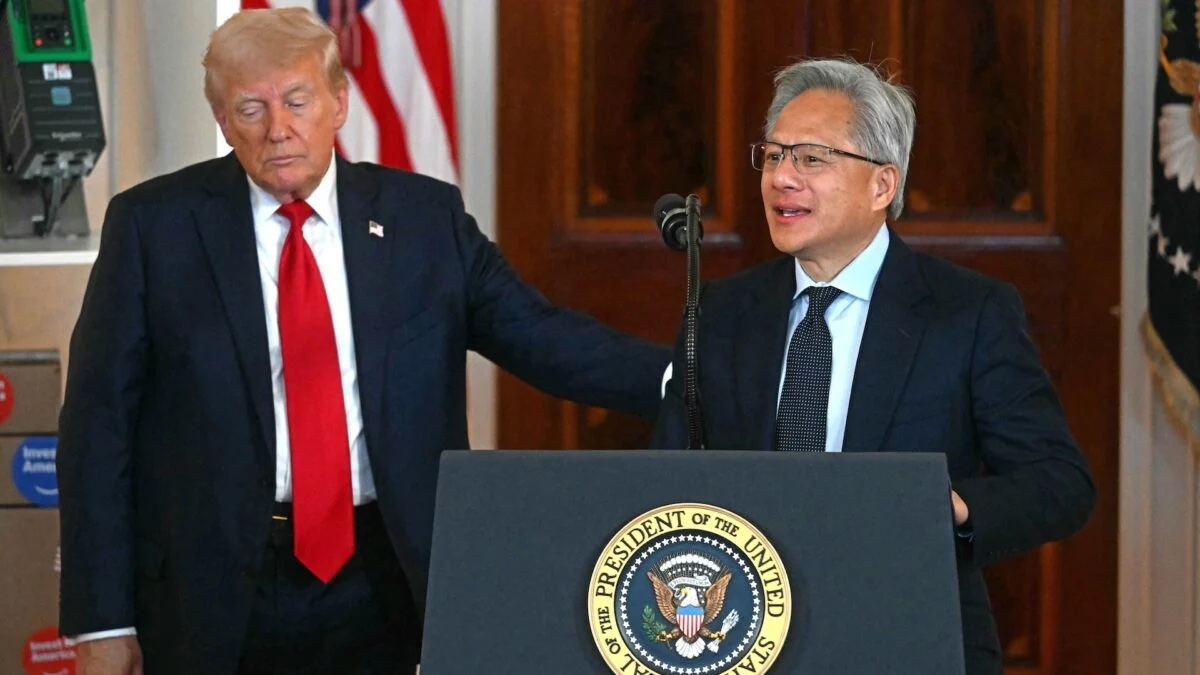
Nvidia CEO Jensen Huang is accompanying Trump on his trip to China, heightening hopes that discussions regarding the stalled H200 AI chip sales will progress.
Nvidia CEO Jensen Huang accompanied US President Donald Trump during his visit to China, raising hopes that the ongoing dispute regarding the sales of the company’s H200 AI chips to Chinese customers might finally reach a resolution.
Huang’s involvement in the Beijing trip came as a surprise, as the White House had previously published a list of executives accompanying Trump, featuring Tesla CEO Elon Musk and Apple CEO Tim Cook.
A source familiar with the matter indicated that Trump reached out to Huang on Tuesday following media reports suggesting that the Nvidia chief had not received an invitation. Huang was subsequently observed boarding Air Force One in Alaska with the president, in anticipation of their arrival in China on Wednesday evening.
“Jensen is attending the summit at President Trump’s invitation to back the United States and the administration’s goals,” an Nvidia spokesperson stated.
A spokesperson from the White House confirmed Huang’s involvement, mentioning that a schedule change allowed him to join the delegation at short notice.
The recent developments have generated a sense of optimism among Chinese technology companies, as there is hope that Nvidia’s delayed H200 chip sales may finally progress following months of negotiations and setbacks.
The H200 chips, considered essential for cutting-edge artificial intelligence systems, have emerged as a significant point of contention in the relationship between Washington and Beijing. Before the intensification of export restrictions, China represented approximately 13% of Nvidia’s total revenue.
A source from a prominent cloud computing company in China informed Reuters that Huang’s presence on the trip was interpreted as an encouraging indication that talks regarding the chips might finally progress.
A source from a prominent Chinese server manufacturer indicated that Huang’s involvement might expedite advancements in the current discussions.
Despite the Trump administration’s approval of H200 chip sales to China late last year and the formal clearance of exports in January under certain conditions, no shipments have been delivered to Chinese buyers as of now.
Individuals knowledgeable about the situation indicated that ongoing disagreements regarding sales conditions and regulatory approvals from both parties have persistently postponed transactions.
Last month, US Commerce Secretary Howard Lutnick stated that Chinese companies continued to face challenges in obtaining approval from their government to finalize chip purchases.
Some US officials and analysts have criticized the issue, contending that granting China increased access to advanced American AI technology may undermine Washington’s competitive edge.
Chris McGuire, a senior fellow for China and emerging technologies at the Council on Foreign Relations and a former official in the Biden administration, expressed criticism regarding Huang’s participation in the trip.
“Any agreement allowing Nvidia to boost chip sales to China leads to a reduction in chip availability for US companies and diminishes America’s advantage over China in AI,” McGuire stated. “It is notable that President Trump remains inclined to prioritize Nvidia’s interests above those of the United States.”