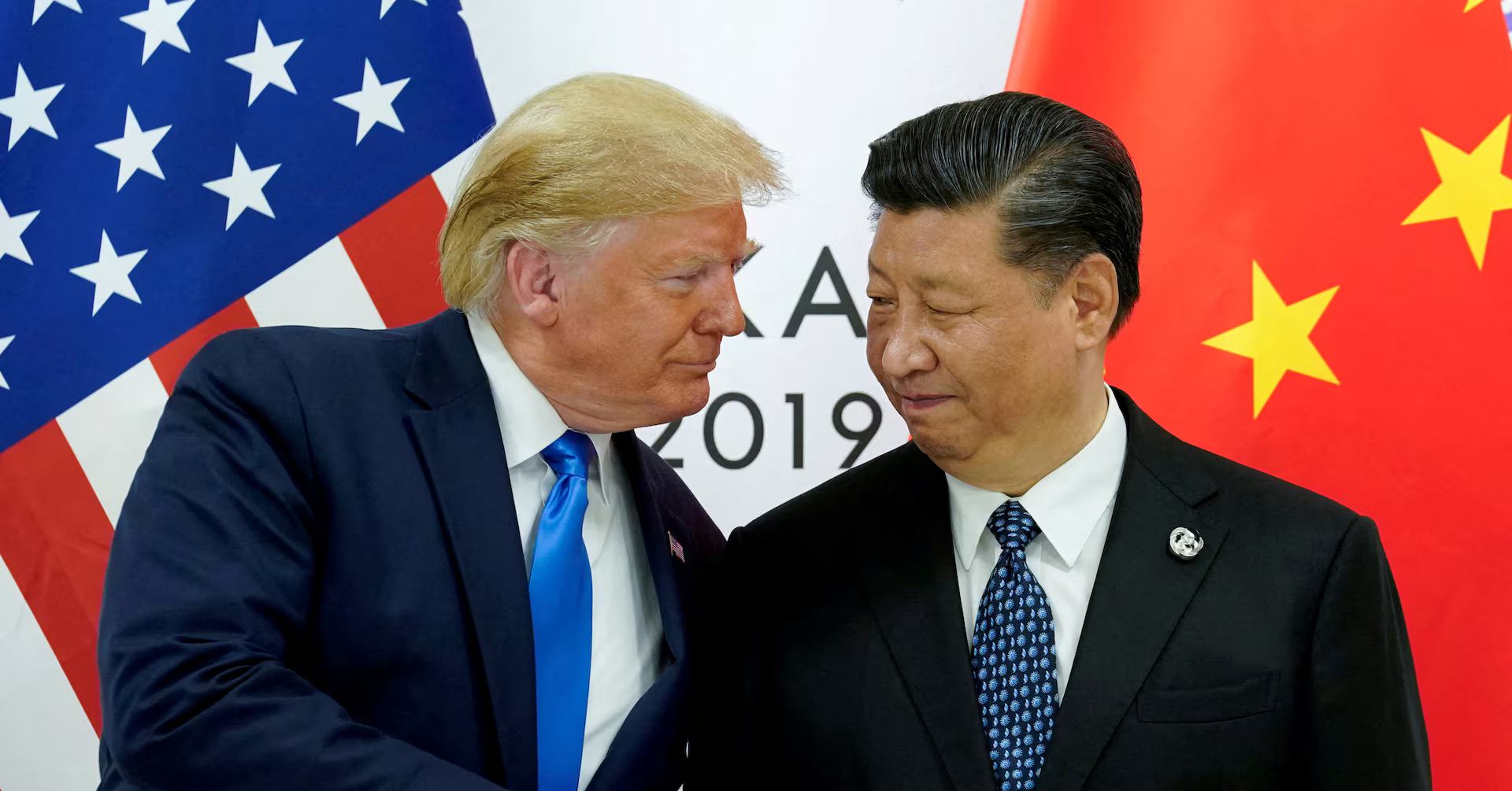
Investors are calling on Trump and Xi to refrain from actions that could hinder AI development, as global markets experience a rally fueled by a robust and growing tech boom.
Market participants express that their primary concern lies not in geopolitical tensions, but rather in the potential easing of restrictions by the United States on advanced chip exports, which are crucial for China’s AI growth.
This signifies a notable change from prior years, during which Chinese markets were significantly influenced by fluctuations in US-China trade relations.
Currently, investor sentiment is predominantly rooted in a positive outlook regarding China’s technological advancements, especially in the realm of artificial intelligence.
China’s currency, the yuan, has consistently gained strength over the past year, achieving a three-year high. Simultaneously, China’s benchmark Shanghai Composite Index has reached an 11-year high, bolstered by robust export performance and increasing demand related to AI.
In the midst of persistent global tensions such as conflicts in the Middle East, issues related to Taiwan, and competition over rare earth materials, investors seem to be directing their attention more towards the AI race than to political disagreements.
“The situation has reversed.” “There’s little China is eager to discuss with Trump,” stated Yang Tingwu, vice general manager at Tongheng Investment, highlighting that market focus has transitioned toward technology-driven growth instead of trade confrontation.
The shift in sentiment arises as Trump embarks on his first visit to China in almost ten years, after a brief lull in trade tensions between Washington and Beijing earlier this year.
Certain analysts suggest that the alleviation of tariff pressures, along with the growth of China’s technology ecosystem, has lessened market sensitivity to political rhetoric. US court rulings have weakened certain aspects of previous tariff measures, while trade flows have persisted through alternative routes in Southeast Asia.
Investors are now heavily positioning around China’s AI ambitions, particularly in data infrastructure and semiconductor access. Companies like China Mobile and China Telecom have drawn heightened investment interest because of their involvement in data center expansion.
“The sole focus for monitoring should be the developments in AI,” stated Zeng Wanping, fund manager at Beijing Monolith Fund Management. “This is the primary focus of the market, nothing else.”
There is also focus on whether the US will ease restrictions on advanced Nvidia chips, which are essential for AI development but are currently subject to strict export controls to China.
Analysts indicate that although diplomatic discussions might address trade, energy, and global conflicts, markets predominantly anticipate that both leaders will refrain from taking actions that could hinder the progress of the global AI boom.
Currently, investor sentiment is closely linked to technology rather than politics, as artificial intelligence continues to transform global markets and investment priorities.