Ruto: Africa Seeks Investment and Equal Partnership, Not Aid
African and global leaders at the Africa Forward Summit emphasized the need for equitable partnerships, financial reforms, and enhanced representation on the continent.
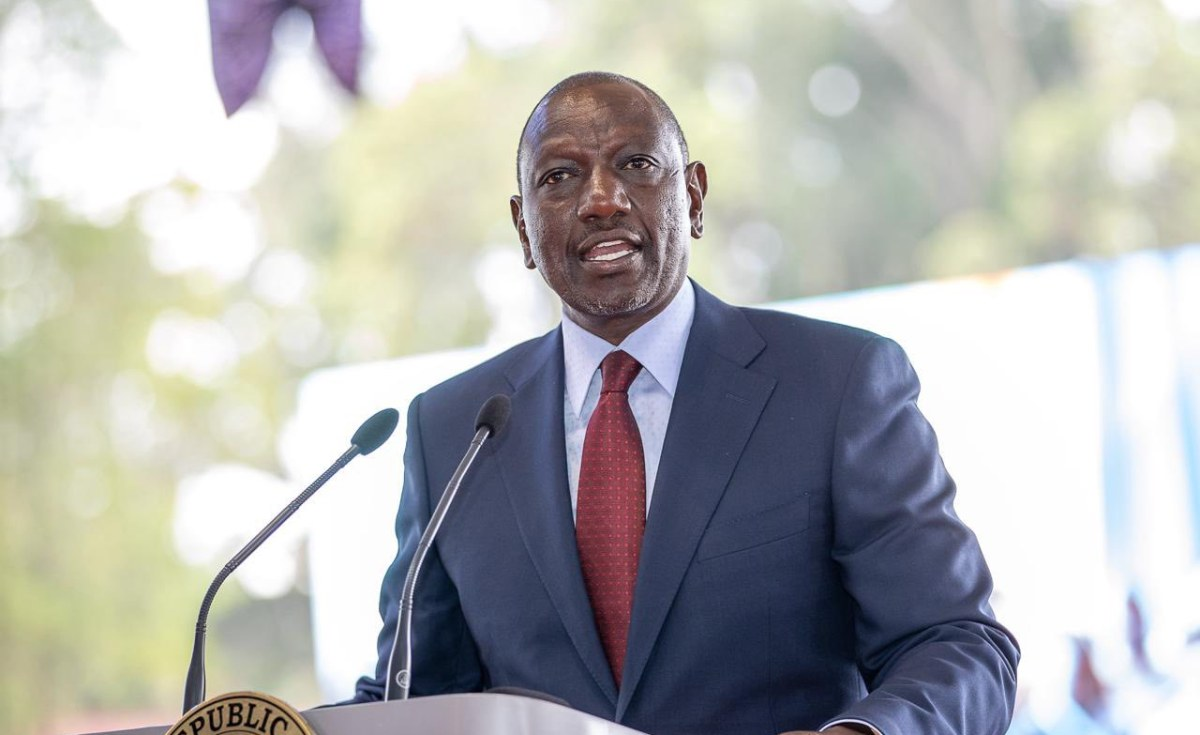
On Tuesday, Kenyan President William Ruto asserted that Africa is moving away from seeking aid from Europe or global financial institutions. He emphasized the need for investment, equal partnerships, and a focus on African-led economic transformation.
Ruto addressed the audience at the Africa Forward Summit in Nairobi, Kenya, where he was joined by French President Emmanuel Macron, Nigerian President Bola Tinubu, and more than 30 African leaders.
The summit, themed “Africa-France Partnerships for Innovation and Growth,” centered on economic reforms, innovation, climate action, technology, and the restructuring of global financial systems.
In his address to the participants, Ruto emphasized that Africa is weary of unequal relationships and seeks partnerships founded on mutual respect, investment, and shared prosperity.
“Africa seeks investment and equal partnership, not aid,” the Kenyan leader stated, characterizing the summit as a “turning point” in the relationship between Africa and France.
He contended that the continent has the potential to foster industrialisation, innovation, and sustainable economic growth if provided with equitable access to financing and investment opportunities.
Ruto emphasized the need for immediate reforms to the international financial system, asserting that African nations are subjected to disproportionately high borrowing costs due to global credit rating agencies overstating the continent’s risk profile.
He stated that the exaggerated perception of risk has persistently driven interest rates upward for African economies, even in light of their growth potential and resource base.
The Kenyan president characterized Africa as a “continent of solutions,” emphasizing its potential to lead in technological innovation and economic transformation instead of solely relying on foreign aid.
French President Emmanuel Macron, who co-hosted the summit, emphasized the need for what he termed “strategic autonomy” for both Africa and Europe.
Macron stated that both continents are confronted with a shared challenge of decreasing reliance on the United States and China for essential technology, artificial intelligence, and strategic minerals.
“Many solutions are produced in the US or produced in China.” He stated, “We share a common struggle, a united effort to establish our strategic autonomy for Europe and Africa.”
The French leader emphasized that Africa’s aspirations in digital technology and artificial intelligence necessitate increased investment in renewable energy and electricity infrastructure.
Macron revealed intentions to broaden the reach of Orange Digital Centres throughout Africa, aiming to train one million young Africans by 2030 with the creation of 50 new centres.
He declared that the era of the old Françafrique model had come to an end, stating that relations between Africa and France should now be founded on mutual respect and partnership instead of paternalism.
“In the past, European leaders would instruct African leaders on their needs, but this is no longer the message that resonates with Africa,” Macron stated.
The French President urged African leaders to enhance governance and accountability, emphasizing that colonialism alone could not account for all of Africa’s current challenges.
Regarding cultural restitution, Macron characterized the return of looted African artworks as “unstoppable,” citing a recently enacted French law that endorses the repatriation of stolen artefacts.
United Nations Secretary-General António Guterres utilized the summit to reiterate his calls for reforms in global governance institutions, characterizing Africa’s lack of permanent representation on the UN Security Council as a “historic injustice.”
“Justice cannot be achieved until there are permanent African members in the Security Council,” Guterres stated.
He expressed sorrow over what he characterized as an unjust global financial system that categorizes African countries as high-risk destinations, despite their economic potential.
The UN chief stated that African countries vulnerable to climate change are still awaiting the financial support that developed nations had previously promised. He emphasized the need for reforms in the global financing structure to guarantee more equitable access to capital and climate funding.
Guterres expressed alarm regarding the deteriorating humanitarian situation in Sudan, cautioning that civilians were bearing “an unconscionable price” for the ongoing conflict.
He urged for an immediate ceasefire and a Sudanese-led civilian transition process, while highlighting the necessity for enhanced cooperation between the United Nations and the African Union.
The summit convened African leaders, global investors, policymakers, and development institutions to explore strategies for accelerating growth, enhancing partnerships, and redefining Africa’s position in the global economy.