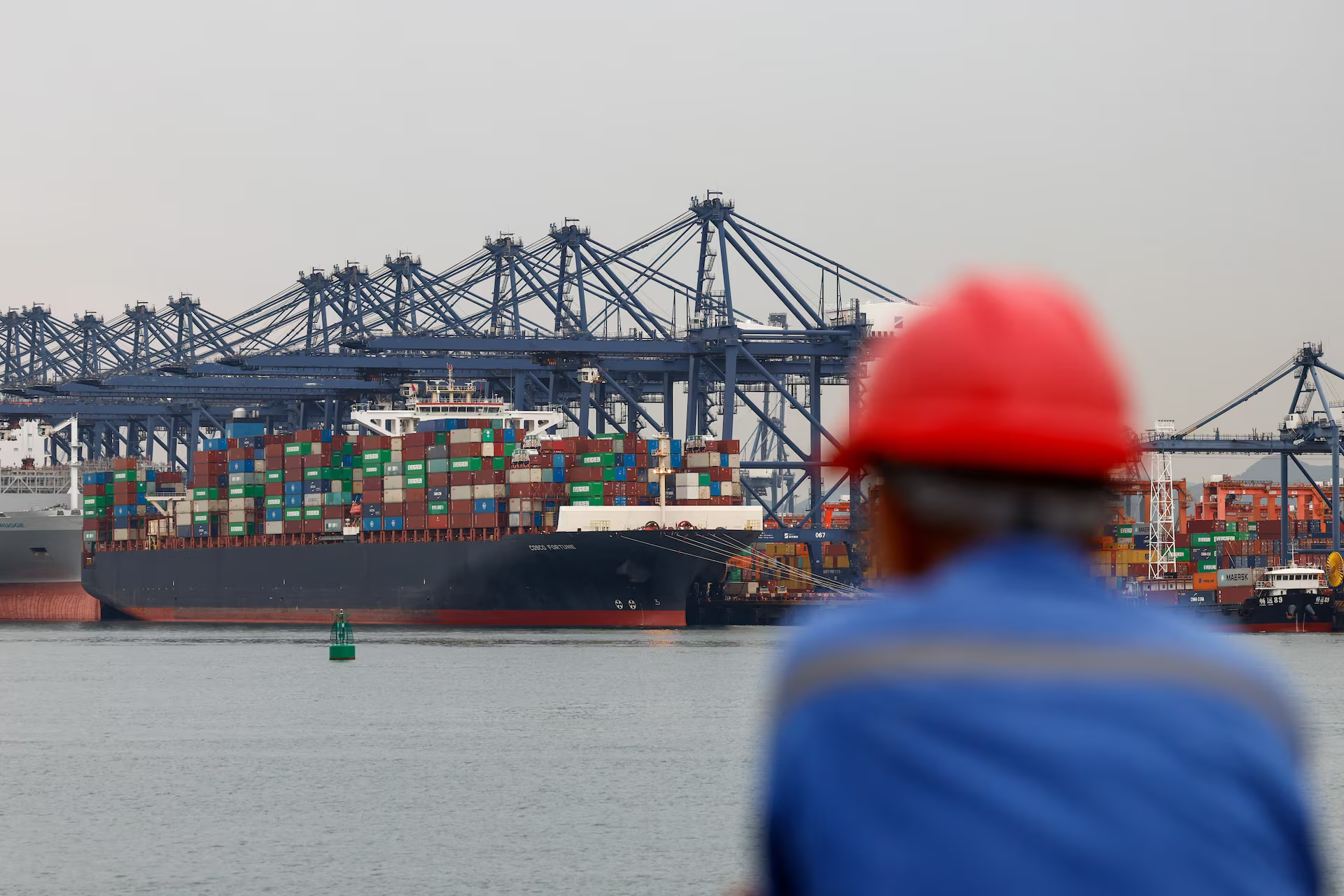
China experienced a 14.1% increase in exports in April, which elevated the nation’s trade surplus to $84.8 billion, driven by robust overseas demand.
Customs data released on Saturday indicated that exports rose by 14.1% year over year in US dollar terms, a notable increase compared to March’s 2.5% rise and surpassing economists’ expectations of 7.9%.
The rise was propelled by manufacturers hurrying to fulfill escalating international orders, as overseas buyers aimed to secure goods and components due to concerns that the Iran war might further elevate global production and shipping expenses.
Chinese exporters have demonstrated remarkable resilience in the face of ongoing instability in the Middle East, bolstered by robust foreign demand and proactive measures by buyers to stockpile supplies. Economists caution that an extended conflict and increasing energy prices may ultimately diminish external demand and exacerbate the strain on China’s already sluggish domestic consumption.
Data from separate factory activities released last month indicated that new export orders reached their highest level in two years, showcasing an enhancement in global demand for Chinese goods.
In April, imports demonstrated another impressive performance, increasing by 25.3% compared to the 27.8% rise observed in March. Analysts projected a 15.2% rise.
In April, China’s trade surplus surged to $84.8 billion, a significant increase from the $51.13 billion reported in the prior month, driven by heightened trade activity.
In the first quarter, China’s economy exhibited steady momentum, with GDP growth hitting 5% year over year. This figure aligns with the upper limit of the government’s annual target range and lessens the immediate necessity for new stimulus measures.
Although the export performance has improved, there are still worries about increasing factory input costs, particularly in petroleum, coal, chemicals, and refined industrial products, as indicated by factory survey data released last month.
Retail sales, an important indicator of consumer spending, remained behind industrial output, as unemployment rates saw a slight increase.
US President Donald Trump is expected to visit China next week for discussions with Chinese President Xi Jinping. Experts suggest that the meeting may result in advancements in agricultural trade and aircraft components, although significant geopolitical disagreements, especially regarding Taiwan, are likely to persist without resolution.