Tigray’s primary political party reaffirmed its authority over the political administration of the northern Ethiopian region on Tuesday, acting on a warning to breach a crucial element of the agreement that concluded a civil war with the federal government.
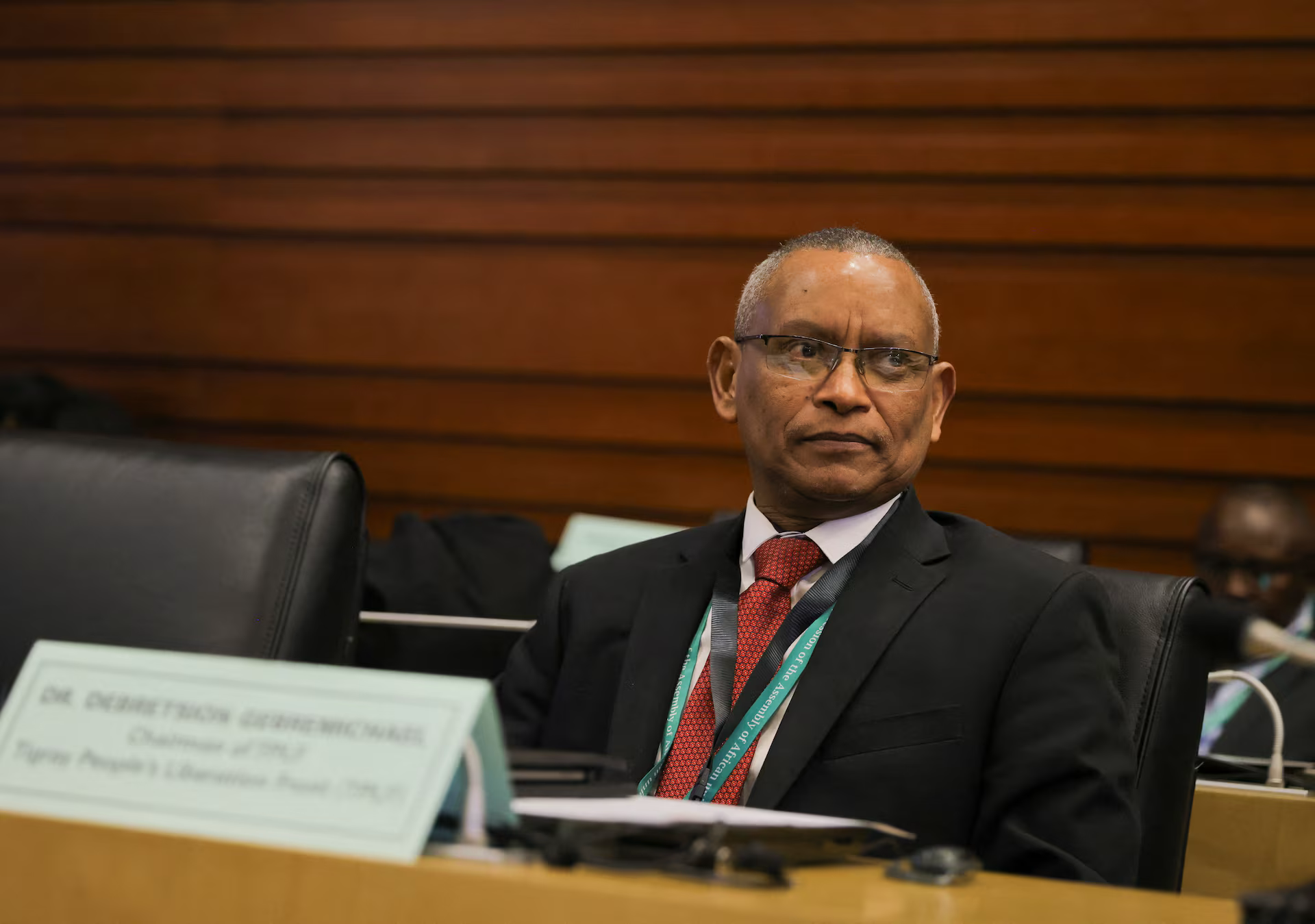
The Tigray People’s Liberation Front (TPLF) announced in a statement that it has reinstated the legislative council that was in place prior to the civil war from 2020 to 2022, and that the council has elected TPLF chair Debretsion Gebremichael as the regional president.
The TPLF declared last month its intention to reinstate pre-war political structures, alleging that the federal government instigated armed conflict with Tigray, withheld funds for civil servant salaries, and extended the tenure of the interim administration’s president without prior consultation. An adviser to Prime Minister Abiy Ahmed warned that “catastrophic conflict” could return to the region, prompted by the prospect. In the past week, both the European Union and Britain have urged for a reduction in tensions.
Billene Seyoum, spokesperson for Abiy, did not provide a response to the request for comment. A representative for the TPLF did not reply to a request for comment regarding the reasons behind the decision or its possible implications.
The civil war from 2020 to 2022 stands as one of the deadliest conflicts of the century.
The conflict in Tigray, which involved forces from neighboring Eritrea, stands as one of the deadliest of the century, resulting in the deaths of hundreds of thousands through direct violence, the breakdown of healthcare, and famine, as reported by researchers.
The situation arose from a deterioration in the relationship between the TPLF, a guerrilla movement that evolved into a political party and held sway over Ethiopian politics for almost thirty years, and Abiy, whose rise to the position of prime minister in 2018 marked the end of the TPLF’s influence. “The decision by TPLF … is evidently a significant escalation.” “If mitigating efforts and a process of de-escalation are not introduced quickly, this may trigger the outbreak of new armed conflict,” Kjetil Tronvoll, a professor of peace and conflict studies at Oslo New University College and a scholar of the TPLF, told Reuters.
In recent months, the Pretoria Agreement has faced challenges, as armed skirmishes have erupted since January between TPLF forces and the federal army, along with government-aligned fighters.
The TPLF’s actions have led to the establishment of competing political administrations.
The Pretoria Agreement established an interim administration, formed through dialogue between the TPLF and Ethiopia’s federal government, to oversee Tigray until new elections could be arranged.
Last month, the TPLF announced its intention to replace the interim administration, alleging that the federal government had breached the Pretoria Agreement by extending the term of the interim administration’s president’s party without prior consultation.
Reuters was unable to independently confirm the TPLF’s assertions regarding the purported breaches of the peace agreement, and the federal government has not provided a direct response to these claims.
The president of the interim administration, Tadesse Worede, has expressed his intention to stay in his position, resulting in the formation of two competing authorities.
A local resident informed Reuters that on Monday, an explosion occurred near the offices of the interim administration in the regional capital, Mekelle. The police stated, as reported by the BBC’s Tigrinya language service, that a hand grenade was responsible for the explosion; however, there were no reported casualties.
The identity of the individual or individuals who may have been responsible remained uncertain.