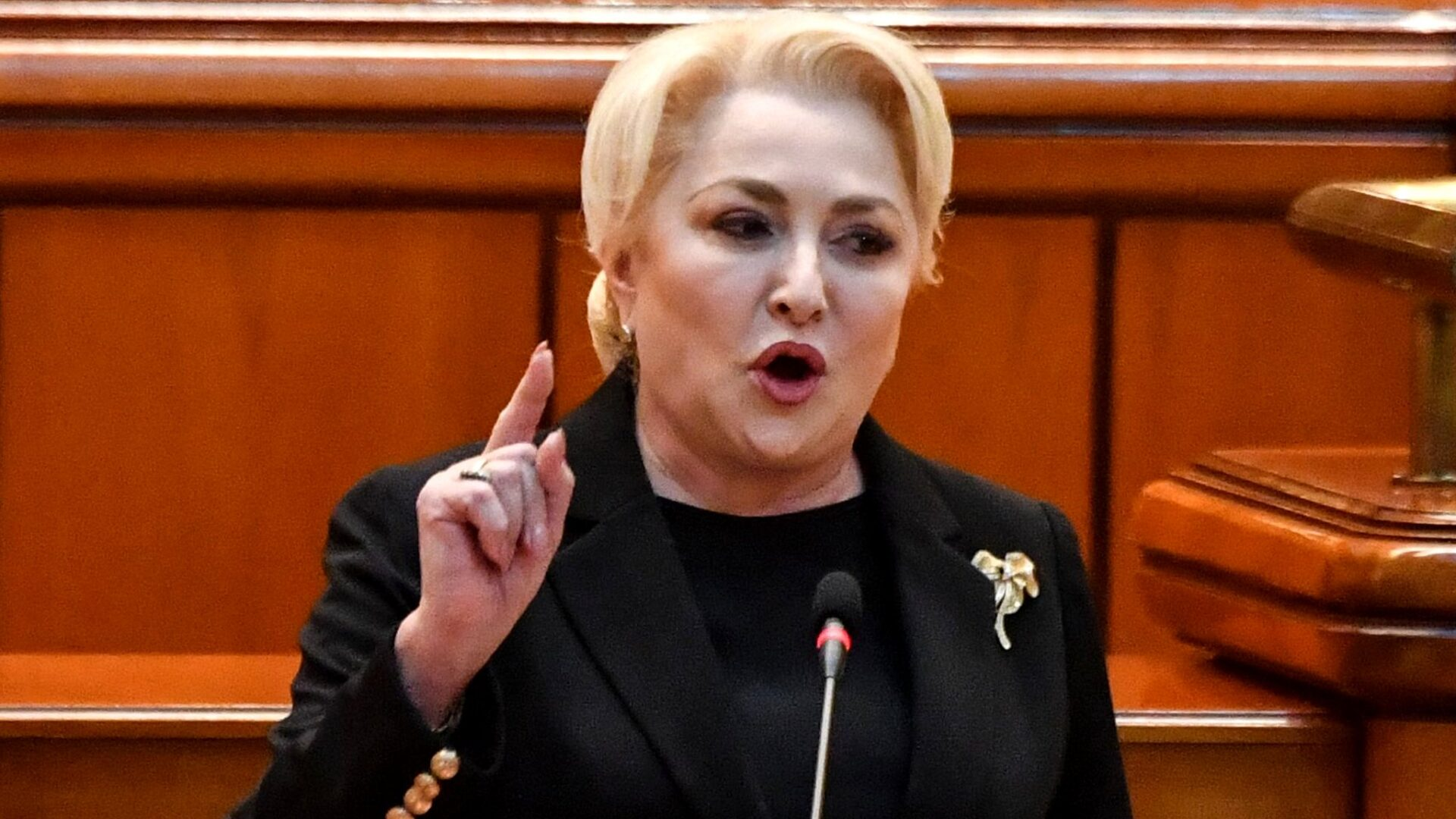
Romanian lawmakers voted on Tuesday to oust the pro-European government led by Prime Minister Ilie Bolojan, as reported by private television station Digi24, citing sources. This development jeopardizes the country’s sovereign debt ratings, its access to EU funds, and the stability of its currency.
Bolojan has been at the helm of a minority government since late April, following the Social Democrats—the largest party in parliament—demanding his resignation. They subsequently exited the four-party pro-European coalition and allied with the far-right opposition to initiate a no-confidence vote.
While a snap election seems improbable, financial markets are apprehensive that the ongoing turbulence may lead Bucharest to falter in its dedication to reducing the EU’s largest budget deficit. Romania’s leu currency has reached a record low against the euro in anticipation of Tuesday’s vote.
The current coalition assumed power 10 months ago with the aim of curbing the advances of the far right following a series of divisive elections. It has started to decrease the deficit, narrowly evading a ratings downgrade from the lowest tier of investment grade.
However, the Social Democrats have consistently found themselves at odds with Bolojan, as his austerity measures have adversely affected their voters and patronage networks, leading to a significant loss of popular support to the far right.
Nonetheless, opinion polls indicate that Bolojan stands as the most favored politician within the ruling coalition. “Is there anyone who can explain how Romania will operate starting tomorrow? Do you have a plan?” Bolojan addressed lawmakers prior to the vote. “Romanians will recognize that governance can be approached differently, with a commitment to respecting public funds, and that cannot be reversed.”
The next general election in the country is scheduled for 2028. The country has never conducted an early election, and analysts suggest that the chances of one occurring now are minimal, given that the opposition hard-right Alliance for Uniting Romanians (AUR) is currently leading in public opinion polls.
Centrist President Nicusor Dan, who nominates the prime minister, is anticipated to invite parties for negotiations and seek to reconstruct the four-party pro-EU coalition with a different member of the Liberals or possibly a technocrat as prime minister.
The Social Democrats have often expressed their willingness to re-enter a pro-EU coalition with a different leader. Bolojan’s party has thus far ruled out collaborating with the Social Democrats again; however, some senior party members have advocated for reconciliation.
Bolojan will continue to serve as interim premier with restricted authority until a new government receives parliamentary approval.
Romania needs to persist in reducing its deficit, projected to decrease to 6.2% of economic output this year from over 9% in 2024. Additionally, it must carry out reforms to access approximately 10 billion euros in EU recovery and resilience funds before the August deadline.