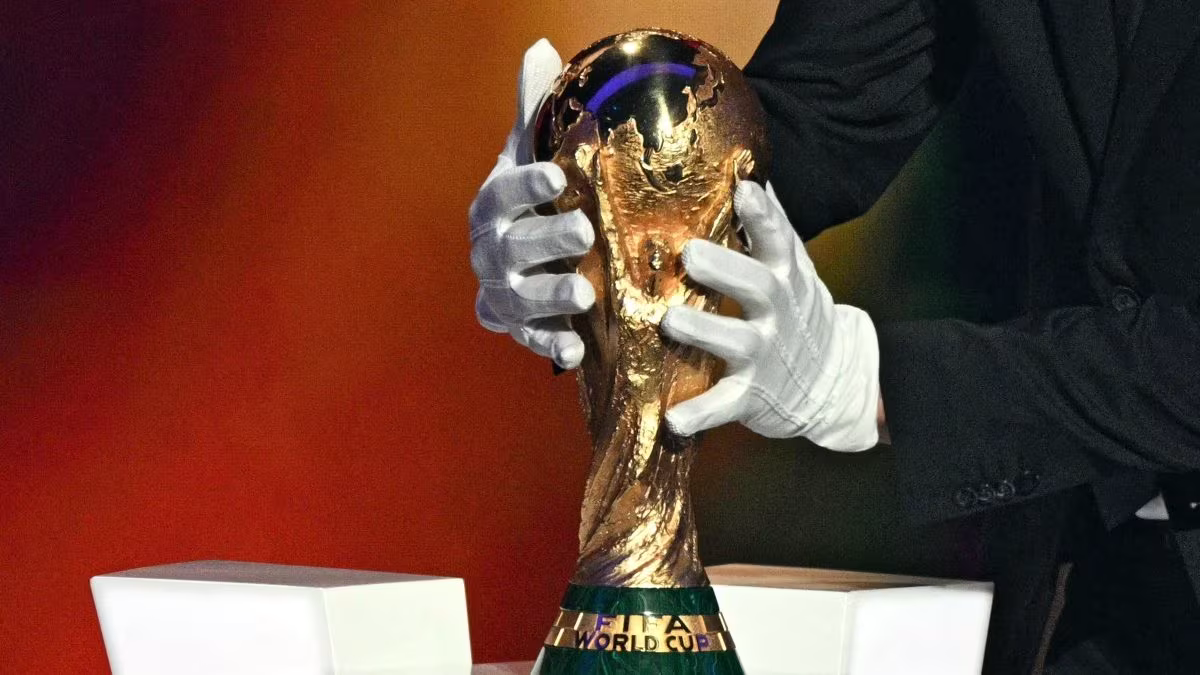
Millions of fans in India and China face uncertainty regarding their ability to watch the World Cup
Millions of soccer fans in the world’s two most populous nations might miss out on watching the World Cup starting next month, as a deadlock over broadcast rights persists in India and no official decision has been made in China.
Reliance and Disney, in India, have proposed $20 million for the broadcast rights of the 2026 World Cup. This amount is significantly lower than FIFA’s asking price, which has been deemed unacceptable by the global governing body of soccer, according to two sources who spoke to Reuters on Monday. Sony (6758.T) has held discussions but has opted not to submit a bid for FIFA rights in India, according to a third source with direct knowledge of the matter.
No deal announcement has been made for China, which FIFA reports accounted for 49.8% of all viewing hours on digital and social platforms worldwide during the 2022 World Cup.
FIFA has finalized agreements with broadcasters in more than 175 territories worldwide, as stated in a communication to Reuters. “Discussions in China and India concerning the sale of media rights for the FIFA World Cup 2026 are ongoing and must remain confidential at this stage,” the statement indicated.
Reliance-Disney, a joint venture spearheaded by billionaire Mukesh Ambani’s Reliance (RELI.NS), did not provide a response to requests for comment, nor did Sony.
Most teams now have a confirmed broadcast agreement with India or China.
In previous World Cups, such as those in 2018 and 2022, the Chinese state broadcaster CCTV obtained the broadcasting rights early on and started showcasing promotional material and sponsor-related advertisements several weeks prior to the tournament.
CCTV, with its broad presence on television and digital platforms, has not yet responded to a request for comment.
In the 2022 tournament, China represented 17.7% of the global linear TV reach, while India accounted for 2.9%. The combined contribution of the two countries represented 22.6% of the overall global digital streaming reach for that World Cup.
The 2026 tournament is set to begin on June 11, allowing just under five weeks for a deal to be finalized, broadcast infrastructure to be established, and advertising inventory to be sold.
Significant soccer enthusiasm in India and China
FIFA initially requested $100 million for broadcast rights for the 2026 and 2030 World Cups in India, according to sources who wished to remain anonymous due to the confidential nature of the discussions.
In 2022, when the World Cup was last broadcast in India, Reliance’s standalone media division acquired the rights for approximately $60 million, a deal that was revealed roughly 14 months prior to the event in Qatar.
A FIFA source informed Reuters that the organization is seeking a comparable sum for this edition of the tournament.
Reliance and Disney (DIS.N) have established a joint venture, positioning themselves as significant players in India’s media and streaming sector. The $20 million FIFA offer highlights the negotiating strength of the Indian group.
FIFA has notably reduced its request from the previous $100 million, yet it remains reluctant to accept the $20 million figure proposed by Reliance, according to one source.
Reliance-Disney, having invested billions in cricket broadcast rights, anticipates that the World Cup will experience reduced viewership in India due to the tournament’s location in the United States, Canada, and Mexico, with most matches scheduled to air after midnight in India, according to sources.
China boasts approximately 200 million soccer fans, surpassing any other nation; however, it has struggled to develop world-class teams, in part due to a top-down approach in which clubs select players from a limited pool of pre-screened candidates.
The second source indicated that football does not hold the same commercial value in India as cricket, the nation’s most popular sport, and that an advertising slowdown associated with the Iranian war has further diminished revenue expectations.
“Football occupies a specialized space in India,” stated the source.
Sony, which operates TV channels and a streaming app in India, has opted not to acquire broadcast rights from FIFA, as it did not align with the group’s economic interests, according to a third industry source. “Although time is limited, I wouldn’t characterize it as a deadlock.” “It’s akin to being at the conclusion of a chess match with just a few moves remaining,” stated Rohit Potphode, managing partner for sports at advertising agency Dentsu India.