Trump says that as part of “Project Freedom,” the US will help ships get through the Strait of Hormuz
Trump announces that the US will assist stranded ships navigating the Strait of Hormuz amid rising tensions affecting global oil supplies and shipping routes.
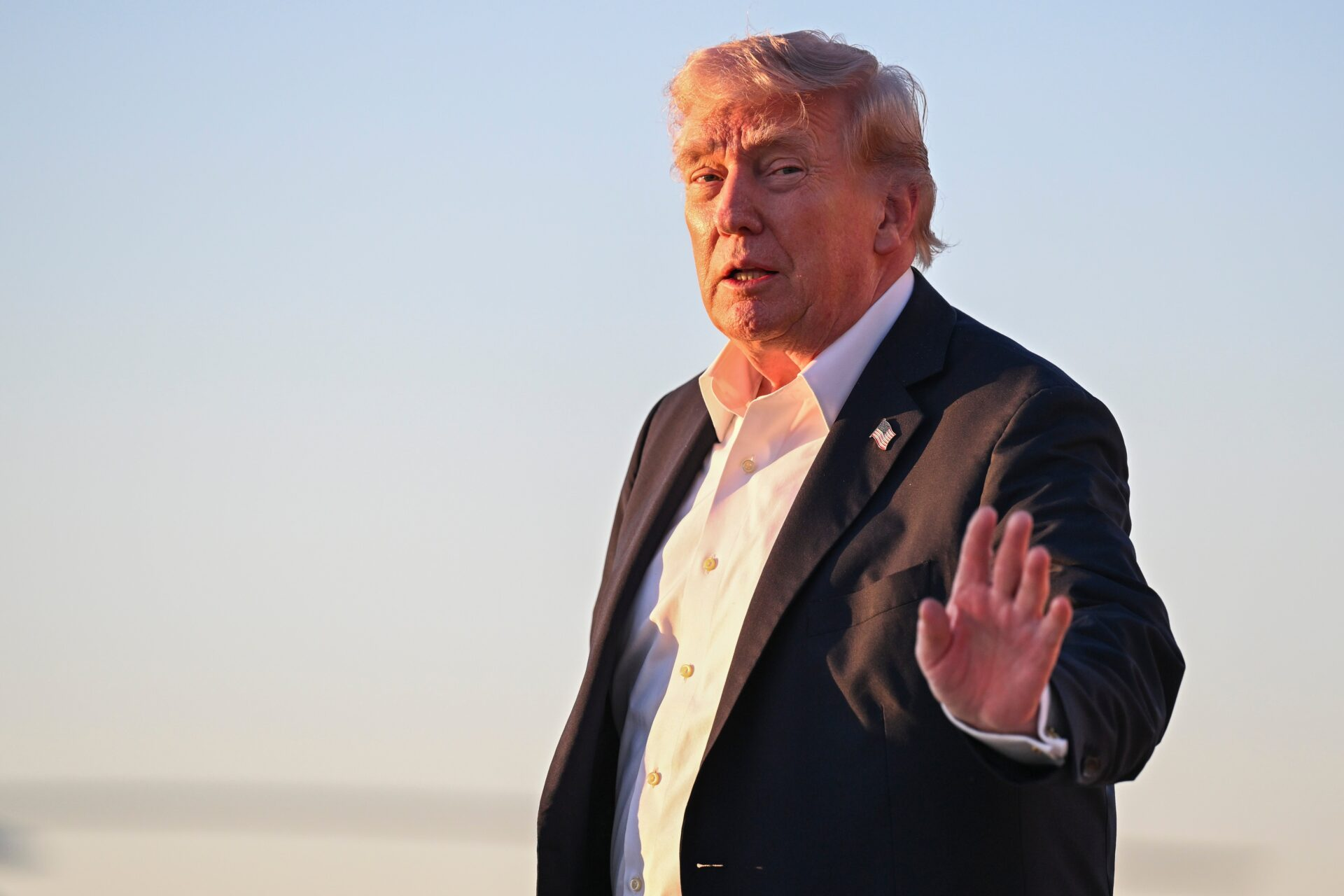
President Donald Trump announced that the United States will assist in guiding stranded vessels out of the Strait of Hormuz starting Monday.
“For the benefit of Iran, the Middle East, and the United States, we have informed these nations that we will ensure the safe passage of their ships through these restricted waterways,” he stated on social media, without detailing which countries would be assisted.
Trump stated that any interference in the process, which he referred to as “Project Freedom,” will need to be addressed with force.
Since the onset of the war in February, Iran has imposed significant restrictions on traffic through the crucial shipping waterway. The United States has implemented a naval blockade on Iranian ports.
Senior Iranian lawmaker Ebrahim Azizi, a former commander in Iran’s Islamic Revolutionary Guards Corps, stated on social media that “any American interference” would be “considered a violation of the ceasefire.”
In Trump’s post, he mentioned that US representatives were engaged in “very positive” discussions with Iran and that those talks “could lead to something very positive for all.”
Trump stated that the operation would serve as a “humanitarian gesture” on behalf of the US, Iran, and other Middle Eastern nations, though he did not specify which countries. He did not offer additional information regarding the management of cooperation with Tehran.
“In every instance, they stated they will not return until the area is deemed safe for navigation, along with all other considerations…” “The ship movement is simply intended to liberate individuals, businesses, and nations that have committed no wrongdoing,” Trump continued.
The United States Central Command announced that 15,000 personnel, guided-missile destroyers, and over 100 aircraft will participate in “Project Freedom.”
Approximately 20,000 sailors have found themselves trapped in the Gulf since the onset of the war with Iran. Concerns have been rising regarding the diminishing supplies and their impact on the physical and mental well-being of sailors.
Approximately 20% of the global oil and liquefied natural gas typically transits through the strait. The ongoing conflict has resulted in an increase in global energy prices.
On Sunday evening, the United Kingdom Maritime Trade Operations announced that a tanker had been struck by an “unknown projectile” in the strait, noting that the crew was safe.
Trump announced his statement following reports from Iranian state-linked media indicating that Tehran had received a response from the US regarding its most recent peace proposal.
According to Iran’s semi-official Tasnim news agency, the response, which was conveyed through Pakistan, is currently under review.
The US has yet to officially confirm whether it has responded. On Sunday, Trump reportedly expressed to Israel’s Kan News that he found the proposal unacceptable.
According to Iranian state media, Tehran’s 14-point peace plan calls for Washington to withdraw its forces from the vicinity of Iran’s borders and to lift its naval blockade of Iranian ports. It also urged for an end to hostilities, including Israel’s actions in Lebanon.
The proposal aimed to secure an agreement within 30 days.
Iranian state media reported that the plan encouraged both parties to concentrate on “ending the war” instead of prolonging a ceasefire.
Esmaeil Baghaei, the spokesman for the Iranian foreign ministry, stated that “at this stage, we do not have nuclear negotiations.”
Iran has consistently refuted claims that it is pursuing a nuclear bomb. It claims that its program is intended for peaceful purposes, despite having enriched uranium to levels close to those suitable for weapons.
On Saturday, Trump announced that Washington had received the most recent Iranian peace proposal.
In a post on Truth Social, he stated that he would review the plan but expressed skepticism, saying he “can’t imagine that it would be acceptable in that they have not yet paid a big enough price for what they have done to humanity and the world over the last 47 years.”
In a conversation with reporters afterward, he mentioned that he had been informed “about the concept of the deal” and added, “They’re going to provide me with the exact wording now.”
When asked by the BBC if military strikes against targets within Iran might resume, Trump indicated that it was “a possibility.”
“Should they act out?” “If they engage in wrongdoing,” he stated. “However, at this moment, we shall observe.”
The US president indicated a firm stance on the conflict, stating, “We’re not leaving,” and “We’re going to do it, so nobody has to go back in two years or five years.”
Agencies linked to the Iranian state reported that Tehran’s most recent proposal was a reaction to a nine-point plan from the US, which detailed a two-month ceasefire.