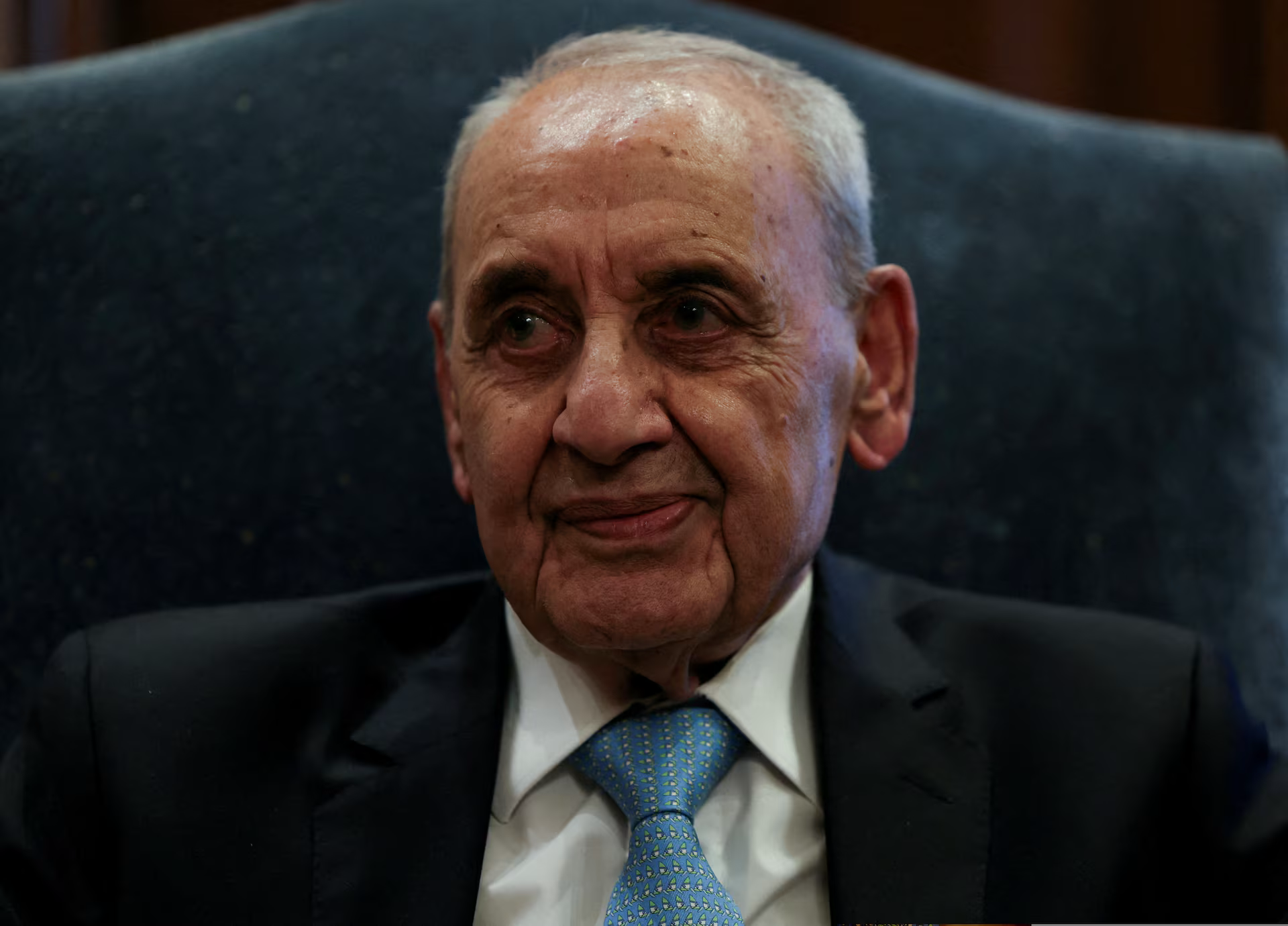
The speaker of Lebanon’s parliament, the highest-ranking Shi’ite politician and a close ally of Hezbollah, stated on Monday that negotiations with Israel cannot occur without a cessation of the ongoing war in southern Lebanon, which continues despite a ceasefire.
Nabih Berri’s remarks, delivered as Israeli forces instructed residents to evacuate four additional villages in southern Lebanon, highlight the difficulties confronting U.S. initiatives aimed at establishing peace between the nations that engaged in uncommon, direct discussions last month.
In March, Israel launched an invasion of Lebanon to eliminate Hezbollah, the Iran-backed Shi’ite militant group that fired across the border in support of Tehran following the attacks by the United States and Israel on Iran. Tehran asserts that any agreement to conclude the broader conflict must also cease hostilities in Lebanon, while Washington maintains that the matters are distinct.
In mid-April, Israel and Lebanon reached an agreement for a ceasefire, which has now been extended into May. While the intensity of fighting has lessened, it has not ceased entirely. Israel continues to occupy southern Lebanon and has been demolishing villages in the region, while Hezbollah persists in its attacks on Israeli forces.
Berri informed Lebanon’s An-Nahar newspaper that the foremost priority should be “stopping the war before any political track.” He also expressed his refusal to engage in negotiations without assurances that Israel would cease its attacks, as outlined in a summary of his remarks issued by his office.
The Israeli military on Monday warned residents of four villages outside its declared security zone to evacuate their homes immediately, alleging that Hezbollah had violated the ceasefire and stating its intention to take action against it.
On Sunday, Hezbollah announced that it had conducted 11 operations targeting Israeli forces in southern Lebanon.
The government of Lebanon seeks a lasting arrangement with Israel aimed at halting the ongoing cycle of invasions and strikes, though it stops short of expressing a desire for a peace agreement. Israel asserts that any agreement must include the permanent disarmament of Hezbollah.
U.S. President Donald Trump, who hosted delegations from the two countries for last month’s ceasefire talks, expressed optimism about the prospects of a peace agreement this year, stating there was “a great chance.” He also indicated his desire to facilitate a meeting soon between Israel’s Prime Minister Benjamin Netanyahu and Lebanon’s President Joseph Aoun.
Hezbollah and Berri have expressed their opposition to the in-person meetings.
Aoun has expressed his support for ambassador-level discussions with Israel, aiming to establish a ceasefire, which would be followed by broader negotiations addressing Lebanon’s additional demands, such as a complete Israeli withdrawal, the repatriation of displaced individuals, and the release of captives held by Israel.
According to Lebanon’s health ministry, over 2,600 individuals have lost their lives in the conflict since March 2. Israel reports that 17 of its soldiers have lost their lives in southern Lebanon, while two civilians have died due to attacks from Hezbollah.
The conflict has intensified divisions in Lebanon regarding Hezbollah’s position as an armed entity. The government has been pursuing the peaceful disarmament of Hezbollah since last year.