UAE says it can’t trust Iran over Hormuz, and peace talks have broken down
On Friday, a UAE official said Tehran could not be trusted to make plans for the Strait of Hormuz. This showed that everyone did not trust Tehran, and efforts to end the Iran War were still stuck.
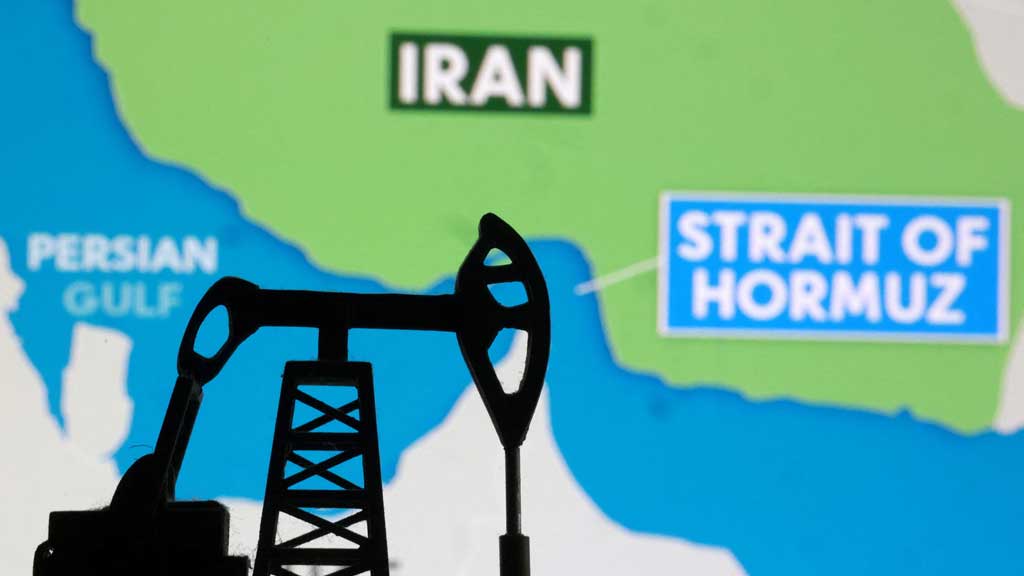
Even though the war has been going on for two months, the important sea route is still mostly closed because of an Iranian blockade, and the U.S. Navy is stopping the sale of Iranian crude oil. 20% of the world’s oil and gas supplies have been cut off by the blockade. The blockade has caused energy costs to rise and economic downturn fears to grow.
Even though there has been a ceasefire since April 8, news that U.S. President Donald Trump was going to be told about new military plans to force Iran to talk drove up the price of oil to a four-year high on Thursday.
Iran has established its air defenses and is preparing a significant counterattack in the event of an assault. Two top Iranian sources told Reuters, speaking on the condition of anonymity, that they think there will be a short, intense U.S. strike followed by an Israeli attack.
“ATTACKS THAT ARE OFFENSIVE”
The White House hasn’t said what it will do next. Trump told Pakistan on Tuesday that he was not happy with Iran’s latest offer, and the country has not yet set a date for new talks to end the war that has killed thousands of people, mostly in Iran and Lebanon.
After airstrikes by the US and Israel on February 28, Iran fired at U.S. bases, infrastructure, and companies with ties to the US in the Gulf states. Iran-backed Hezbollah in Lebanon also launched missiles at Israel, prompting a retaliatory attack on Lebanon.
To show that the Gulf states are worried, Anwar Gargash, the presidential adviser for the UAE, said that the main things that protect free navigation through the strait were “collective international will and provisions of international law.” He also wrote, “And, of course, no unilateral Iranian arrangements can be trusted or relied upon following its treacherous aggression against all its neighbors.”
Under the 1973 War Powers Resolution, Trump has until Friday to either end the war or make the case to Congress for continuing it.
A top administration official said that for the purposes of the resolution, hostilities had ended because of the April ceasefire between Washington and Tehran. This means that the date will likely pass without changing the course of the war.
Financial and energy markets stayed tense because of worries about the talks that have reached a stalemate and the possibility that the Strait of Hormuz could remain closed for a long time.
On Friday, the price of Brent crude futures went up again, this time by a small amount to over $111 a barrel. They are expected to rise 5.7% over the course of the week after reaching a high point of $126 a barrel on Thursday, which was the highest level since March 2022.
IRAN SAYS NOT TO EXPECT TALKS TO END QUICKLY
Esmaeil Baghaei, a spokeswoman for Iran’s Foreign Ministry, warned on Thursday not to expect quick results from talks.
A top member of Iran’s Revolutionary Guards said that any new U.S. attack on Iran, no matter how small, would lead to “long and painful strikes” on U.S. positions in the region. Commander of the Aerospace Force Majid Mousavi was quoted by Iranian media as saying, “We’ve seen what happened to your regional bases; we will see the same thing happen to your warships.”
Trump said again on Thursday that Iran would not be allowed to have a nuclear weapon. He also stated that the price of gas would significantly decrease once the war concluded, a major concern for his Republican Party ahead of the November midterm elections.
Iran says that its nuclear program is only for peaceful reasons.
Trump called Iran’s economy “a disaster” on Thursday, but experts say he might have to wait a while if he wants Iran to blink first in a game of economic chicken.
Iran’s already serious economic problems have gotten worse during the war, and things could get much worse afterward. However, the country appears to be able to handle the current situation in the Gulf, even though the U.S. blockade has stopped its energy exports.
According to the news site Axios, one plan that was going to be shared with Trump by top U.S. military leaders at a meeting on Thursday was to use ground troops to take over part of the strait so that commercial shipping could resume. Officials say Trump is also considering extending the U.S. blockade or claiming victory on his own.
Washington didn’t say anything about its plans right away.
In a sign that the U.S. was also thinking about a world without war, a State Department message that was supposed to be read out loud to partner countries by May 1 asked them to join a new group called the Maritime Freedom Construct to help ships get through the strait.
An alliance of this kind has been talked about by France, Britain, and others, but they have said they will only help open the Strait once the fighting stops.