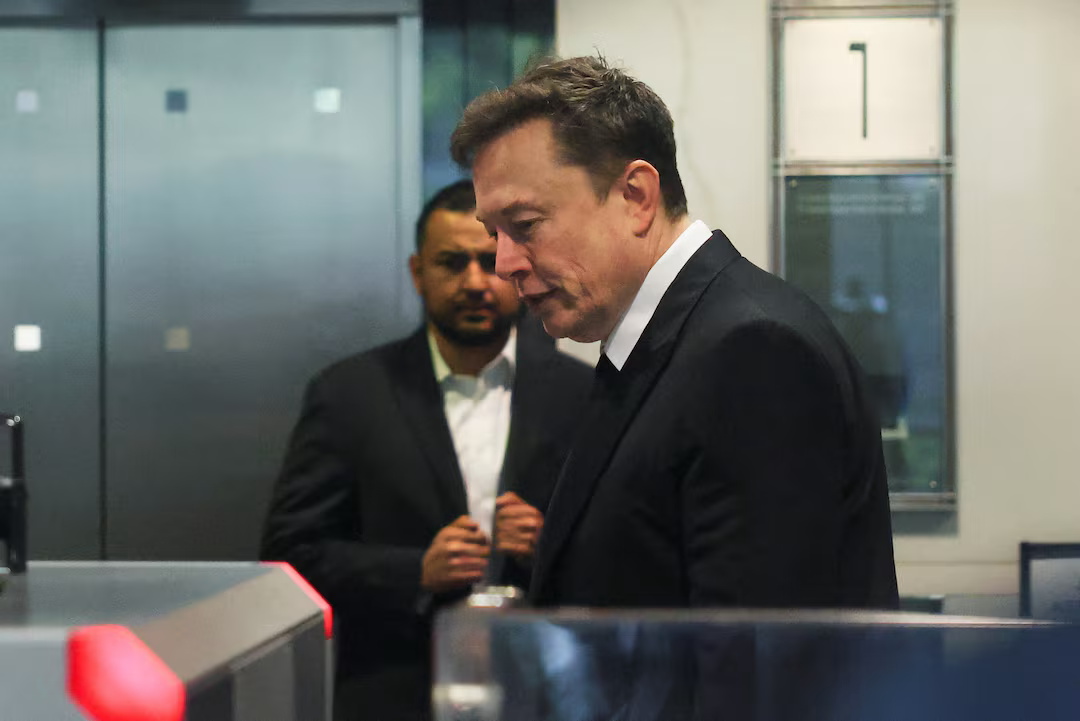
Elon Musk informed the court that he did not review the “fine print” regarding the transition of OpenAI, expressing that he relied on the assurances that the organization would continue to operate as a nonprofit.
Elon Musk informed a court that he did not review the “fine print” regarding plans associated with OpenAI transitioning to a for-profit entity, stating that he depended on assurances that it would continue as a non-profit organization.
During cross-examination on Thursday, Musk stated that he was aware of initial discussions but believed the organization would maintain its original structure.
“My testimony is that I overlooked the fine print and only focused on the headline,” he stated.
The lawsuit involves Musk taking legal action against OpenAI, along with its CEO Sam Altman and president Greg Brockman. He claims they obtained his $38 million in donations and support by pledging to establish a non-profit dedicated to safe AI development, only to change course later.
William Savitt, a lawyer representing OpenAI, inquired of Musk regarding a term sheet from 2017 that detailed a shift to a for-profit model managed by a non-profit entity.
Musk stated that he had received reassurance from Altman and others during that period.
“I received assurances from Sam Altman and others that OpenAI would persist as a nonprofit,” he stated in court.
The trial, currently in its third day in a California courtroom, has the potential to influence the future of OpenAI. The organization is the driving force behind ChatGPT and has garnered billions in investments while increasing its computing capabilities in anticipation of a potential public offering.
Musk is pursuing modifications to OpenAI’s governance and $150 billion in damages.
His claims have been rejected by OpenAI. Musk is reportedly seeking to regain control of the company and is dissatisfied with its performance since stepping down from the board in 2018. The company also states that he is advancing his own AI initiative, xAI.
Throughout the hearing, Musk occasionally displayed frustration with the line of questioning.
“Few answers will be complete, particularly when you interrupt me constantly,” he remarked.
US District Judge Yvonne Gonzalez Rogers subsequently expressed disapproval of the lawyer’s interruptions while rejecting Musk’s assertion that the questioning was biased.
Musk was questioned about why he had not pursued legal action sooner and if he should have anticipated the transition to a for-profit model.
He informed the court that the for-profit division currently possesses the majority of OpenAI’s value.
“The for-profit sector is clearly where the value lies.” The for-profit has captured the vast majority of the value of the nonprofit,” he stated.
Musk stated that his company, xAI, had utilized OpenAI systems to train its own models.
“It is common practice to utilize other AIs for the validation of your AI,” he stated.
Musk was released following over two hours of interrogation. Jared Birchall, his aide, subsequently took the stand.