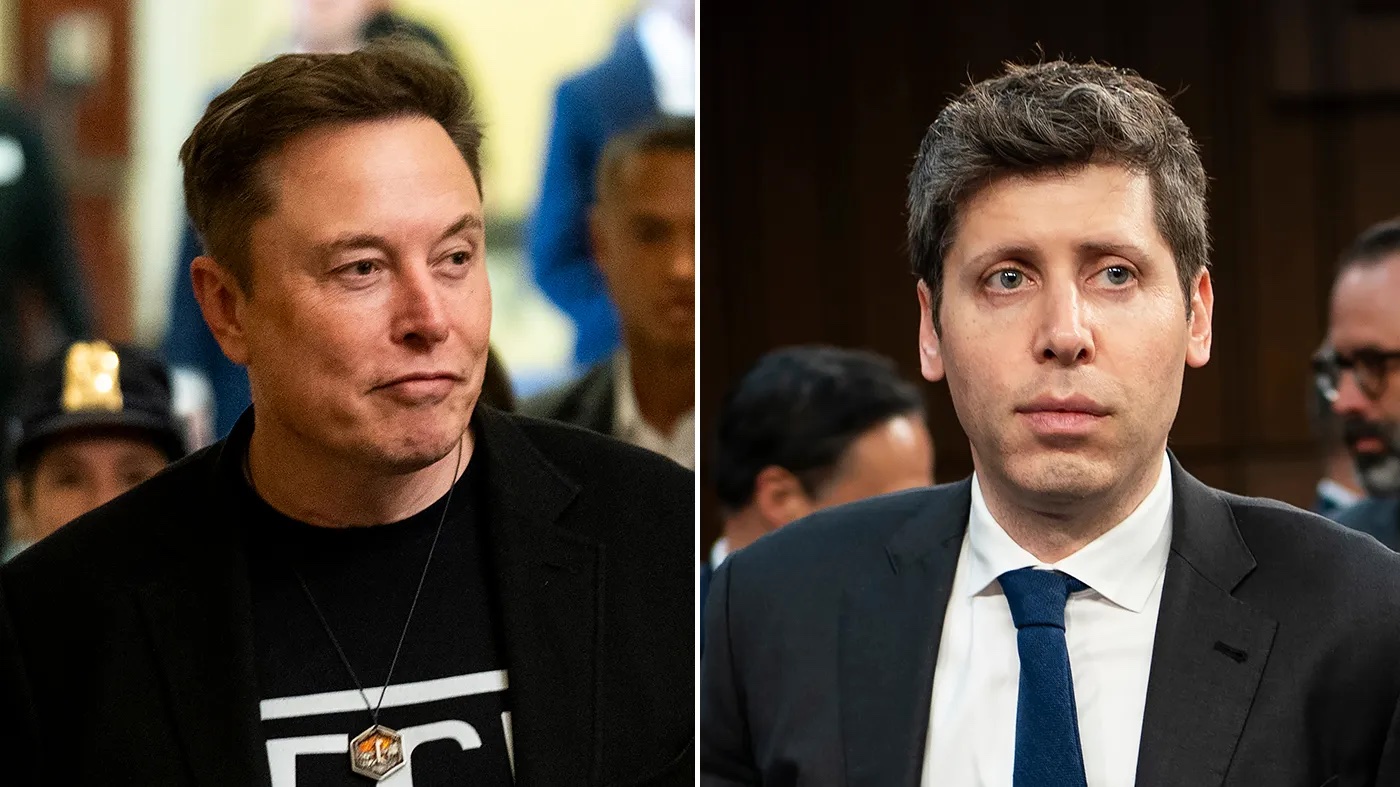
A trial set to influence the future of artificial intelligence commences on Tuesday, featuring billionaires Elon Musk and Sam Altman in disagreement over the transformation of ChatGPT creator OpenAI from a nonprofit organization to a profit-driven powerhouse valued at hundreds of billions of dollars.
The civil lawsuit involving Musk against OpenAI and Altman will commence with opening statements in the federal court located in Oakland, California, after the selection of nine jurors on Monday.
Musk asserts that Altman and Greg Brockman, the chief executive and president of OpenAI, have betrayed both him and the public by deviating from the company’s mission to serve as a benevolent steward of AI for humanity’s benefit, instead transforming it into a “wealth machine” for their gain and that of investors.
The world’s wealthiest individual is pursuing $150 billion in damages from OpenAI and Microsoft, one of its major investors, with the funds intended for OpenAI’s charitable division.
He is also advocating for OpenAI to transition back to a nonprofit status, with Altman and Brockman being removed from their positions as officers and Altman being taken off the board.
Musk, the founder of Tesla and SpaceX, stated that he contributed approximately $38 million in seed funding to OpenAI for its initial mission, only to witness OpenAI establish a for-profit organization in March 2019, shortly after he departed from its board.
OpenAI asserted that Musk was aware of and endorsed the transformation and only initiated legal action after his unsuccessful bid for the CEO position and the launch of his own AI company to hinder its progress.
Musk has ceased his pursuit of damages for himself while he continues to seek claims of breach of charitable trust and unjust enrichment.
U.S. District Judge Yvonne Gonzalez Rogers has indicated her desire for jurors to commence deliberations regarding the defendants’ liability by May 12.
The jury consists of nurses, city employees, and retirees. If the jury finds the defendants liable, both parties will present their arguments for potential remedies to the judge.
Musk, Altman, and Microsoft CEO Satya Nadella are among the witnesses anticipated to testify, with Musk expected to take the stand as early as this week.
EGOS AND PERSONALITIES
Musk and Altman established OpenAI in 2015 with the aim of advancing AI for the benefit of humanity while countering competitors like Google.
The trial may reveal more about the egos and personalities that influenced OpenAI’s transformation from a nonprofit research lab in Brockman’s apartment to a company valued at over $850 billion.
It may complicate OpenAI’s plans for a potential initial public offering by raising questions about its leadership and could also heighten Americans’ concerns regarding AI technology in general.
OpenAI contends that Musk’s actions were driven by jealousy as he sought to hinder its development while promoting his own xAI, which he established in 2023 soon after OpenAI introduced ChatGPT.
Reports indicate that Musk participated in discussions about creating OpenAI’s new framework and expressed interest in becoming its CEO.
Microsoft has refuted claims of collusion with OpenAI, stating that their collaboration began only after Musk’s departure.
OpenAI is encountering increasing competition from rivals such as Anthropic and is investing billions in computational resources. According to a report by Reuters, a potential IPO may place the company’s value at $1 trillion.
Musk’s xAI lags significantly behind OpenAI in terms of usage. He has integrated that business into his rocket company SpaceX, which may see its own IPO this year, potentially becoming the largest ever.
Last fall, OpenAI restructured itself once more to become a public benefit corporation, with the nonprofit and various investors, including Microsoft, holding stakes. The nonprofit possesses a 26% ownership interest, along with warrants contingent upon OpenAI achieving specific valuation milestones.
An organization structured as a public benefit corporation could enhance OpenAI’s appeal to investors while preserving its foundational charitable principles.