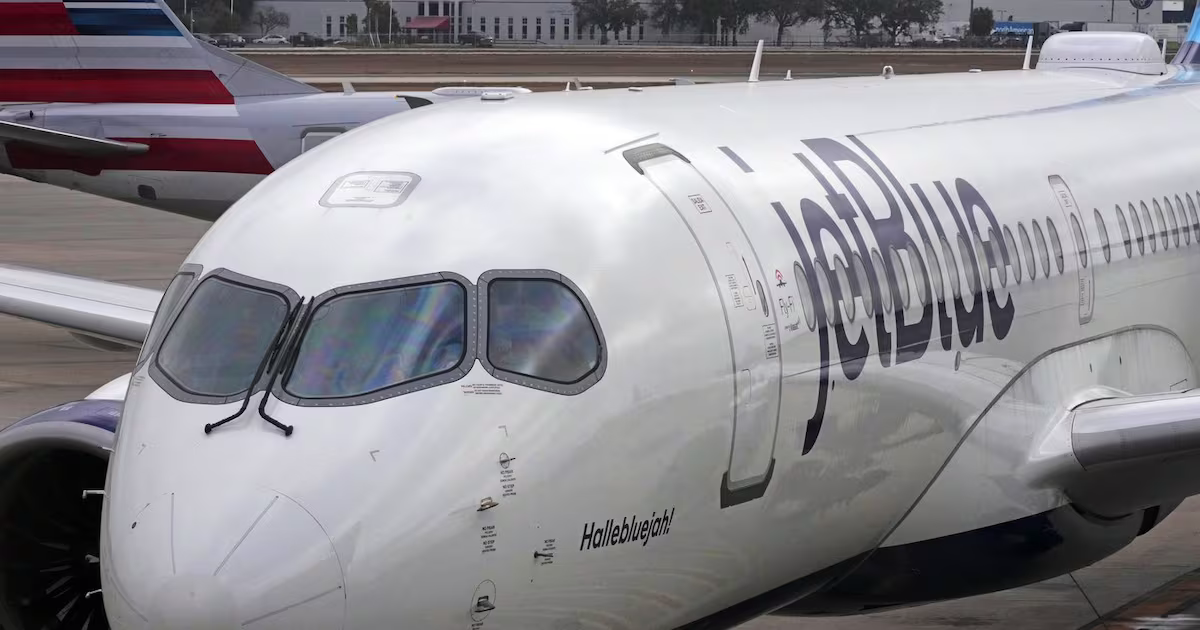
JetBlue Airways announced on Tuesday its intention to reduce hiring, decrease capacity, and raise fares in response to rising jet fuel costs, following a larger-than-expected loss in the first quarter that could jeopardize the airline’s recovery plans.
The U.S.-Israeli assault on Iran has resulted in the closure of the vital Strait of Hormuz, interrupting nearly 20% of the world’s oil and gas supplies and causing the most significant upheaval in the aviation sector since the COVID-19 pandemic.
“Despite the increasing volatility in the macro environment, especially concerning fuel, we are implementing decisive measures to manage what we can control, such as adjusting capacity, optimizing revenue, and upholding disciplined cost control,” stated CEO Joanna Geraghty on Tuesday.
The airline intends to recover 30% to 40% of the increased fuel costs in the second quarter, with the goal of fully recouping these expenses by early 2027.
Since the conflict began at the end of February, jet fuel prices have almost doubled, putting carriers in a difficult position as they face rising costs while being unable to adjust the prices of tickets that have already been sold.
The New York-based carrier anticipates an average fuel price per gallon ranging from $4.13 to $4.28 in the second quarter, in contrast to $2.40 per gallon during the corresponding period last year.
During the first quarter, fuel prices increased by approximately 15% compared to the same period last year.
Willie Walsh, the general director of the International Air Transport Association, stated on Tuesday that airlines cannot absorb the significant increase and will need to transfer the additional costs to consumers.
Increasing fuel costs intensify the challenges faced by smaller carriers such as JetBlue, which possess limited financial flexibility and are more vulnerable to uncertainty. Industry executives caution that the conflict in the Middle East may alter the dynamics of the airline industry.
JetBlue began 2026 with the goal of regaining stability and starting to enjoy the advantages of a turnaround initiative initiated in 2024, emphasizing stringent cost controls, route optimization, and the deferral of aircraft deliveries. However, elevated fuel costs pose a significant risk to the success of that plan.
Last week, CEO Joanna Geraghty informed employees that JetBlue is not contemplating bankruptcy, as stated in a memo reviewed by Reuters. She emphasized that the airline has sufficient liquidity and the ability to secure additional capital.
The New York-based carrier has recently obtained a $500 million debt financing commitment, secured by up to 22 aircraft, along with the option to raise an additional $250 million by utilizing more planes as collateral.
In the first quarter, operating revenue increased by 4.7% year-over-year, reaching $2.24 billion. Additionally, revenue per available seat mile, a widely recognized industry metric that serves as a proxy for pricing power, saw a rise of 6.5% during the same period.
The New York-based carrier announced an adjusted loss of $319 million, equating to 86 cents per share, which fell short of analyst expectations of a loss of 71 cents.