Ukraine Commemorates Four Decades Since Chornobyl: Renewed Nuclear Concerns Amidst the Russia Conflict
Ukraine commemorates 40 years since the Chornobyl disaster, as the ongoing conflict with Russia reignites concerns about a potential nuclear catastrophe throughout Europe.
On Sunday, Ukraine observed the 40th anniversary of the Chornobyl nuclear disaster, with solemn commemorations that were overshadowed by increasing concerns that Russia’s ongoing war might lead to a new nuclear catastrophe in Europe.
Kyiv cautions that ongoing Russian military operations near nuclear sites heighten the risk of a significant incident as the anniversary of the 1986 explosion at the Soviet-built Chornobyl Nuclear Power Plant, situated near the deserted city of Prypiat, arrives.
On April 26, 1986, reactor four experienced an explosion and meltdown, resulting in the release of radioactive material over extensive areas of Europe, following efforts by Soviet authorities to hide the magnitude of the event.
Authorities evacuated hundreds of thousands, contaminated extensive areas of land, and exposed millions to radiation. The long-term death toll continues to be a matter of debate, yet there have been numerous reports of radiation-related illnesses, such as cancer, affecting survivors and clean-up workers.
Ukrainian officials report that throughout Russia’s full-scale invasion, Moscow has consistently fired missiles and drones along paths near nuclear facilities, including Chornobyl. Kyiv asserts that a vital protective structure surrounding the destroyed reactor sustained damage in a strike last year.
President Volodymyr Zelenskiy stated that the risks continue to be severe due to ongoing Russian pressure on Ukraine’s energy infrastructure and nuclear facilities.
“Currently, the dangers remain significant due to Russia’s actions concerning our Zaporizhzhia Nuclear Power Station, as well as their overall impact on our energy resources and territory,” Zelenskiy stated to reporters in Kyiv.
Russian forces are presently in control of the Zaporizhzhia Nuclear Power Plant, located in southeastern Ukraine, which is the largest nuclear facility in Europe. Since Russian troops seized the plant in March 2022, Ukraine’s state nuclear agency has reported its 15th temporary blackout.
Rafael Grossi, the Director General of the International Atomic Energy Agency (IAEA), addressed the situation in Kyiv, emphasizing the necessity of immediate action regarding the compromised nuclear infrastructure.
“Repairs should commence at the earliest opportunity,” Grossi stated.
According to Ukraine’s chief prosecutor, radar data indicates that a minimum of 92 Russian drones have entered a five-kilometer radius of the Chornobyl containment structure since June 2024.
In February 2025, a Russian drone strike breached the large containment arch that had been erected in 2016 over the damaged reactor to avert radioactive leakage from the original 1986 sarcophagus. While there were no recorded radiation leaks, authorities have confirmed that the structure needs significant repairs, with estimates exceeding €500 million, as stated by the European Bank for Reconstruction and Development.
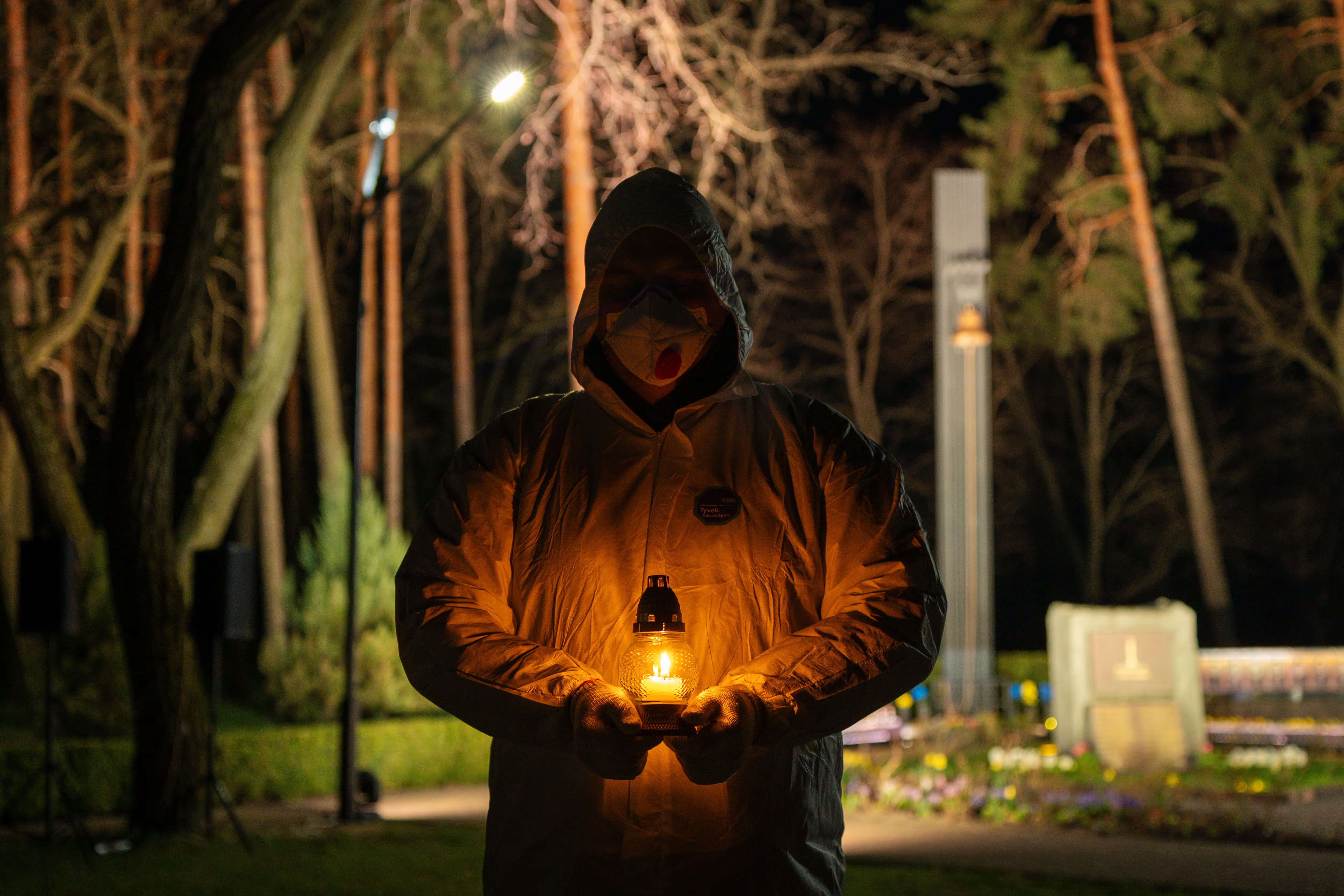
Commemorations occurred throughout Ukraine, including at the Chornobyl site and in Kyiv, where President Zelenskiy lit a candle with visiting Moldovan President Maia Sandu and other officials. Foreign dignitaries, among them the EU energy commissioner, participated in events and committed to ongoing support for Ukraine’s energy sector, which is often subjected to Russian strikes.
Nuclear energy currently represents approximately 70% of Ukraine’s electricity generation, as reported by state-owned operator Energoatom, highlighting the critical role of its nuclear infrastructure in ensuring national energy security amid wartime conditions.
During the memorial events, survivors and clean-up workers reflected on the aftermath of the 1986 disaster and reported on the Soviet-era efforts to downplay its severity.
Serhii Balashov, involved in the Chornobyl clean-up operation, stated that authorities did not recognize the health effects on the workers.
“They failed to recognize the connection between our health issues and our time in Chornobyl for the clean-up,” he stated.
Pope Leo, in a message commemorating the anniversary, stated that the disaster imparted a profound moral lesson for humanity.
He remarked that Chornobyl had left “a mark on humankind’s collective conscience” and emphasized that nuclear energy “should always be used to support life and peace.”
The Chornobyl exclusion zone, spanning approximately 2,600 square kilometers north of Kyiv, continues to be predominantly uninhabited today. The plant, which was briefly occupied by Russian forces in the early weeks of the invasion, is now under the management of Ukrainian personnel who are working in rotating shifts to oversee its long-term decommissioning. The last reactor was decommissioned in 2000.
Within the facility, the control room for reactor four stands still, populated by corroded machinery from the Soviet era. In the open air, nature has taken back a significant portion of the land, where creatures like moose and wild horses wander through the deserted terrain.
Even after four decades, officials caution that the legacy of Chernobyl is being redefined by conflict—now not merely as a historical memory, but as a current and developing threat.