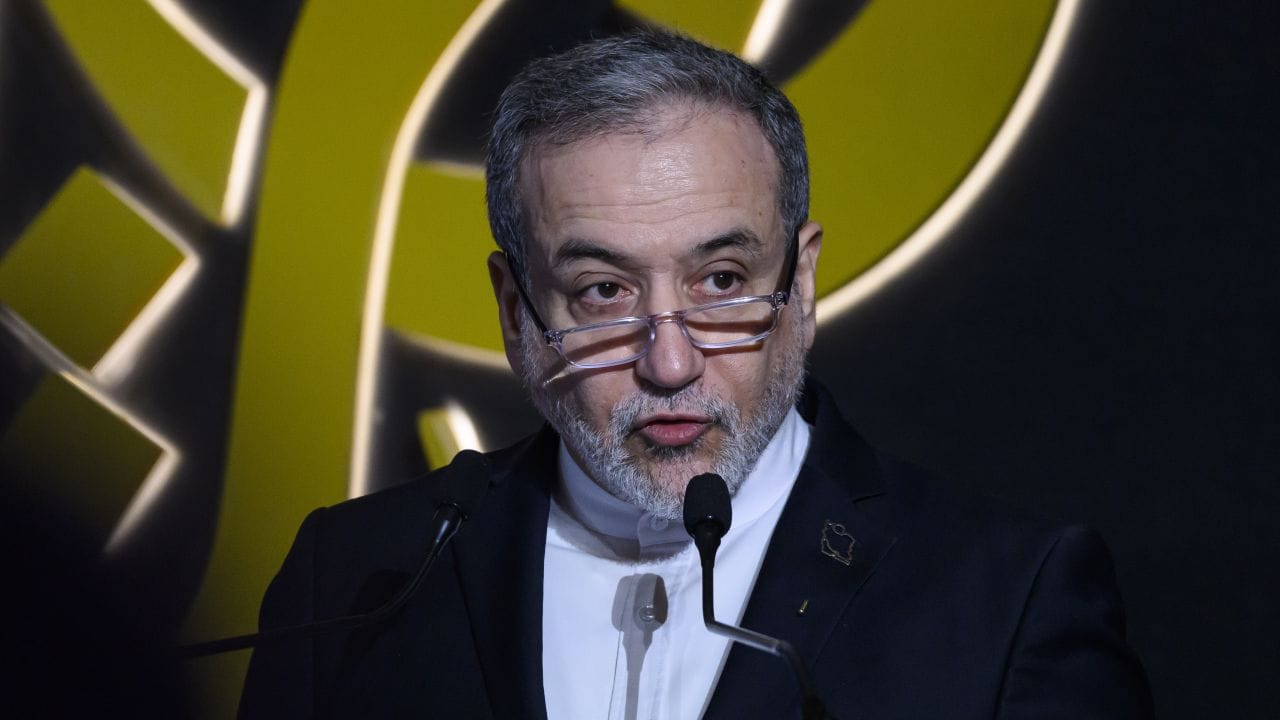
The foreign minister of Iran is traveling to Russia as Trump calls for direct communication, highlighting the stagnation in global diplomatic efforts regarding the US-Iran conflict.
US President Donald Trump has stated that Iran can “call” if it wishes to negotiate an end to the two-month war, as Tehran intensified its diplomatic efforts by dispatching its foreign minister to Russia for discussions with Vladimir Putin.
During a briefing, Trump indicated a willingness to engage in dialogue while maintaining that Washington’s position would not change.
“If they wish to communicate, they are welcome to come to us or give us a call.” There exists a telephone. “We have reliable, secure lines,” he stated.
“They understand the essential components that the agreement must encompass.” It is quite straightforward: They must not possess a nuclear weapon; otherwise, there is no justification for a meeting.
Diplomatic hopes waned over the weekend following Trump’s cancellation of a scheduled visit to Islamabad by his envoys, Steve Witkoff and Jared Kushner, due to concerns regarding the significance of Iran’s proposals.
“Iran offered a lot, but not enough,” Trump stated during his speech in Florida.
In the meantime, Iran’s Foreign Minister Abbas Araqchi made his way between Pakistan and Oman — crucial mediators in the ongoing crisis — before reaching Russia on Monday, where he is anticipated to request Moscow’s backing.
Kazem Jalali, Iran’s envoy to Moscow, stated that the visit was a component of heightened diplomatic efforts.
“Araqchi will meet Putin as part of the ongoing diplomatic efforts to promote the country’s interests in the face of external threats,” Jalali stated in a post on X.
“Iran and Russia stand together in a collective effort against the totalitarian forces of the world, supporting independent nations and those striving for justice, as well as countries that aspire to a world devoid of unilateralism and Western hegemony.”
Although a ceasefire has brought an end to large-scale hostilities, a resolution to the conflict remains elusive. This situation arose on February 28, following U.S.-Israeli strikes on Iran. The conflict has resulted in the loss of thousands of lives, caused upheaval in global energy markets, and heightened worries regarding economic stability.
Oil prices increased while US stock futures declined in early Asian trading on Monday, following a standstill in negotiations that resulted in the effective blockage of shipping through the strategic Strait of Hormuz. The route generally transports approximately one-fifth of the world’s oil supplies, providing Tehran with considerable influence.
As reported by Axios, Iran has put forward a new proposal via Pakistani mediators aimed at reopening the strait and resolving the conflict, while deferring nuclear negotiations. Nevertheless, there has been no comment from the White House or the State Department regarding the report.
Iran has consistently asserted its entitlement to enrich uranium for civilian use—a stance that has been dismissed by Washington and its allies, who are concerned it might pave the way for nuclear weapons development.
Iranian President Masoud Pezeshkian reaffirmed Tehran’s position during a conversation with Pakistan’s Prime Minister Shehbaz Sharif.
He stated that Iran would not engage in “imposed negotiations” under threats or blockades, as per an official statement, emphasizing that the United States must first eliminate obstacles, including its maritime restrictions.
Aside from the nuclear matter, the rifts between the two nations continue to be significant. Washington aims to impose limits on Iran’s backing of regional groups like Hezbollah and Hamas, along with restrictions on its ballistic missile capabilities. Tehran is requesting the lifting of sanctions and the cessation of Israeli military operations in the area.
Violence has persisted in other locations. On Sunday, Israeli airstrikes in Lebanon resulted in the deaths of 14 individuals and left 37 others injured, as reported by the health ministry, amidst escalating tensions in the region despite ongoing ceasefire attempts.
Despite the increasing intensity of diplomatic efforts, the route to a comprehensive settlement remains unclear as negotiations have stalled and positions have become more entrenched.