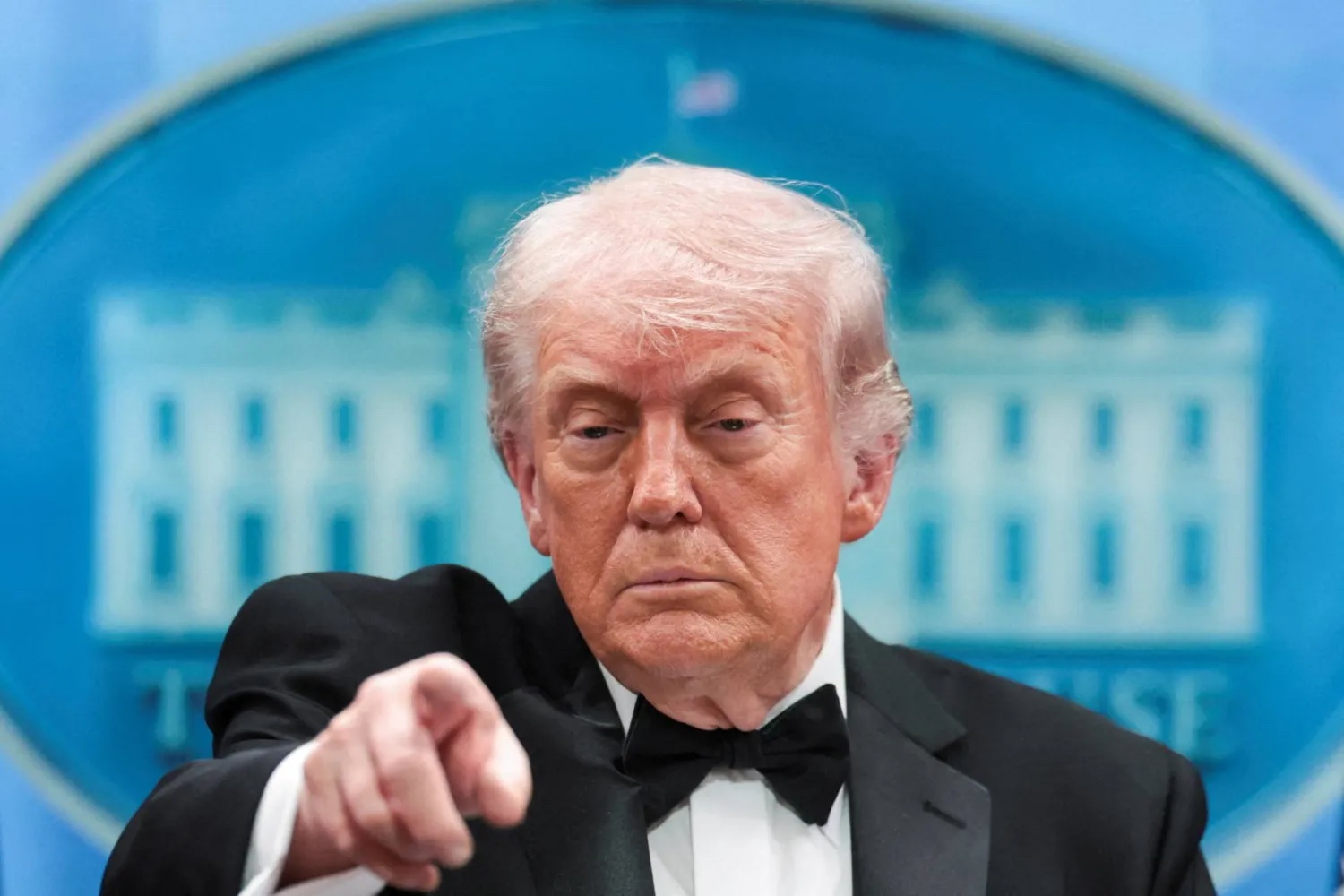
Trump states that Iran can reach out if it wishes to engage in conversation, as the Iranian envoy returns to Pakistan
U.S. President Donald Trump stated on Sunday that Iran could reach out if it wishes to discuss a resolution to their two-month conflict, emphasizing that Tehran must never possess a nuclear weapon. Meanwhile, Iran’s foreign minister returned to Pakistan for discussions, despite the lack of U.S. representatives present.
Hopes for revitalizing peace efforts diminished on Saturday when Trump canceled a planned visit to Islamabad by his envoys Steve Witkoff and Jared Kushner, while Iranian Foreign Minister Abbas Araqchi persisted in his diplomatic travels among mediating nations. “If they wish to engage in dialogue, they can come to us, or they can reach out by phone. ” There exists a telephone. “We have nice, secure lines,” Trump stated during “The Sunday Briefing” on Fox News. “They know what has to be in the agreement.” Trump stated, “It’s basic: They cannot have a nuclear weapon; otherwise, there’s no reason to meet.”
Tehran has consistently requested Washington to recognize its right to enrich uranium, which it asserts is solely for peaceful purposes. However, Western powers contend that this initiative is aimed at developing nuclear weapons, which raises significant concerns about regional security and the potential for an arms race in the Middle East.
While a ceasefire has temporarily halted extensive combat in the conflict that commenced with U.S.-Israeli strikes on Iran on February 28, no consensus has been established regarding the conditions to conclude a war that has resulted in thousands of casualties, increased oil prices, exacerbated inflation, and cast a shadow over global economic prospects.
Trump encounters internal pressure to conclude the conflict.
As his approval ratings decline, Trump encounters increasing domestic pressure to bring an end to the unpopular war. The leaders of Iran, despite facing military weaknesses, have discovered a strategic advantage in negotiations through their capacity to halt shipping in the crucial Strait of Hormuz, a route that typically facilitates a fifth of the world’s oil shipments.
Tehran has effectively shut down the strait, while Washington has enacted a blockade on Iran’s ports.
Araqchi returned to Islamabad following discussions on Sunday in Oman, which serves as another mediator in the conflict.
Iranian state media reported that Araqchi engaged in discussions about security in the strait with Omani leader Haitham bin Tariq al-Said, emphasizing the necessity of a regional security framework that is free from external interference.
Sources from the Pakistani government indicated that Araqchi is set to engage in discussions with the country’s leadership prior to his departure for Moscow.
The semi-official Tasnim news agency in Iran reported that Araqchi’s discussions with Pakistani officials will cover topics such as “establishing a new legal framework for the Strait of Hormuz, securing compensation, ensuring no further military aggression from warmongers, and removing the naval blockade.”
The report stated that the discussions would not pertain to Iran’s nuclear program.
During a speech in Florida on Saturday, Trump announced that he had called off his envoys’ visit, citing excessive travel and costs for what he deemed an insufficient offer from Iran. Iran “provided many concessions, yet it fell short,” he stated.
Prior to a White House press dinner in Washington that evening, comments were made, and Trump was swiftly escorted off the stage by security personnel after a man discharged a firearm in the hotel venue.
Iranian President Masoud Pezeshkian communicated with Pakistani Prime Minister Shehbaz Sharif via phone, stating that Tehran would not engage in “imposed negotiations” under threats or blockade, as per a statement from the Iranian government.
He stated that the United States must first eliminate barriers, such as its maritime blockade, before negotiators can start establishing the foundation for a settlement.
The United States and Iran have significant differences.
The tensions between the U.S. and Iran go beyond Tehran’s nuclear ambitions and its influence over the strait.
Trump aims to restrict Iran’s backing of its regional proxies, such as Hezbollah in Lebanon and Hamas in Gaza, while also seeking to diminish its capacity to target U.S. allies with ballistic missiles. Iran seeks the removal of sanctions and the cessation of Israeli assaults on Hezbollah.
In discussions held in Islamabad earlier in April, U.S. Vice President JD Vance headed the U.S. delegation in meetings with Iran’s parliamentary speaker, Mohammad Baqer Qalibaf. Their discussions concluded without reaching an agreement.
Following the cancellation of the recent diplomatic mission, two U.S. Air Force C-17s transporting security personnel, equipment, and vehicles designated for the protection of U.S. officials departed from Pakistan, as reported by two Pakistani government sources to Reuters on Sunday.
Before the shooting at the White House Correspondents’ Dinner, Trump posted on Truth Social, stating there was “tremendous infighting and confusion” among Iran’s leadership.
Pezeshkian emphasized last week that Tehran had “no hardliners or moderates,” highlighting the nation’s unity in support of its supreme leader.
The conflict has caused significant instability in the Middle East. Iran has targeted its Gulf neighbors, and tensions between Israel and Iran-backed Hezbollah in Lebanon have resurfaced.
On Sunday, Israel’s military announced new evacuation orders for southern Lebanon, instructing residents to vacate seven towns located beyond the “buffer zone” that it had occupied prior to a ceasefire, which has not succeeded in completely stopping hostilities.