Netanyahu’s primary opponents unite for the upcoming election in Israel
Two of Israeli Prime Minister Benjamin Netanyahu’s most formidable political rivals announced their decision to unite in an effort to remove his coalition government in the forthcoming election anticipated later this year.
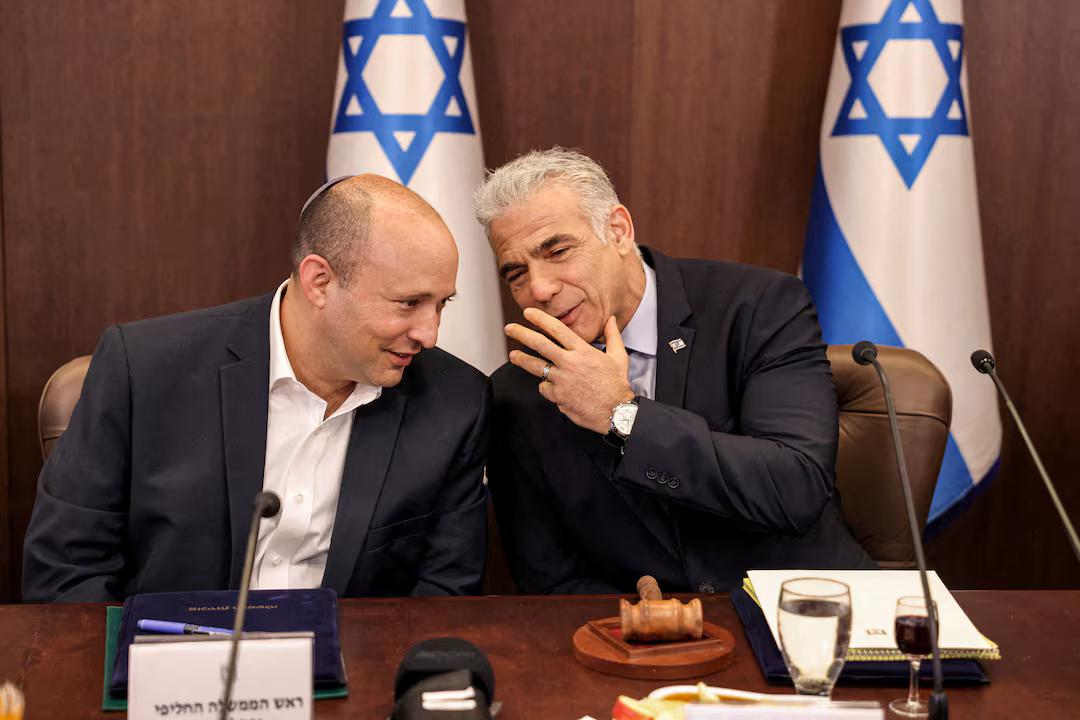
The former prime ministers—right-wing Naftali Bennett and centrist Yair Lapid—released statements regarding the merger of their parties, Bennett 2026 and There is a Future. “We are standing here together for the sake of our children.” “The State of Israel must change direction,” Lapid stated while standing next to Bennett at a joint news conference.
Bennett announced that the new party will be named Together, and he will assume the role of its leader. “After three decades, it’s time to say goodbye to Netanyahu and start a new chapter for Israel,” he stated.
Since his initial term in the 1990s, Netanyahu has emerged as a divisive figure both domestically and internationally, often polarizing public opinion and leading to significant political unrest in Israel.
UNITING ONCE AGAIN
Bennett and Lapid have previously united to end Netanyahu’s 12-year consecutive rule in the 2021 election. They formed a coalition government that, despite a slim majority, was deeply divided on significant issues such as the Israeli-Palestinian conflict, managing to last just 18 months.
For the first time in Israel’s history, their coalition included a party representing the country’s Arab minority—Palestinian by heritage, Israeli by citizenship—known as the United Arab List (UAL).
Prior to that, the duo forcefully entered his 2013 coalition government, a maneuver that excluded Netanyahu’s longstanding ultra-Orthodox Jewish allies, which significantly shifted the political landscape and led to increased tensions within the coalition.
Netanyahu, the longest-serving prime minister of Israel, returned to power after winning the November 2022 election, establishing the most right-wing government in the nation’s history.
However, Hamas’ 2023 attack on southern Israel severely damaged Netanyahu’s security credentials, plunging the Middle East into turmoil and forcing Israel to fight on multiple fronts. Polls conducted since then have indicated that he is likely to lose the upcoming election, scheduled for the end of October.
Netanyahu, the most prominent Israeli politician of his generation, has demonstrated exceptional political resilience in the past.
On Sunday, he shared a photo from 2021 featuring Bennett and Lapid alongside UAL head Mansour Abbas. “They accomplished it once, and they will do it again,” again.”
Netanyahu’s Telegram post indicated a clear jab at their brief 2021 coalition that involved UAL.
Bennett stated that he will not pursue a coalition with Arab parties again and dismissed the idea of ceding any land to adversaries, which seems to refer to the Palestinians’ aspiration to create an independent state in territories occupied by Israel.
TRANSFORMING POLITICAL LANDSCAPE
Bennett, 54, a combative former army commando who has transitioned into a tech millionaire, has been lagging behind Netanyahu in the election polls. An April 23 survey conducted by Israel’s N12 News revealed that Bennett has secured 21 of the Knesset’s 120 seats, while Netanyahu’s Likud has obtained 25 seats.
It found Lapid’s party securing only seven seats, a decrease from the 24 it currently holds. However, Netanyahu’s coalition of right-wing and religious parties commands only 50 seats, compared to at least 60 seats for Bennett and Lapid’s likely coalition, which would include several smaller factions.
The survey aligned with earlier polls conducted by academic institutions and various Israeli media, indicating that Bennett remains the leading contender against Netanyahu, although the political landscape may still evolve.
Lapid, 62, a charismatic former TV news anchor who composes pop songs and thrillers, articulates the sentiments of Israel’s secular middle class, which has grown increasingly frustrated by what it perceives as an inequitable tax and military service burden.
Netanyahu’s ultra-religious political allies are pursuing an exemption for their communities, which experience low employment rates and receive numerous state benefits, from the conscript military service.
The situation in Israel has become increasingly urgent, particularly as the military has expressed concerns about being over-stretched, with the last two years resulting in the highest military death toll in decades.
Lapid and Bennett have prioritized the issue as a key focus of their campaign. Netanyahu has faced criticism for not converting military successes into strategic advantages against Iran and its allied groups in Lebanon and Gaza, namely Hezbollah and Hamas, which has raised questions about the effectiveness of his leadership and strategy in the ongoing conflict.