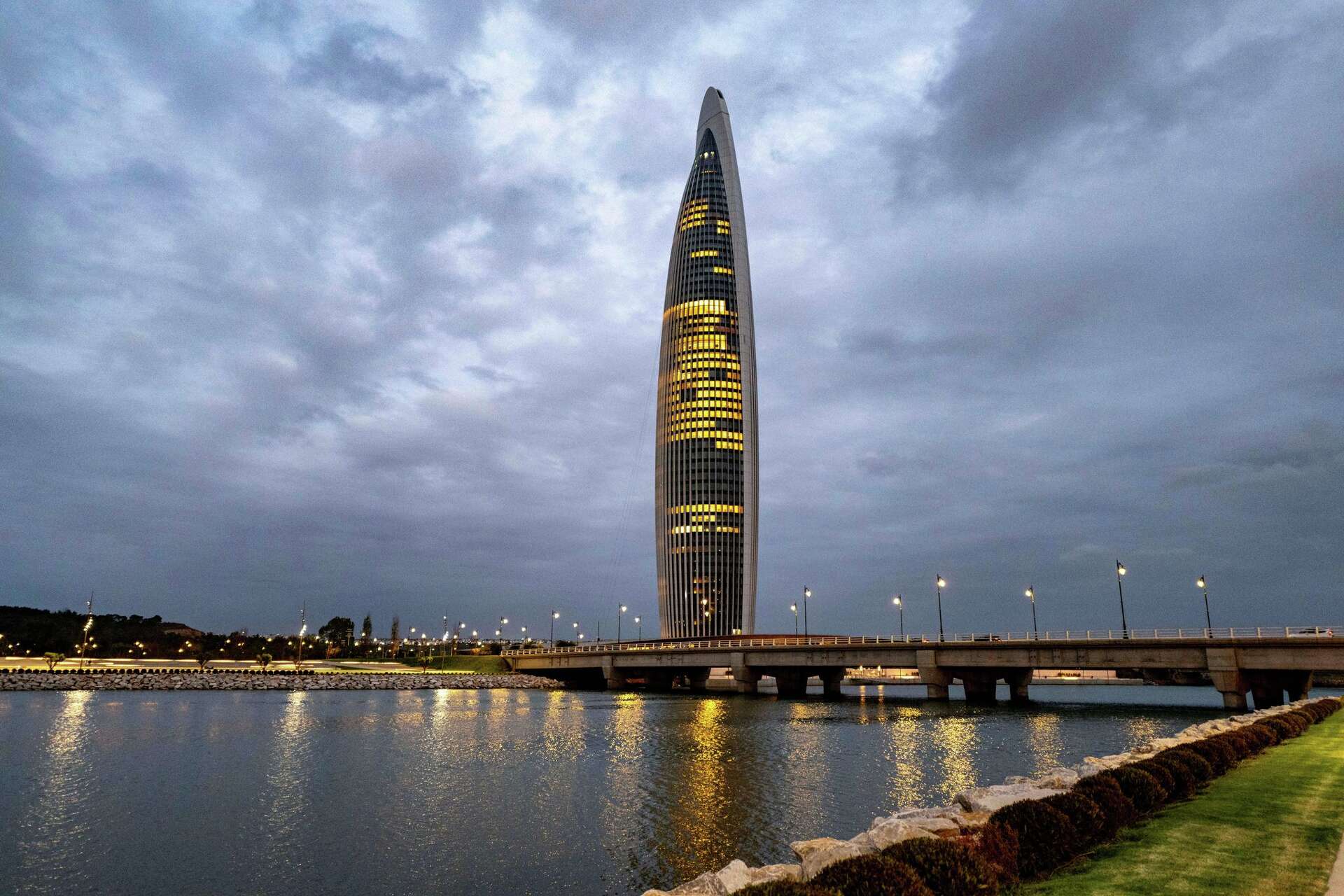
Morocco has inaugurated the Mohammed VI Tower in Rabat, enhancing tourism, attracting investment, creating jobs, and establishing itself as a regional powerhouse.
Morocco has officially opened the Mohammed VI Tower, a $700 million, 55-story skyscraper that now stands out prominently against the historic skyline of the capital region, representing a significant milestone in the country’s efforts to enhance its global influence.
The 820-foot structure, the tallest in Morocco and one of the tallest in Africa, stands in Salé, the twin city of Rabat. The tower, named after King Mohammed VI, draws architectural inspiration from a rocket poised for launch, symbolizing ambition and progress.
The skyscraper is conceived as a mixed-use development, featuring a luxury Waldorf Astoria, as well as offices, retail outlets, restaurants, and upscale residential apartments. Officials from the development company anticipate that the project will generate around 450 direct jobs and 3,500 indirect employment opportunities.
The tower’s construction took eight years and engaged over 2,500 workers from more than a dozen countries, showcasing the extensive scale and global cooperation involved in the project. The structure has achieved notable symbolic significance, featuring on Morocco’s 200-dirham banknote.
Situated in a prime location close to the Grand Theatre of Rabat, a notable creation by the esteemed architect Zaha Hadid, the tower provides expansive vistas of the Atlantic Ocean and the Rabat-Salé metropolitan area.
Officials indicate that the initiative is a component of a larger strategy to enhance the visibility of Rabat and Salé, which are frequently eclipsed by cities such as Marrakech and Casablanca in the realm of global tourism. Morocco, recognized as Africa’s most visited country, is striving to enhance its attractiveness to international travelers, especially as changing global dynamics guide tourists towards destinations viewed as stable.
The initiative aligns with preparations for the 2030 FIFA World Cup, which Morocco will co-host, enhancing its global visibility.
The Mohammed VI Tower, beyond its role in tourism, is regarded by its advocates as a representation of Morocco’s growing influence in Africa and the Middle East. It underscores the country’s aspiration to establish itself as a significant regional center through major, prominent infrastructure initiatives.
Nevertheless, the development has faced its share of criticism. Certain observers contend that investment continues to be focused along the Atlantic corridor, resulting in the underdevelopment of other regions in the country, which exacerbates regional inequalities and limits economic opportunities for those areas. Youth-led protests in recent times have brought attention to issues related to unemployment and the standard of public services, highlighting the need for government action to address these critical social challenges.
The skyscraper’s vision is attributed to Othmane Benjelloun, a 93-year-old billionaire and proprietor of Bank of Africa. The project details indicate that the concept was inspired by a visit he made to NASA in 1969, during which he took part in a spaceflight simulation prior to the Apollo 12 mission.