The United States has decided to adjust its sanctions on Venezuela, permitting the South American nation’s government to compensate Nicolás Maduro’s defense attorney. This change alleviates a restriction that could have jeopardized the drug trafficking case against the deposed Venezuelan president, as indicated by a court filing released on Friday.
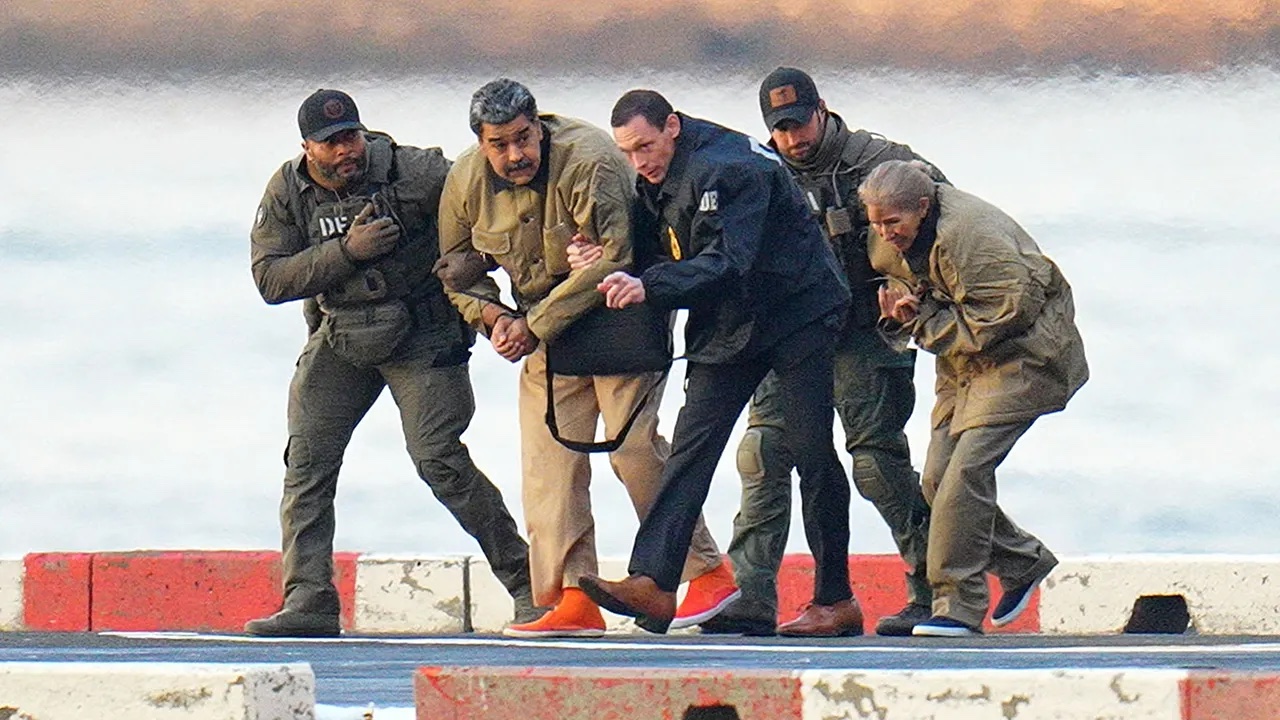
On January 3, U.S. special forces apprehended Maduro, 63, and his wife Cilia Flores, 69, at their residence in Caracas and transported them to New York to face criminal charges, including narcoterrorism conspiracy. They have entered a plea of not guilty and are currently incarcerated in Brooklyn while awaiting trial.
In February, Barry Pollack, Maduro’s lawyer, requested that U.S. District Judge Alvin Hellerstein, based in Manhattan, dismiss the case on the grounds that U.S. sanctions were hindering the Venezuelan government from covering his legal fees.
Pollack stated that the prohibition constituted a breach of Maduro’s rights under the U.S. Constitution to select his preferred counsel.
According to their lawyers, neither Maduro nor Flores can independently cover their legal expenses, and the Venezuelan government is ready to cover the costs.
Every criminal defendant in the United States possesses constitutional rights, irrespective of their citizenship status.
During a court hearing on March 26, Hellerstein expressed that he did not plan to dismiss the case, although he seemed doubtful about the government’s justification for blocking the payments.
Prosecutor Kyle Wirshba asserted in court that valid national security and foreign policy concerns underlie the U.S. sanctions preventing the payments. Wirshba also stated that Hellerstein lacked the authority to direct the Treasury Department to alter its sanctions, as it is the executive branch, rather than the judiciary, that oversees foreign policy.
Hellerstein observed that the U.S. has eased sanctions on Venezuela following Maduro’s removal. Relations between Caracas and Washington have seen improvement since Delcy Rodriguez, the former vice president under Maduro, took on an interim leadership role in Venezuela. “The defendant is present; Flores is present.” “They present no further national security threat,” stated Hellerstein, a judicial appointee of Democratic President Bill Clinton. “The right in question, which takes precedence over other rights, is the right to constitutional counsel.”
In his initial term in the White House, U.S. President Donald Trump intensified sanctions on Venezuela due to claims that Maduro’s administration was corrupt and eroding democratic institutions. Washington labeled Maduro’s 2018 reelection as fraudulent.
Maduro rejected those accusations, as well as claims of his involvement in drug trafficking, labeling them as mere justifications for what he described as a U.S. intent to take control of the South American OPEC nation’s extensive oil reserves.